Musicathon from Musixmatch: a Hackathon for AI Developers with $25k in Prizes
Musixmatch Pro is running the Musicathon hackathon from June 15 to 21. Developers worldwide will build AI tools for musicians using APIs from ElevenLabs, Replit, AI LALAL and other partners. Entry is free, with $25k+ in prizes at stake, including $5000 in cash. The format is fully remote.
AI-processed from @Replit; edited by Hamidun News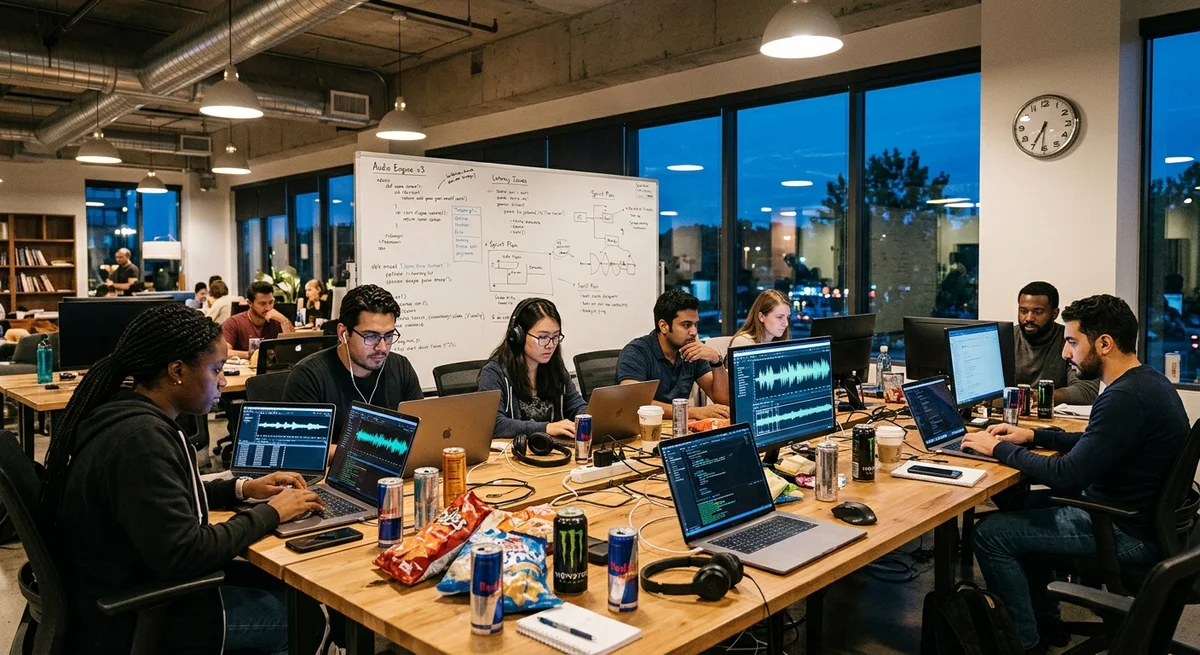
Musixmatch Pro is launching Musicathon, the first major hackathon at the intersection of music and AI. Over one week in June, developers from around the world will build tools that could change how musicians work.
Format: remote, open, no barriers
Musicathon is a 7-day coding marathon, fully remote and open to developers of any level. Participants can work solo or in teams. There are no barriers to entry: experience in music or AI is not required, only a desire to build a useful tool.
The main task is to solve a real problem for musicians, producers or sound engineers. The tracks are fairly broad: audio processing automation, music data analysis, interfaces for working with sound, track recommendation systems, copyright management, distribution tools. The organizers deliberately left the wording open to encourage creativity.
The hackathon will reach developers worldwide, from Silicon Valley to Eastern Europe, from Brazil to Asia. That means people in different time zones will be coding at any given moment, creating a kind of 24-hour development cycle.
Partners: a full stack of tools
The project is backed by a coalition of major platforms working at the intersection of music and AI. Each partner provides specialized tools and APIs:
- ElevenLabs: voice synthesis and cloning (creating voiceovers, dubbing a singer's voice)
- Replit: a cloud IDE for coding right in the browser, with no environment setup
- SongstatsApp: analytics on the popularity and stream counts of each track
- AI LALAL: separation of vocals and instruments (isolating drums or guitar from a finished song)
- Cyanite.ai: analysis of musical parameters (genre, tempo, mood, key)
This combination lets developers build complex projects without writing everything from scratch. Imagine an app that analyzes an uploaded track, separates the vocals from the instruments, and then generates a new vocal in the style of a well-known singer. Doing that alone in a week would be impossible.
Why the music industry is ready for change
The music industry has historically been conservative about technology. Even in the 2010s, studios worked in old ways: live recording, an engineer at the console, expensive mastering. The last two years have shown that AI can radically simplify these processes. Generative AI creates backing tracks, fills gaps in arrangements and suggests mixing options. It will not push out professionals, but it will widen access to tools for independent musicians and small studios.
Musicathon is Musixmatch's way of staying at the center of this revolution. Instead of closed R&D, the company chose to crowdsource ideas through a hackathon. Developers will bring their visions, and the company will identify promising directions and young talent.
Prizes and judging
The total prize pool is $25k+: a main prize of $5000 in cash, plus extra awards from partners (credits for their services, monthly subscriptions, the chance to integrate with their platforms). The hackathon runs from June 15 to 21, and registration opens on the start day.
Judges will evaluate not only technical quality but also usefulness to real musicians. Beautifully written code that does not solve a real problem will not win.
Winners often get more than money. They are invited to join partner companies' teams, offered speaking slots at conferences, and given the chance to develop their project with investment support. For young developers, this can be the starting point of a career in the AI industry.
What this means
Musicathon signals that the music industry is ready for change. For developers, it is an open market backed by major platforms. For musicians, it means access to tools that were previously available only to large studios. For startups, it is a chance to spot new trends and hire talent. It also shows how quickly attitudes toward technology are shifting in a conservative industry.
The real value of AI in music lies not in generative models for fakes, but in tools that help professionals work better and faster.
- Nov 1, 2026Local models lose to Opus and Codex: 0.21 on a MacBook versus 1.00 for Codex
- Nov 1, 2026Kimi scores 96.2% on a 1C database analytics test and emerges as a fallback if Claude access is blocked
- Nov 1, 2026OpenAI Rewrites GPT Behavior Rules: Five Values and a Chain of Command
- Oct 31, 2026Author puts his script before an AI jury: the verdict cost 850 thousand tokens
Key Questions Answered
What are the key details on Format: remote, open, no barriers?
Musicathon is a 7-day coding marathon, fully remote and open to developers of any level. Participants can work solo or in teams. There are no barriers to entry: experience in music or AI is not required, only a desire to build a useful tool. The main task is to solve a real problem for musicians, producers or sound engineers. The tracks are fairly broad: audio processing automation, music data analysis, interfaces for working with sound, track recommendation systems, copyright management, distribution tools. The organizers deliberately left the wording open to encourage cre
What are the key details on Partners: a full stack of tools?
The project is backed by a coalition of major platforms working at the intersection of music and AI. Each partner provides specialized tools and APIs: ElevenLabs: voice synthesis and cloning (creating voiceovers, dubbing a singer's voice) Replit: a cloud IDE for coding right in the browser, with no environment setup SongstatsApp: analytics on the popularity and stream counts of each track AI LALAL: separation of vocals and instruments (isolating drums or guitar from a finished song) Cyanite.ai: analysis of musical parameters (genre, tempo, mood, key) This combination lets d
Why the music industry is ready for change?
The music industry has historically been conservative about technology. Even in the 2010s, studios worked in old ways: live recording, an engineer at the console, expensive mastering. The last two years have shown that AI can radically simplify these processes. Generative AI creates backing tracks, fills gaps in arrangements and suggests mixing options. It will not push out professionals, but it will widen access to tools for independent musicians and small studios. Musicathon is Musixmatch's way of staying at the center of this revolution. Instead of closed R&D, the compan
Test Frontier LLMs & Autonomous Agents in One Workspace
Run Claude Opus 5.5, GPT-6, Gemini 3.1, and DeepSeek side-by-side in Nomad AI (nomadnet.ai) — unified model routing, deep research, and multimodal workflows under one subscription.
The AI world, distilled — once a week
Seven stories that actually mattered, hand-picked. No noise, no reposts, no press releases.
Done! Check your inbox for a confirmation.