AI Agent Permissions Should Grow With Their Capabilities — How Anthropic Does It
Anthropic published engineering recommendations for managing AI agent permissions. The main idea: access rights should evolve with the agent's capabilities. In
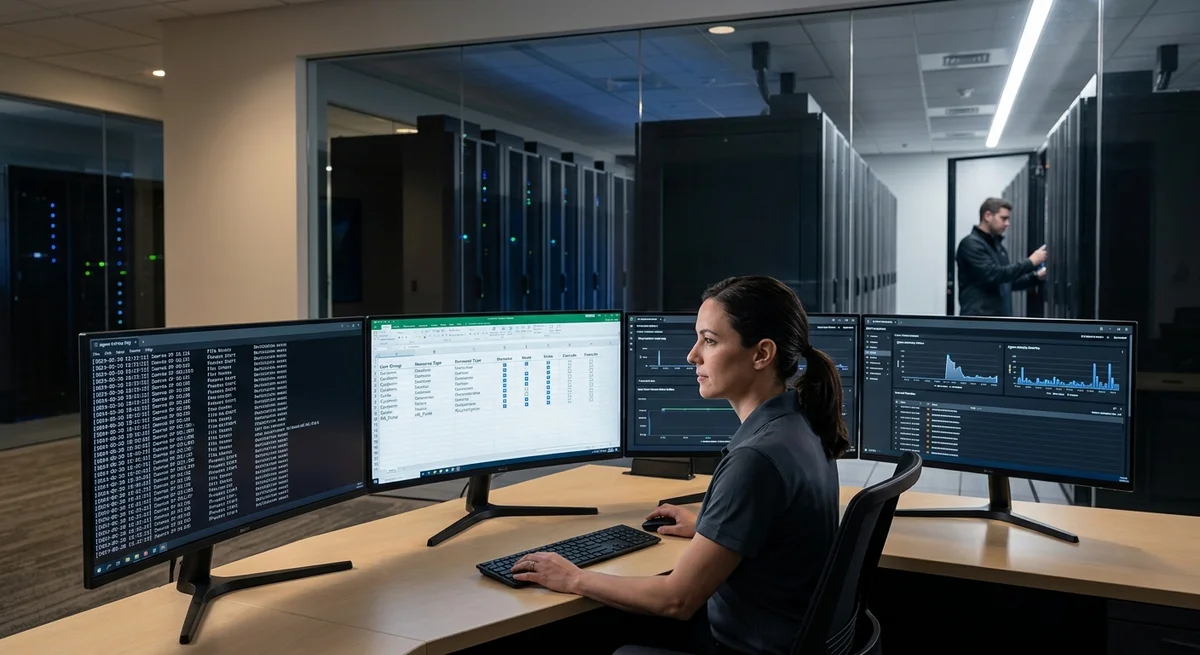
Anthropic has released an engineering guide dedicated to managing access rights for AI agents. The key takeaway: as agents become more powerful and perform more complex tasks, their permissions should evolve. The company uses sandboxing — a special technique that limits potentially destructive actions and protects systems from errors.
Why this is critical
AI agents increasingly gain access to external tools: browsers, file systems, APIs, databases. This expands their capabilities, but simultaneously increases risk. If an agent makes a mistake or is pushed by an improperly formulated request, it could delete important data, send a random email from your account, or execute an incorrect financial transaction. Anthropic emphasizes: access rights are not a static set of permissions. They should grow together with the agent's capabilities and reliability. A new agent receives minimum rights, then gradually, as it proves stability and contextual understanding, its permissions expand.
How sandboxing works
Sandboxing is isolation. You give the agent the ability to act in a limited environment where it cannot cross boundaries and damage the rest of the system. Examples:
- An agent can edit only files in the /tmp folder, without touching system directories
- API requests pass through a proxying layer that checks each call
- A browser agent sees only certain websites, the rest are blocked
- Financial transactions require additional confirmation or have a transaction limit
- Databases are accessible read-only, or only for specific tables
This approach allows you to give the agent enough freedom to work, while simultaneously keeping it within security boundaries.
Anthropic's practical approach
In its products, including Claude and new agent frameworks, Anthropic applies these principles in practice. When you deploy an agent, you first define what tools it can use and how they should be limited. For example, if you need an agent to answer questions about your documentation, you give it access only to that documentation. If an agent helps manage your calendar, you allow it to read and write only events, not manage other aspects of your account.
It is especially important to establish a monitoring system. The company recommends logging all agent actions: what commands it executed, what tools it used, what errors occurred. Regular audits help detect anomalous behavior quickly. If an agent starts doing unforeseen things or violates typical patterns, the system should alert or block it.
"Trust is not a binary choice.
It is a spectrum, and you need to give the agent exactly as many rights as it needs to work right now," the Anthropic guide states.
As the agent proves stability and contextual understanding, its rights can be gradually expanded. But this should be a conscious, step-by-step process, not an automatic increase based on operating time.
What this means
Proper sandboxing and dynamic permissions are not just a best practice, they are a necessity when deploying AI agents to production. For organizations deploying AI agents in their systems, this means: carefully think through what your agent should do and what data it needs, define the exact scope of its rights and limitations, monitor behavior in real-time and gradually expand rights as the agent's reliability grows.
This is especially important in critical scenarios: if an agent has access to financial data, medical records, personal information, or critical infrastructure, the risk of error becomes enormous. For AI companies like Anthropic, this means embedding these principles in product architecture from the start, rather than adding them later as a patch.