Anthropic updates its Responsible Scaling Policy with a flexible safeguard system for growing AI models
Anthropic has published a significant update to its AI risk management framework, the Responsible Scaling Policy (RSP). Instead of a one-size-fits-all approach, the company is introducing a flexible system of proportional protection: ASL safety levels scale with a model's growing capabilities. The update introduces capability thresholds, specific AI abilities that, once reached, require stricter safety and monitoring measures. Anthropic's current models operate at the ASL-2 level.
AI-processed from Anthropic Blog; edited by Hamidun News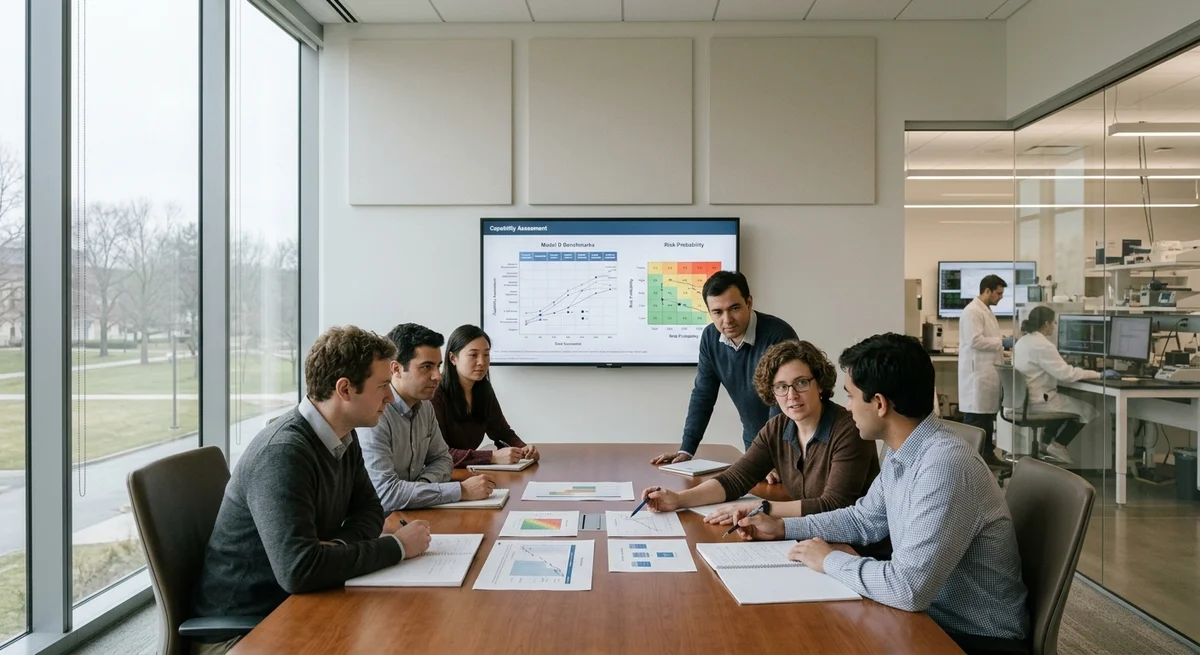
Anthropic has published an update to its Responsible Scaling Policy, the framework it uses to manage risks in developing powerful AI systems. The update brings a more flexible and nuanced approach while keeping the core principle: the company will not train or deploy models until it is confident the risks are at an acceptable level.
Why the policy was updated
A year ago, Anthropic released the first version of the RSP, designed to manage the risks of increasingly capable AI systems. A year of putting it into practice showed the need for a more flexible approach. The company tracks not only the technical capabilities of its models but also their potential risks and consequences.
Anthropic monitors several categories of threats at once. These include familiar problems such as the spread of disinformation, incitement to violence and fraud, all of which are covered by the company's Usage Policy. The RSP, however, focuses on more ambitious catastrophic scenarios that could arise once models reach a certain level of independence and the ability to carry out complex manipulation.
The updated policy draws on practical experience and on approaches used in other high-risk industries: aviation, nuclear energy and pharmaceuticals. This helps the company prepare for the accelerating pace of AI development and build safeguards that scale with the technology.
How the ASL levels work
The new system rests on the principle of proportional protection: safety measures must grow with the risks. Anthropic has introduced AI Safety Level Standards (ASL Standards), graded sets of technical and procedural requirements inspired by international Biosafety Levels, which are used in laboratories handling dangerous materials.
The system starts at ASL-1 for models with basic capabilities (for example, specialized chess bots or fast information-retrieval bots) and rises to ASL-2, ASL-3 and beyond as capabilities and potential risks grow. Each higher level brings stricter requirements:
- Enhanced monitoring and logging of all operations the model performs
- Stricter pre-deployment safety testing
- Additional layers of access control, isolation and segmentation
- Mandatory independent audits and reviews by external security experts
- More frequent reassessment of potential risks as new data emerges
At present, all Anthropic models operate under the ASL-2 standard, which the company considers to reflect industry best practices today.
Capability thresholds: when to go on high alert
Instead of vague, subjective criteria, Anthropic has defined concrete thresholds, or Capability Thresholds: specific model abilities that, once reached, require stronger safety measures and a new ASL level. Two key thresholds have been defined so far.
The first is Autonomous AI R&D. If a model can independently carry out complex AI research tasks that normally require human expertise and intuition, it could significantly accelerate AI development in an unpredictable direction.
The second threshold is mentioned in the source document, but its full description has not yet been disclosed. The company leaves open the possibility of expanding the list as it better understands the real-world impact of new capabilities.
What this means
Anthropic is making the case that AI safety should be neither an irrational blockade nor a total absence of control. Instead, the company is building a scalable system that grows with the technology and adapts to real risks.
The approach matters for other developers too. If Anthropic's ideas gain wide acceptance in the community, they could become a de facto industry standard. That is especially relevant for regulators, who are now looking for practical frameworks to oversee AI systems.
- Nov 1, 2026OpenAI Rewrites GPT Behavior Rules: Five Values and a Chain of Command
- Nov 1, 2026Google admits AI Mode cuts search revenue, shares fall 15%
- Oct 31, 2026Author puts his script before an AI jury: the verdict cost 850 thousand tokens
- Oct 31, 2026Anthropic: Fold Subagents Back Into a Single Loop — One Customer's Tasks Ran Twice as Fast
Key Questions Answered
Why the policy was updated?
A year ago, Anthropic released the first version of the RSP, designed to manage the risks of increasingly capable AI systems. A year of putting it into practice showed the need for a more flexible approach. The company tracks not only the technical capabilities of its models but also their potential risks and consequences. Anthropic monitors several categories of threats at once. These include familiar problems such as the spread of disinformation, incitement to violence and fraud, all of which are covered by the company's Usage Policy. The RSP, however, focuses on more amb
How the ASL levels work?
The new system rests on the principle of proportional protection: safety measures must grow with the risks. Anthropic has introduced AI Safety Level Standards (ASL Standards), graded sets of technical and procedural requirements inspired by international Biosafety Levels, which are used in laboratories handling dangerous materials. The system starts at ASL-1 for models with basic capabilities (for example, specialized chess bots or fast information-retrieval bots) and rises to ASL-2, ASL-3 and beyond as capabilities and potential risks grow. Each higher level brings stricte
What are the key details on Capability thresholds: when to go on high alert?
Instead of vague, subjective criteria, Anthropic has defined concrete thresholds, or Capability Thresholds: specific model abilities that, once reached, require stronger safety measures and a new ASL level. Two key thresholds have been defined so far. The first is Autonomous AI R&D. If a model can independently carry out complex AI research tasks that normally require human expertise and intuition, it could significantly accelerate AI development in an unpredictable direction. The second threshold is mentioned in the source document, but its full description has not yet bee
Test Frontier LLMs & Autonomous Agents in One Workspace
Run Claude Opus 5.5, GPT-6, Gemini 3.1, and DeepSeek side-by-side in Nomad AI (nomadnet.ai) — unified model routing, deep research, and multimodal workflows under one subscription.
The AI world, distilled — once a week
Seven stories that actually mattered, hand-picked. No noise, no reposts, no press releases.
Done! Check your inbox for a confirmation.