US Sets Aside $9 Billion for Nvidia AI Chips in Race With China
The United States is allocating $9 billion to Nvidia superchips to accelerate the development of artificial intelligence. The government wants to preserve its technological leadership in the global AI race. The investment is aimed at equipping federal agencies, the Department of Defense and research institutions.
AI-processed from ZDNet AI; edited by Hamidun News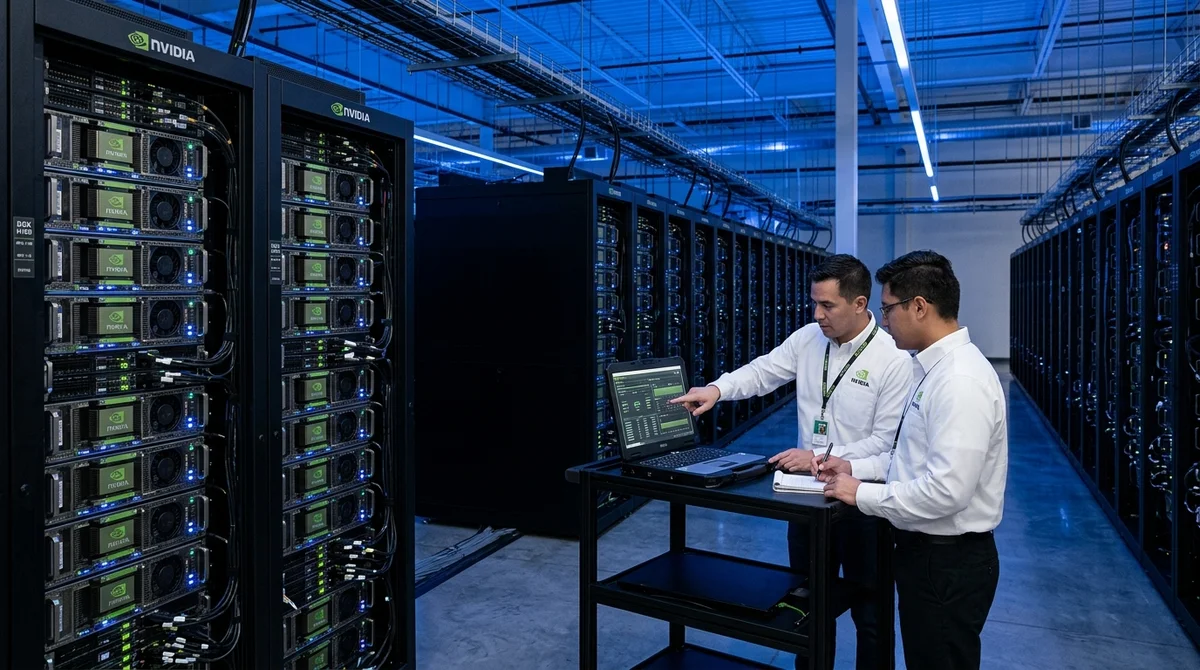
The US government plans to allocate $9 billion to buy advanced Nvidia chips for artificial intelligence development. It is one of the largest government investments in AI infrastructure, meant to reinforce US technological leadership as global competition intensifies.
Why the government is joining the race
The US federal government has recognized the critical strategic importance of computing power for modern AI. The market for high-performance machine learning chips is concentrating quickly, and Nvidia controls the overwhelming majority of global supply of the necessary hardware. Without reliable access to such hardware, national laboratories, research centers and defense units will fall behind in the race for AI advantage.
Historically, the US relied on the free market, but policymakers now treat computing resources as a national security issue. The H100 and H200 chips are the main tool for training large language models and generative systems. Their scarcity is felt by companies such as OpenAI and Anthropic, but also by government bodies. A single federal purchase would make it possible to build national computing infrastructure for research institutions, the defense industry and government departments.
Where the money will go
The government funds will be distributed across several key areas:
- National science laboratories (NIST, Department of Energy, National Laboratories) for fundamental research
- Federal agencies deploying AI in the civilian sector: healthcare, education, infrastructure
- Department of Defense units developing strategic AI systems
- Leading American universities in defense research programs
- Centralized AI infrastructure for critical government services
The investment would create a full-fledged AI ecosystem available to thousands of researchers and engineers at a world-class level.
Background: the geopolitical race
The federal investment is a direct response to China's rapid AI progress. The US has already imposed export restrictions on advanced chips, but policymakers consider that insufficient. The aim is not only to contain competitors but to significantly outpace them in domestic development.
At the same time, the government is rolling out programs to localize chip production. Intel and TSMC are building fabs in the US with state support, but a full transition will take several more years. Until then, Nvidia remains a critical strategic partner.
Analysts note that Nvidia GPU prices are rising not only because of commercial demand, but also because of growing recognition of its strategic importance to national security.
"In AI, there is no time to fall behind.
This is a matter of national competitiveness and security," senior officials stress.
What it means
The US is acknowledging that computing resources have become the strategic currency of our time. The investment signals that AI infrastructure is no longer just a technology problem but a national security matter.
For business, this means that access to government computing resources, contracts and grants will remain key competitive factors in the AI market.
- Nov 2, 2026TensorFold 1.2.0 boosts Qwen3.8-27B throughput on M3 Ultra by 44.2% at 16 streams
- Nov 1, 2026Local models lose to Opus and Codex: 0.21 on a MacBook versus 1.00 for Codex
- Nov 1, 2026Habr author fine-tunes YOLOv8l on dental X-rays and pushes mAP50 to 0.642
- Nov 1, 2026Voice bots built on LLMs turn to Jev, a fast classifier, for decisions in 200–500 ms
Key Questions Answered
Why the government is joining the race?
The US federal government has recognized the critical strategic importance of computing power for modern AI. The market for high-performance machine learning chips is concentrating quickly, and Nvidia controls the overwhelming majority of global supply of the necessary hardware. Without reliable access to such hardware, national laboratories, research centers and defense units will fall behind in the race for AI advantage. Historically, the US relied on the free market, but policymakers now treat computing resources as a national security issue. The H100 and H200 chips are
Where the money will go?
The government funds will be distributed across several key areas: National science laboratories (NIST, Department of Energy, National Laboratories) for fundamental research Federal agencies deploying AI in the civilian sector: healthcare, education, infrastructure Department of Defense units developing strategic AI systems Leading American universities in defense research programs Centralized AI infrastructure for critical government services The investment would create a full-fledged AI ecosystem available to thousands of researchers and engineers at a world-class level.
What are the key details on Background: the geopolitical race?
The federal investment is a direct response to China's rapid AI progress. The US has already imposed export restrictions on advanced chips, but policymakers consider that insufficient. The aim is not only to contain competitors but to significantly outpace them in domestic development. At the same time, the government is rolling out programs to localize chip production. Intel and TSMC are building fabs in the US with state support, but a full transition will take several more years. Until then, Nvidia remains a critical strategic partner. Analysts note that Nvidia GPU price
Test Frontier LLMs & Autonomous Agents in One Workspace
Run Claude Opus 5.5, GPT-6, Gemini 3.1, and DeepSeek side-by-side in Nomad AI (nomadnet.ai) — unified model routing, deep research, and multimodal workflows under one subscription.
The AI world, distilled — once a week
Seven stories that actually mattered, hand-picked. No noise, no reposts, no press releases.
Done! Check your inbox for a confirmation.