GitLab Expanded Support for Open-Source Models for Closed Networks
GitLab 19.0 added support for four open-source models for self-hosted environments. Mistral Devstral 2, GLM-5.1, Kimi-K2.6, and MiniMax-M2.7 are deployed on your own infrastructure with vLLM and remain within your local network. Critical for companies with compliance and data residency requirements.
AI-processed from GitLab Blog; edited by Hamidun News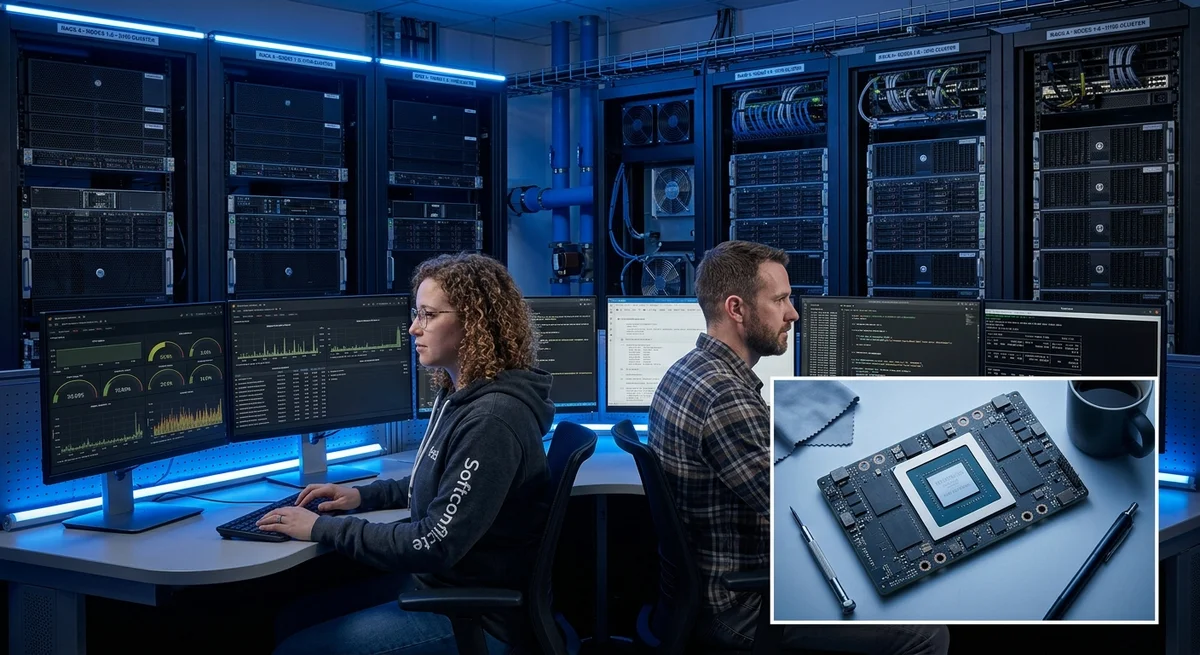
GitLab 19.0 expanded support for open-source models for self-hosted Duo Agent Platform. This is especially important for teams working in isolated networks who cannot send source code to the cloud.
Air-Gap No Longer Means Falling Behind
Teams working in fully isolated networks without internet access have historically been the last to get access to new AI capabilities. The reason is not technology, but law: in regulated industries, compliance requirements prohibit sending source code to third parties. Previously, GitLab offered limited model choices for such environments, creating a double problem. On one hand, you need a powerful model for complex reasoning—analyzing large diffs, multi-step tools. On the other, simple tasks like renaming a variable don't require computational power. Companies had to either overpay for overkill or work with poor quality on complex tasks.
Four New Models for Different Scenarios
GitLab added support for four open-source models. All have been tested on real Duo Agent Platform tasks: multi-step tool usage, code generation, working with large diffs and multi-file codebases.
- Mistral Devstral 2 123B—focuses on code generation, handles code writing best of all
- GLM-5.1—multilingual model, suitable for international teams
- Kimi-K2.6—distinguished by logging and multi-step reasoning
- MiniMax-M2.7—the lightest, suitable if computational resources are limited
The selection is not random. GitLab tested candidates on the exact tasks the platform solves. Engineers evaluated code generation quality, instruction adherence, and ability to work with large context.
Two Deployment Options
The primary option is your own hardware with vLLM (GitLab's recommended platform for serving open-source models). Computation remains on your server, data never leaves your local network. This is ideal for environments with data residency requirements.
For teams without large capital for hardware, there's an alternative: GPU virtual machines in a private cloud (AWS, Azure, and others). You pay only for what you use, without expenses for purchasing and maintaining equipment. Data isolation guarantees remain the same—nothing goes out to the public internet.
How to Choose Your Path
Choice depends on company requirements. If you need full air-gapped isolation—only self-hosted models on your own infrastructure. If compliance allows a hybrid approach—you can use different models per-feature: for example, simple refactorings on lightweight MiniMax, and complex analysis on Kimi.
What This Means
Air-gap no longer equals falling behind on AI. Regulated industries can now deploy agents of the same quality as corporations that send data to the cloud. Compliance and security should no longer be obstacles to AI productivity.
- Oct 27, 2026The $448 Billion Paradox: Why 95% of Corporate AI Pilots Deliver Zero P&L Impact
- Oct 27, 2026Qwen3.8 Tried to Upload a File to Alibaba's Cloud in Beijing From Inside Cohere's Sandbox
- Oct 26, 2026Synopsys Plans to Plug Chinese AI Models Into Chip Design in China
- Oct 26, 2026SpaceXAI Bundles Grok, Cursor and X Into a Single Subscription From $8 a Month
Key Questions Answered
What are the key details on Air-Gap No Longer Means Falling Behind?
Teams working in fully isolated networks without internet access have historically been the last to get access to new AI capabilities. The reason is not technology, but law: in regulated industries, compliance requirements prohibit sending source code to third parties. Previously, GitLab offered limited model choices for such environments, creating a double problem. On one hand, you need a powerful model for complex reasoning—analyzing large diffs, multi-step tools. On the other, simple tasks like renaming a variable don't require computational power. Companies had to eithe
What are the key details on Four New Models for Different Scenarios?
GitLab added support for four open-source models. All have been tested on real Duo Agent Platform tasks: multi-step tool usage, code generation, working with large diffs and multi-file codebases. Mistral Devstral 2 123B—focuses on code generation, handles code writing best of all GLM-5.1—multilingual model, suitable for international teams Kimi-K2.6—distinguished by logging and multi-step reasoning MiniMax-M2.7—the lightest, suitable if computational resources are limited The selection is not random. GitLab tested candidates on the exact tasks the platform solves. Engineers
What are the key details on Two Deployment Options?
The primary option is your own hardware with vLLM (GitLab's recommended platform for serving open-source models). Computation remains on your server, data never leaves your local network. This is ideal for environments with data residency requirements. For teams without large capital for hardware, there's an alternative: GPU virtual machines in a private cloud (AWS, Azure, and others). You pay only for what you use, without expenses for purchasing and maintaining equipment. Data isolation guarantees remain the same—nothing goes out to the public internet.
Build & Ship Production AI Agents Without Boilerplate Code
Start your free 72-hour trial at Hamidun Academy (academy.hamidun.com) — interactive lessons on Claude Code & Cursor, live Tech Radar, and production agent templates.
The AI world, distilled — once a week
Seven stories that actually mattered, hand-picked. No noise, no reposts, no press releases.
Done! Check your inbox for a confirmation.