Lam Research Integrates AI into Equipment to Reduce Chip Defects
Lam Research is embedding AI directly into chip manufacturing equipment. The AI system will monitor semiconductor production processes in real-time—detecting defects at early stages and optimizing parameters. This will reduce defects and increase chipfab productivity without requiring complete equipment replacement. Semiconductor manufacturing is one of the most complex and expensive industrial processes. Even microscopic deviations from specified parameters can result in entire batches being defective. Currently, quality control is largely manual or semi-automatic, meaning defects are discovered too late—after expensive materials, rare gases, and machine time on equipment worth tens of millions of dollars have already been consumed. Even a 1-2% reduction in defect rates can save major chipfabs tens or hundreds of millions of dollars annually.
AI-processed from 3DNews AI; edited by Hamidun News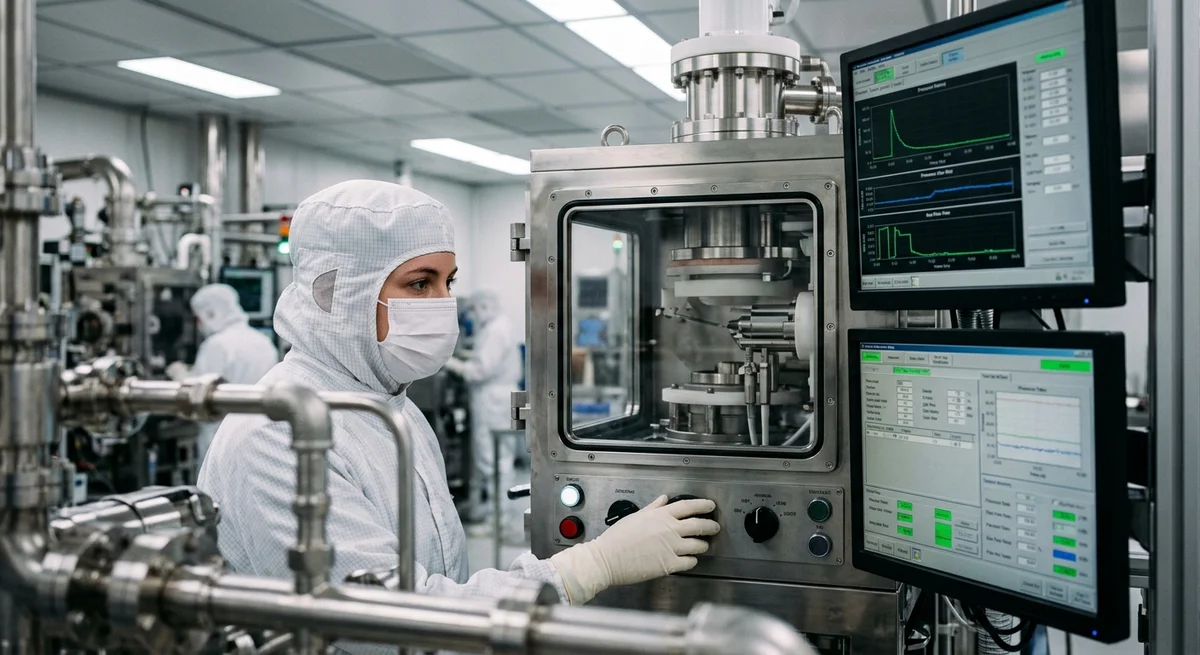
Lam Research, one of the leading manufacturers of equipment for the semiconductor industry, has announced plans to embed AI directly into its chip manufacturing tools. Until now, the connection between artificial intelligence and chipfabs has been limited to increased processor demand driven by the AI boom, but now AI will begin working directly in the manufacturing process itself—monitoring quality and optimizing parameters in real time.
Why Chip Defects Are So Expensive
Semiconductor manufacturing is one of the most complex and expensive industrial processes. Even microscopic deviations from specified parameters can result in entire batches of wafers being defective. Today, quality control is still largely manual or semi-automatic: engineers inspect samples after each stage, analyze sensor data, but can only respond to problems after the fact. This means defective chips are discovered too late—after expensive materials, rare gases, and machine time on equipment worth tens of millions of dollars have already been consumed. Even a 1-2% reduction in defect rates can save a major chipfab tens or even hundreds of millions of dollars per year. That's why everyone is looking for ways to improve yield—the output of functional chips.
How AI is Being Embedded in Equipment
Lam Research plans to embed AI monitoring and control systems directly into its tools—etching machines, coating systems, lithography tools, and chemical-mechanical polishing equipment. The AI will analyze dozens of process parameters:
- Plasma parameters and its energy in real-time
- Temperature and pressure in the processing chamber
- Data from spectral and optical sensors
- Adhesion and precise thickness of deposited layers
- Microchemistry and composition of boundary regions of structures
The system will be able to predict possible defects several processing cycles before they fully manifest, and automatically adjust the equipment's parameters—plasma power, exposure time, temperature. This will enable engineers to act preventively, correcting the process on the fly, rather than reactively discovering defects after the operation is complete.
A Strategic Move in the Equipment Competition Wars
Embedding AI into production equipment is a strategic move for Lam Research. The company will be able to offer its customers a unique advantage: not just high-precision equipment, but tools that optimize themselves and become smarter with each processed batch. This will significantly strengthen the company's competitive position against global competitors like ASML and Tokyo Electron. Moreover, embedded AI systems will generate vast volumes of anonymized data about manufacturing processes. Over time, AI will learn from this data from thousands of tools worldwide, becoming increasingly accurate and efficient. The scale effect here works in Lam Research's favor: the more of their equipment in the world, the better their algorithms become.
What This Means
This is a signal that AI is moving out of the cloud and into physical manufacturing. For the semiconductor industry, this means the opportunity to reduce operating costs, increase the yield of functional chips, and bring new technologies to market faster. For the rest of heavy industry—metallurgy, chemicals, pharmaceuticals—this is news that embedded intelligence in equipment will soon become an industry standard.
Build & Ship Production AI Apps with Vibe Coding
Join Zhemal Khamidun's hands-on Vibe Coding Intensive at hamidun.com/vibecoding — master Claude Code, Cursor, and autonomous agentic workflows.
The AI world, distilled — once a week
Seven stories that actually mattered, hand-picked. No noise, no reposts, no press releases.
Done! Check your inbox for a confirmation.