Recycling Startups Use AI to Extract Aluminum from Waste
Aluminum prices have risen 20%, and recycling startups see a golden opportunity. They are actively investing in AI technologies for more efficient extraction of aluminum and other critical minerals from household waste and industrial scrap. This new approach could create a powerful alternative source of rare materials and significantly reduce dependence on costly traditional mining.
AI-processed from TechCrunch; edited by Hamidun News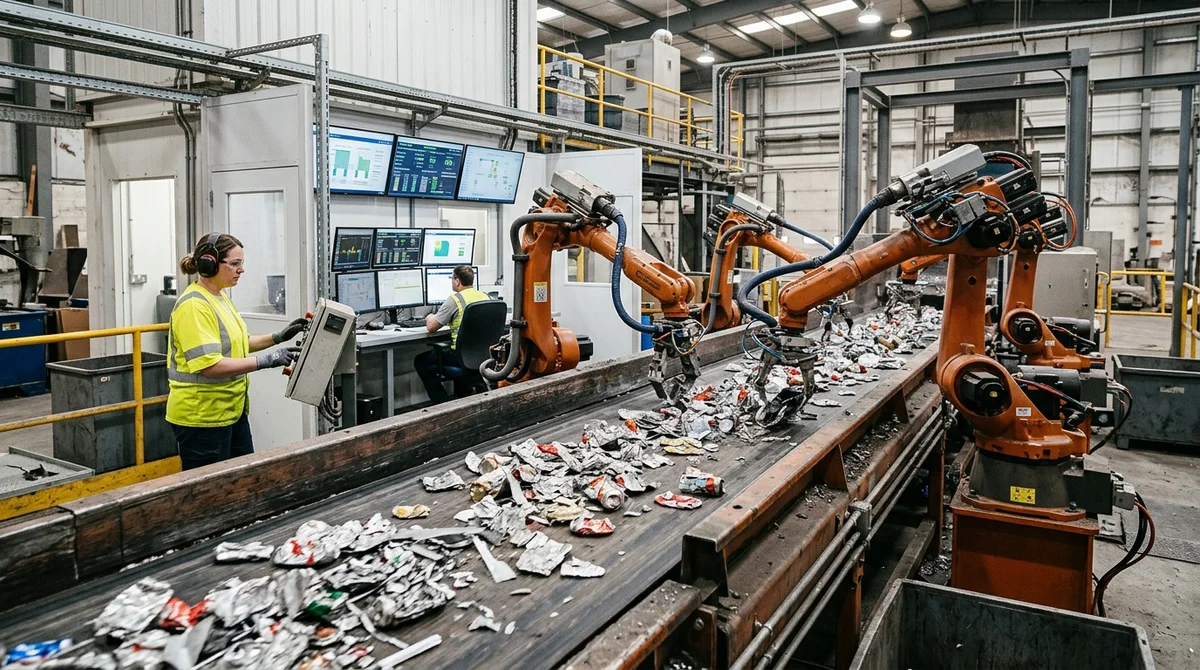
Recycling startups are increasingly using artificial intelligence to recover critical minerals. Against the backdrop of 20% aluminum price increases and growing demand for rare materials, such technologies are becoming economically attractive.
Why Aluminum Got More Expensive
Aluminum prices have risen 20% due to a combination of factors: increased demand for electric vehicle production, aerospace industry development, and supply shortages from traditional mining sources. Aluminum is needed for batteries, device housings, aircraft structures, and solar panels. The economics of recycling are now more attractive than ever: secondary aluminum commands higher prices, and its production requires only 5% of the energy needed for primary ore mining.
How AI Is Transforming Recycling
Artificial intelligence helps startups on several key levels. Computer vision with high precision sorts waste by metal types faster than humans can—the system analyzes color, weight, and magnetic properties in real time. Machine learning systems predict optimal smelting and refining parameters for maximum aluminum and rare earth extraction. AI-powered robots disassemble complex electronics without losing valuable material, separating copper from gold, platinum from plastic. Automation reduces costs and minimizes errors.
Here are the key applications:
- Automatic waste sorting by metal types in real time
- Predicting rare element content in batches
- Robotic disassembly of electronics with high precision
- Optimizing energy consumption in remelting and refining
- Material quality control through video analysis
The New Economics of Recycling
Startups view the current market conditions as a historic moment. Thanks to AI, they can process waste with minimal losses and extract profit from materials that were previously economically inefficient. At current prices, each kilogram of recovered aluminum has real value. Some companies in this sector are attracting venture capital investments, viewing recycling as a serious alternative to traditional mining. Scaling takes time, but the economics look promising.
What This Means
Recycling with AI systems is becoming a competitive source of raw materials. This could reduce pressure on traditional mining, decrease dependence on imports of rare materials, and make production more environmentally friendly. For startups, this is an opportunity to scale a profitable business as aluminum and rare element prices continue to rise.
- Oct 24, 2026Google Releases EmbeddingGemma 2: Five Modalities in a 768-Dimensional Space
- Oct 24, 2026Lovable builds GPT-Live, Claude and Gemini Omni into its chat: 9 AI tools in one place
- Oct 24, 2026Vercel Takes Python to GA and Launches Daemons for Background Workers
- Oct 24, 2026OpenAI bans Russian and Iranian influence networks: 7 fake journalists and ~100 articles
Key Questions Answered
Why Aluminum Got More Expensive?
Aluminum prices have risen 20% due to a combination of factors: increased demand for electric vehicle production, aerospace industry development, and supply shortages from traditional mining sources. Aluminum is needed for batteries, device housings, aircraft structures, and solar panels. The economics of recycling are now more attractive than ever: secondary aluminum commands higher prices, and its production requires only 5% of the energy needed for primary ore mining.
How AI Is Transforming Recycling?
Artificial intelligence helps startups on several key levels. Computer vision with high precision sorts waste by metal types faster than humans can—the system analyzes color, weight, and magnetic properties in real time. Machine learning systems predict optimal smelting and refining parameters for maximum aluminum and rare earth extraction. AI-powered robots disassemble complex electronics without losing valuable material, separating copper from gold, platinum from plastic. Automation reduces costs and minimizes errors. Here are the key applications: Automatic waste sorting
What are the key details on The New Economics of Recycling?
Startups view the current market conditions as a historic moment. Thanks to AI, they can process waste with minimal losses and extract profit from materials that were previously economically inefficient. At current prices, each kilogram of recovered aluminum has real value. Some companies in this sector are attracting venture capital investments, viewing recycling as a serious alternative to traditional mining. Scaling takes time, but the economics look promising.
Build & Ship Production AI Apps with Vibe Coding
Join Zhemal Khamidun's hands-on Vibe Coding Intensive at hamidun.com/vibecoding — master Claude Code, Cursor, and autonomous agentic workflows.
The AI world, distilled — once a week
Seven stories that actually mattered, hand-picked. No noise, no reposts, no press releases.
Done! Check your inbox for a confirmation.