AMD invests over $10 billion in Taiwan in decisive race with Nvidia for AI chips
AMD announced investments exceeding $10 billion in Taiwanese partners to accelerate development and scale production of AI chips and software. Under Lisa Su's l
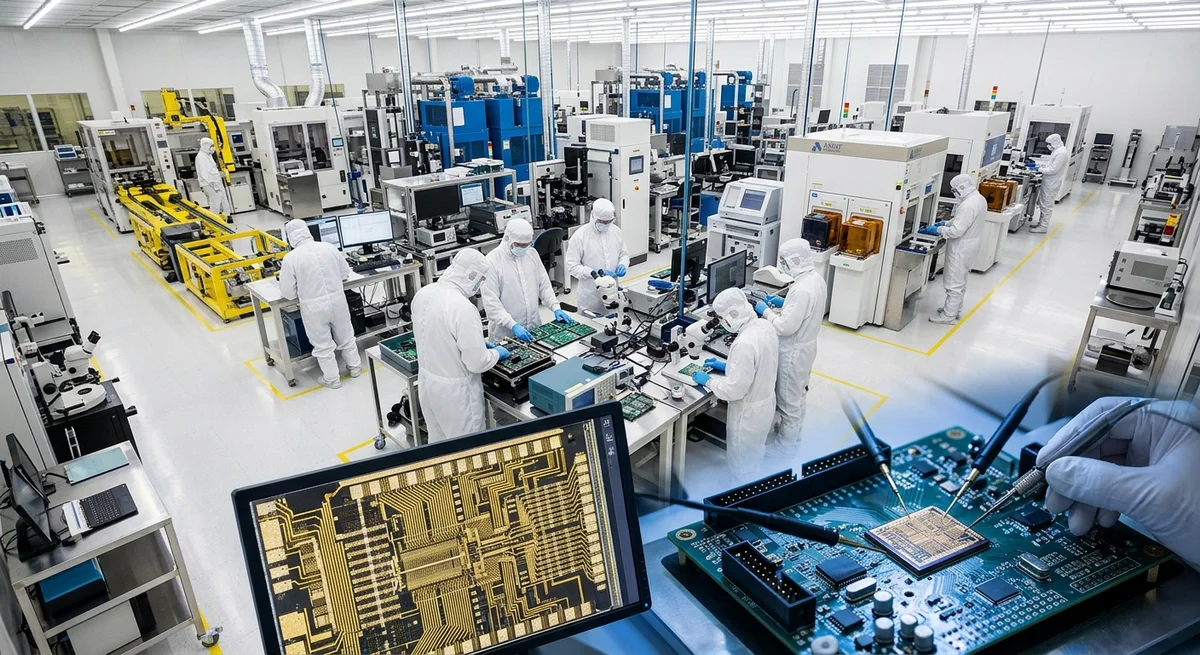
AMD is making another strategic move in the global race for AI infrastructure leadership. This time the company announced over $10 billion in investments in Taiwan partners — the world's leading microchip manufacturer.
Local Production Bet
AMD is investing in developing and scaling the production of both AI chips and software for cloud infrastructure. This is an ambitious move aimed at becoming a serious competitor to Nvidia in the AI accelerator market. Under Lisa Su's leadership, the company has chosen a partnership path in Taiwan — working with local manufacturers instead of building its own factories. This will allow it to adapt faster to growing demand from cloud providers and enterprises. The investments cover several key areas:
- Development of the next generation of AI accelerators based on CDNA architecture
- Scaling chip production for global cloud platform orders
- Creating a complete software stack for working with AMD accelerators
- Strengthening the supply chain amid geopolitical risks
- Preparing for massive demand for AI infrastructure in 2026–2027
Why Taiwan
Taiwan is the heart of the global semiconductor industry. TSMC, the world's largest chip manufacturing contractor, is located there. AMD's investments in Taiwan partners mean the company wants to be closer to the manufacturing process, respond faster to market requests, and minimize supply delays. Geopolitical tensions around Taiwan and potential trade restrictions are also pushing tech companies toward diversification and production localization. For AMD, strengthening its presence in Taiwan is both a strategic cushion and a way to demonstrate competence to major customers.
Competition with Nvidia Is Intensifying
Nvidia dominates the AI chip market with a share of approximately 85–90%, but its monopolistic position is beginning to erode. AMD with its MI300X solution is gaining momentum, customers are seeking alternatives due to Nvidia chip shortages and pricing pressure. AMD's investments in Taiwan are a direct response to demand and an attempt to narrow the gap.
Cloud giants like AWS, Google Cloud, Meta, and Microsoft Azure are scaling up capacity for AI workloads. They are interested in competition between chip suppliers, as this reduces prices and accelerates innovation. AMD is becoming an increasingly attractive option for them.
Some customers are already openly stating they are ready to migrate to AMD chips if it gives them independence from Nvidia and better price control.
Beyond Just Chips
AMD's investments cover not just the chips themselves, but also software — this is an important part of the strategy. AI hardware without optimized software runs inefficiently. AMD ROCm — an open platform for working with GPU accelerators — is becoming increasingly mature competition for Nvidia's CUDA. Local development in Taiwan will allow AMD to integrate hardware and software faster, improving performance and convenience for developers. For cloud providers, this means they will be able to get a complete turnkey solution from AMD rather than assembling a stack from different suppliers. This accelerates deployment and reduces integration risks.
What This Means
For the market, this is a signal that Nvidia's monopoly is beginning to show cracks. AMD's investments show that the company is serious about competing for market share, not just testing the market. For users and enterprises, this could mean more choices, healthy price competition, and accelerated innovation in the AI infrastructure segment. The AI chip market is entering a new phase — a phase of competition instead of monopoly. For AMD shareholders, these investments are a bet on exponential growth in the AI segment in the coming years. If the company can deliver on its promises and scale production, revenues from AI chip sales could become the main driver of profit growth.
*Meta has been recognized as an extremist organization and banned in the Russian Federation.