Lenovo rides the AI wave: shares jump on processor demand
Lenovo reported strong growth in revenue from its AI business. Its shares climbed in Hong Kong as demand for AI processors helped offset rising chip prices. CFO Winston Cheng spoke about the company's outlook.
AI-processed from Bloomberg Tech; edited by Hamidun News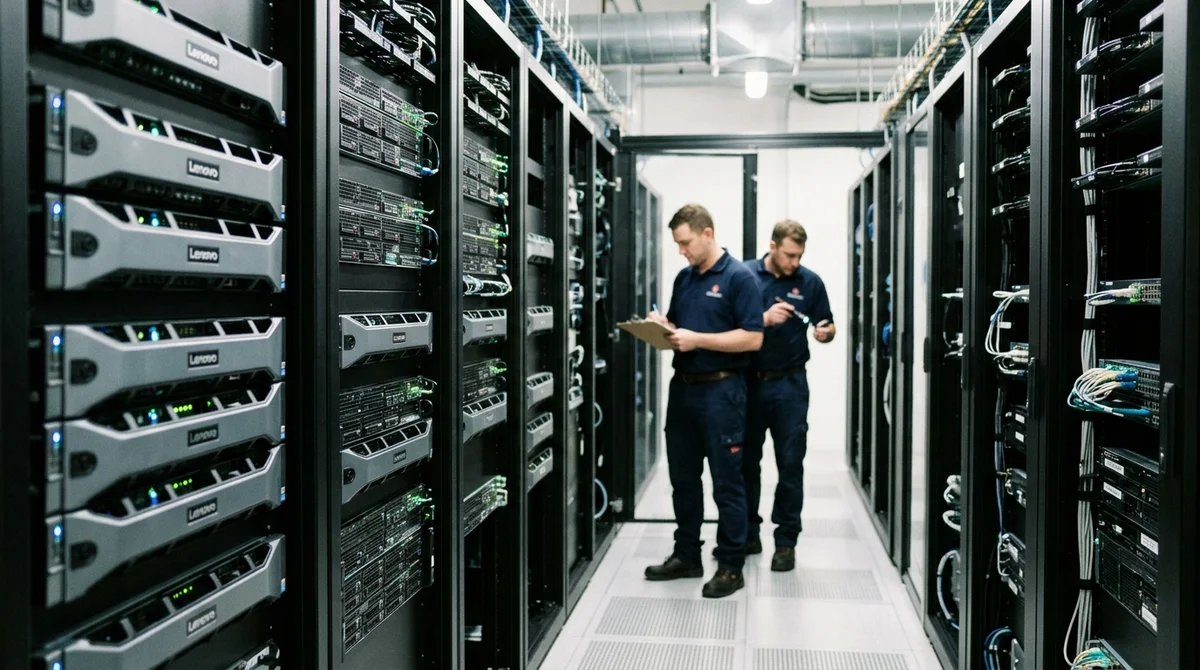
Lenovo shares rose on Friday in Hong Kong trading on strong growth in AI revenue. A wave of demand for artificial intelligence processors helped the company offset rising component costs and surprise investors with positive quarterly results.
AI demand outweighs the risks
For the first time in several years, Lenovo is facing rising prices for chips and components. For an electronics maker, that looks like a negative and a threat to profitability. But the company managed to grow revenue from AI servers and GPU accelerators much faster than its costs are rising. Investors welcomed the strategy and the adaptability: the stock reacted with a notable gain on the exchange.
This is the first major signal that companies focused primarily on consumer and office markets can move into the enterprise segment and find new sources of profit there.
The market is sending a clear signal: demand for AI chips and specialized AI hardware has become the dominant revenue driver for technology manufacturers. Whereas Lenovo once earned most of its income from laptops and personal computers, the center of gravity is now shifting toward cloud servers, GPU accelerators and enterprise data center solutions. Analysts expect the share of AI services in the revenue of large hardware makers to grow from 15% to 40% over the next two years.
That is a massive shift in the business model. The traditional PC market no longer grows at the pace demographers and analysts expected in the 2000s. Instead, companies like Lenovo are moving investment and production capacity to where real demand is: cloud infrastructure and AI-specialized systems. This became obvious after large cloud providers (Alibaba, Tencent, ByteDance, Meta*, Google) began buying processors and GPUs in bulk to run LLMs and AI services.
Lenovo's strategy in the AI era
In an interview with Bloomberg, CFO Winston Cheng highlighted several key points of the company's strategy:
- Broader AI server portfolio: new models optimized for data centers and cloud services
- Close partnership with GPU makers: cooperation with NVIDIA, AMD and other accelerator leaders
- Growing shipments to Asian cloud platforms: a bet on Chinese, Korean and Indian cloud providers
- R&D investment: developing specialized solutions for LLMs and computer vision
The company clearly understands that if it stays only in laptops and personal computers, its growth will slow to low single-digit percentages. The pivot toward enterprise AI and cloud infrastructure is not a passing fad but a lasting structural adaptation to a new reality.
What this means
For investors, Lenovo's quarterly report is a good case study in how a company can not only survive a period of rising costs but also grow profit. The key is a fast reorientation toward real demand.
Rising chip prices remain a real problem for the whole industry, but demand for AI-specialized hardware is so large and pressing that manufacturers can easily pass part of the costs on to the market and still earn high margins.
Lenovo's story offers a lesson: in the AI era, companies must react quickly to new markets and invest in the infrastructure cloud providers need. Those who hesitate risk being left with an obsolete portfolio. Those who move fast get better margins and more reliable relationships with corporate customers.
That means companies that manage to adapt and invest in the right segments will win even amid a component crunch. Over the next 3-5 years, expect capacity to keep shifting toward AI infrastructure and enterprise solutions.
*Meta is designated an extremist organization and banned in Russia.
- Nov 1, 202616 models tested on 7 search tools: Exa averaged 10.5 out of 14, SearXNG about 3
- Nov 1, 2026Google's StreamVibe video agent beats other models by 10.7% on response timing and quality
- Nov 1, 2026OpenAI Rewrites GPT Behavior Rules: Five Values and a Chain of Command
- Nov 1, 2026Voice bots built on LLMs turn to Jev, a fast classifier, for decisions in 200–500 ms
Key Questions Answered
What are the key details on AI demand outweighs the risks?
For the first time in several years, Lenovo is facing rising prices for chips and components. For an electronics maker, that looks like a negative and a threat to profitability. But the company managed to grow revenue from AI servers and GPU accelerators much faster than its costs are rising. Investors welcomed the strategy and the adaptability: the stock reacted with a notable gain on the exchange. This is the first major signal that companies focused primarily on consumer and office markets can move into the enterprise segment and find new sources of profit there. The mar
What are the key details on Lenovo's strategy in the AI era?
In an interview with Bloomberg, CFO Winston Cheng highlighted several key points of the company's strategy: Broader AI server portfolio: new models optimized for data centers and cloud services Close partnership with GPU makers: cooperation with NVIDIA, AMD and other accelerator leaders Growing shipments to Asian cloud platforms: a bet on Chinese, Korean and Indian cloud providers R&D investment: developing specialized solutions for LLMs and computer vision The company clearly understands that if it stays only in laptops and personal computers, its growth will slow to low s
What this means?
For investors, Lenovo's quarterly report is a good case study in how a company can not only survive a period of rising costs but also grow profit. The key is a fast reorientation toward real demand. Rising chip prices remain a real problem for the whole industry, but demand for AI-specialized hardware is so large and pressing that manufacturers can easily pass part of the costs on to the market and still earn high margins. Lenovo's story offers a lesson: in the AI era, companies must react quickly to new markets and invest in the infrastructure cloud providers need. Those w
Test Frontier LLMs & Autonomous Agents in One Workspace
Run Claude Opus 5.5, GPT-6, Gemini 3.1, and DeepSeek side-by-side in Nomad AI (nomadnet.ai) — unified model routing, deep research, and multimodal workflows under one subscription.
The AI world, distilled — once a week
Seven stories that actually mattered, hand-picked. No noise, no reposts, no press releases.
Done! Check your inbox for a confirmation.