Axon pivots to AI: company president explains the new strategy
Axon is evolving from a Taser company into a developer of AI solutions for public safety. President Josh Isner explained why Wall Street misreads the company's strategy. Drones, enterprise security and artificial intelligence are at stake.
AI-processed from Bloomberg Tech; edited by Hamidun News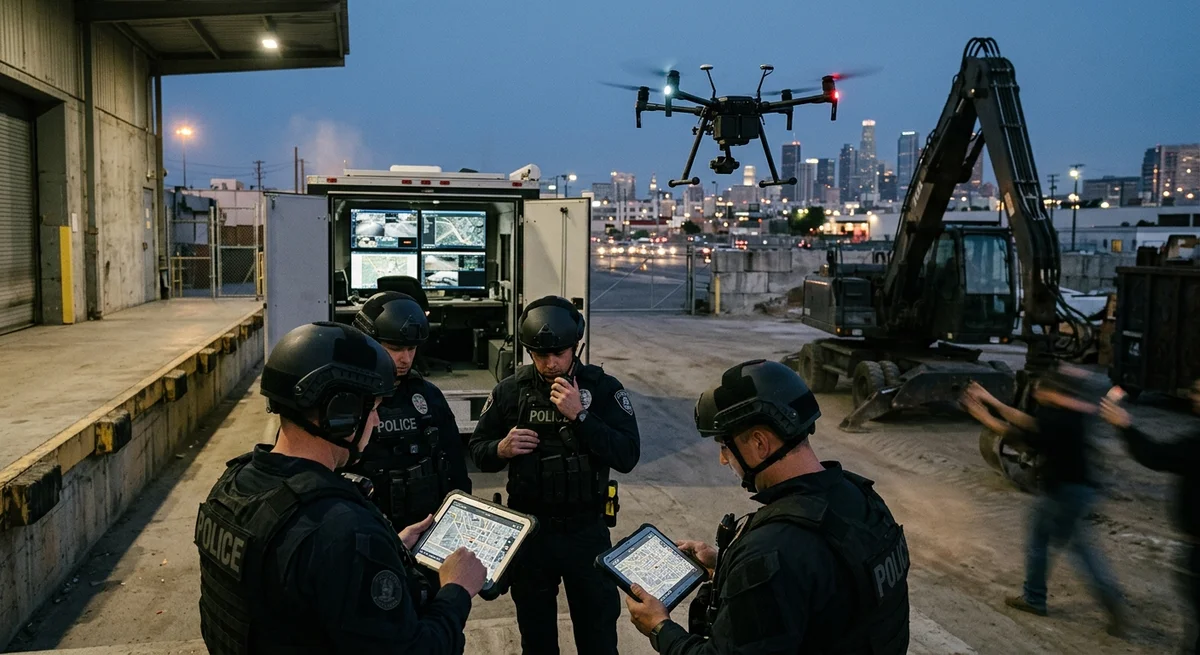
Axon, known for its Taser stun guns and police body cameras, has announced a fundamental transformation of its business. The company is investing aggressively in AI and evolving into a provider of end-to-end platforms for public safety and corporate security.
Transformation beyond Taser
In a recent interview with Bloomberg, Axon President Josh Isner criticized how investors read the company's strategy. Wall Street focuses on the traditional products: stun guns and cameras. In reality, Axon is building something quite different: an ecosystem of next-generation AI security solutions.
The company is launching surveillance drones, cloud-based enterprise security platforms and AI systems that analyze public safety data. Body cameras and stun guns remain in the portfolio, but they are turning into sensors for a larger system. Think of it as the shift from selling chips to selling computers.
Isner stresses that the market demands integrated solutions. Police, corporate security teams and municipal enforcement agencies don't need standalone gadgets; they need platforms that tie video, audio, location and analytics together. That is where the big money is.
AI as the foundation of the next wave of profit
Axon's next growth cycle will come not from hardware but from software and AI services. Here is what the company is betting on:
- Automated analysis of drone and body camera footage — recognizing objects, gestures and potential threats
- Systems for predicting and proactively monitoring dangerous areas
- Cloud platforms for real-time coordination between emergency services and police
- Intelligent integration of data from different sources and systems
- Automated report writing and incident analytics
Isner pointed to a key issue: investors often fixate on what is visible — camera and stun gun sales, their margins, their volumes. They don't see the scale of the SaaS business ahead. Yet that kind of platform is exactly what public safety and corporate security need.
Axon has a competitive edge thanks to its deep work with police and enforcement agencies: the company understands their real needs.
What this means
Axon is becoming an example of a classic hardware company shifting toward a software and AI future. For investors, this means the next 3-5 years will be about proving out new business units, not about improving the margins of existing ones.
For public safety, it means the arrival of platforms that collect and analyze data in more sophisticated ways and at lower cost than today's fragmented tool stack. This may change the very architecture of how police and enforcement agencies work with data.
- Nov 2, 2026The Verge reviewer builds a $50 Meta Muse Charm alternative with Claude Code
- Nov 2, 20268 Skills for video in Claude Code: from 244 pixel effects to rough-cut editing
- Nov 1, 2026Pika Labs releases open video model H3 Flex: 6 steps instead of 50
- Nov 1, 2026Google's StreamVibe video agent beats other models by 10.7% on response timing and quality
Key Questions Answered
What are the key details on Transformation beyond Taser?
In a recent interview with Bloomberg, Axon President Josh Isner criticized how investors read the company's strategy. Wall Street focuses on the traditional products: stun guns and cameras. In reality, Axon is building something quite different: an ecosystem of next-generation AI security solutions. The company is launching surveillance drones, cloud-based enterprise security platforms and AI systems that analyze public safety data. Body cameras and stun guns remain in the portfolio, but they are turning into sensors for a larger system. Think of it as the shift from sellin
What are the key details on AI as the foundation of the next wave of profit?
Axon's next growth cycle will come not from hardware but from software and AI services. Here is what the company is betting on: Automated analysis of drone and body camera footage — recognizing objects, gestures and potential threats Systems for predicting and proactively monitoring dangerous areas Cloud platforms for real-time coordination between emergency services and police Intelligent integration of data from different sources and systems Automated report writing and incident analytics Isner pointed to a key issue: investors often fixate on what is visible — camera and
What this means?
Axon is becoming an example of a classic hardware company shifting toward a software and AI future. For investors, this means the next 3-5 years will be about proving out new business units, not about improving the margins of existing ones. For public safety, it means the arrival of platforms that collect and analyze data in more sophisticated ways and at lower cost than today's fragmented tool stack. This may change the very architecture of how police and enforcement agencies work with data.
Test Frontier LLMs & Autonomous Agents in One Workspace
Run Claude Opus 5.5, GPT-6, Gemini 3.1, and DeepSeek side-by-side in Nomad AI (nomadnet.ai) — unified model routing, deep research, and multimodal workflows under one subscription.
The AI world, distilled — once a week
Seven stories that actually mattered, hand-picked. No noise, no reposts, no press releases.
Done! Check your inbox for a confirmation.