How DINO and SAM Accelerate Medical Diagnostics in Emergency Departments
Researchers from the University of Pennsylvania are implementing advanced AI models DINO and SAM in the medical triage process in emergency departments. The sys
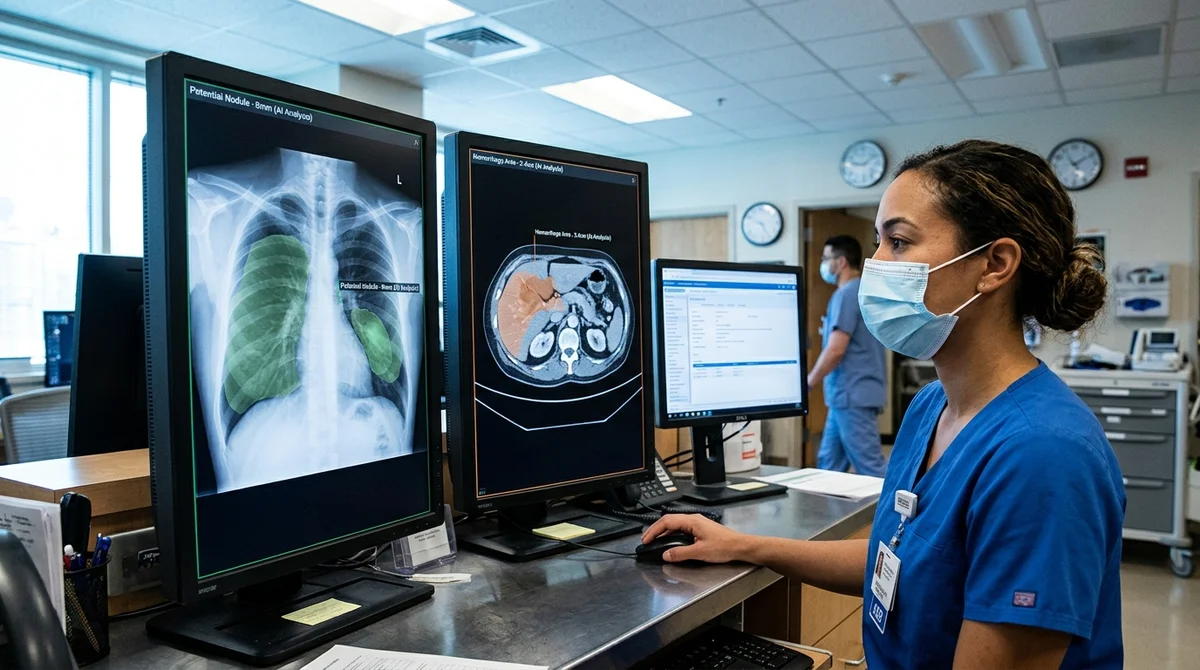
Researchers from the University of Pennsylvania are implementing advanced AI models DINO and SAM to automate medical triage in emergency departments. This project aims to accelerate diagnosis and help doctors prioritize patients based on real visualization data.
What are DINO and SAM
DINO is a computer vision model from Meta, specializing in detecting and segmenting objects in images. SAM (Segment Anything Model) complements it, providing the ability to automatically highlight areas of interest on medical images with high accuracy. Together, these models create a powerful tool for analyzing medical visualizations.
In a medical context, DINO and SAM can analyze X-rays, computed tomography (CT) scans, and ultrasound studies in mere seconds. This allows doctors to get a preliminary analysis before they examine the images themselves.
- Automatic analysis of chest and extremity X-rays
- Highlighting zones of damage, fractures, and potential pathologies
- Automatic classification of urgency level based on findings
- Integration with electronic medical records system and queue
How it works in practice
The system is connected to the digital patient queue in the emergency department. When a patient arrives and undergoes initial examination using visualization, the obtained images are instantly sent for AI analysis. Neural network models highlight key clinically significant findings, generate a brief structured report, and display it to the doctor on screen. This solution enables medical professionals to focus on critical cases first, instead of following a simple first-come-first-served order. The doctor can quickly review the system's recommendations and make an informed decision about treatment prioritization.
"We are not replacing doctors, but giving them more time for patients
who need it most," the research group stated.
Why this is critically important
In trauma and emergency care, every minute matters and can determine a patient's fate. The traditional system operates on a first-come-first-served basis, which can lead to fatal delays if a patient with serious trauma or stroke arrives after a less critical patient. The AI system helps doctors re-evaluate priorities based on actual objective data from medical images, rather than solely on patient complaints or first impression. This leads to fairer and more efficient resource allocation.
Challenges on the path to implementation
Despite its potential, the system faces serious challenges. First is validating models on real patient data while fully complying with privacy and regulations like HIPAA. Second is integration with heterogeneous medical equipment across different hospitals. Third is overcoming distrust among some doctors toward AI recommendations and the need to conduct clinical trials proving real improvements in patient treatment outcomes.
What this means
Automated diagnosis is gradually moving from research laboratories into real hospitals and emergency departments. For medical institutions, this means significant acceleration of work and reduced staff burden. For patients—greater chances of timely and adequate care. For AI developers, this opens a new class of critical healthcare applications where code quality can affect human life.