Has the Backlash Against AI Begun? The Guardian's Fiona Katauskas Poses the Question
Guardian cartoonist Fiona Katauskas asks whether a wave of backlash against AI has begun. There are signs it has. Europe has adopted a strict AI Act, authors and journalists have filed lawsuits, and public skepticism is growing. The industry is running out of hype and starting to collide with reality. The questions have shifted from how quickly AI will replace people to who is liable for the harm, who controls the data, and why companies train models on protected content without consent. This is not the end of AI, the article argues, but a move toward maturity, in which companies that pay authors, disclose how they train models and obtain consent will come out ahead.
AI-processed from Guardian; edited by Hamidun News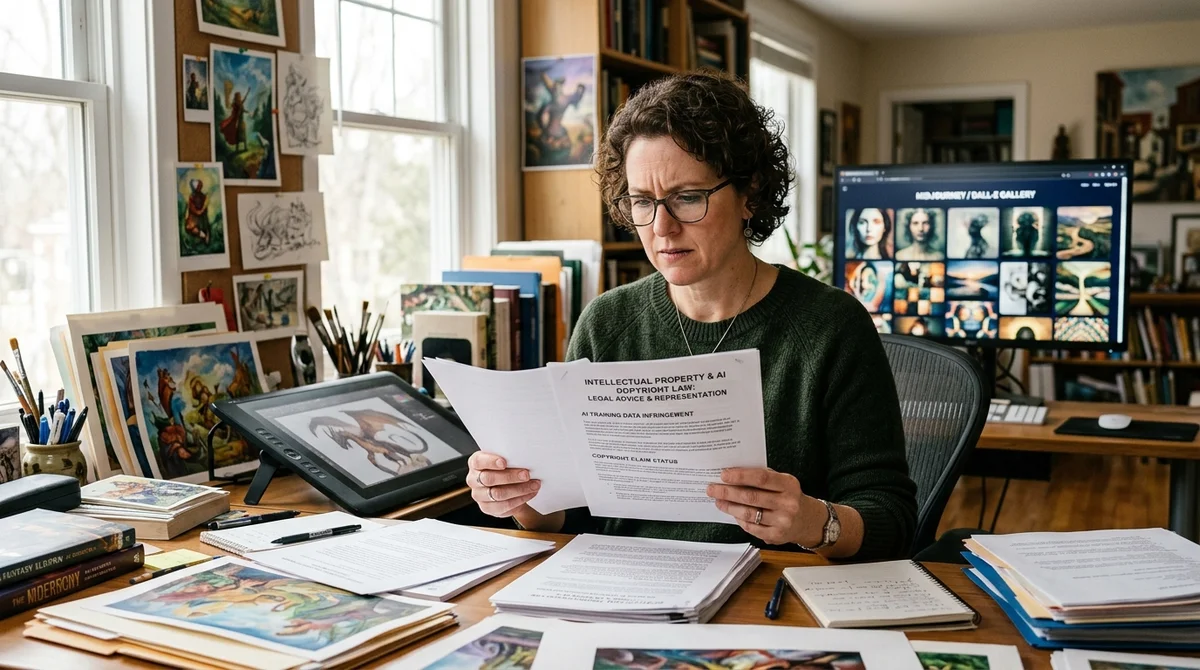
Well-known Guardian cartoonist Fiona Katauskas raises a provocative question in a new column: has a wave of backlash against AI begun? The question is no accident. Over the past year the industry has gone from frenzied hype to facing serious criticism and growing resistance. The signs are visible everywhere.
Signs of discontent
The facts are there. In April 2026 the European AI Act came into full operation, the strictest set of rules for artificial intelligence in the world. The law does not merely restrict the use of AI in sensitive areas; it requires companies to disclose how they train models and to obtain consent for the use of data.
At the same time, a wave of lawsuits from authors, artists and journalists has swept across the US and Europe. They suspect their work was used to train models without consent and without compensation. OpenAI, Google, Meta* and others have received claims worth tens of billions of dollars. The lawsuits are already producing results: some publishers have agreed licensing deals with the companies.
Hollywood remembers the 2023 strike by writers and actors, in which AI was central to the negotiations. Journalists demand that media outlets pay for the use of their texts. Programmers are angry that GitHub Copilot was trained on open-source code without asking its authors.
From hype to regulation
Two years ago the situation was entirely different. ChatGPT launched in November 2022 and captured the world's imagination: everyone talked only about AI, startups raised billions, and newspapers ran stories about a revolution. The main question sounded naive: how quickly will AI replace humans?
Now the main question is different: who is responsible for the harm? Who controls the data? Why do companies train models on protected content without consent? The industry has moved from a phase of wonder to a phase of accountability. And the change is systemic. The signs are everywhere:
- Europe, Canada, Brazil and China are introducing strict rules on training and using AI
- Copyright lawsuits are growing in number and scale, with billions of dollars at stake in court
- Companies are hiring lawyers rather than AI engineers for new positions
- Investment in AI startups has slowed, and interest is shifting to private models and enterprise software
- Media and creative industries demand transparency in training and in the licensing of content
Who adapts, who falls behind
Big companies such as Google, Meta*, Microsoft and OpenAI are adapting to the new reality quickly. They are hiring lawyers, negotiating content licenses with publishers and building private training datasets. They can afford it.
Mid-sized startups have a much harder time: they cannot afford legal battles or licensing at scale. Many are leaving the game or looking for a niche where AI is needed but regulation is lighter.
The problem is not that AI is bad as a technology. For several years the industry built products without thinking about the rights of the people whose data was used for training. That was naive and expensive: the bill has arrived in the form of court cases and regulation.
"This is not the end of AI, it is the end of the era of free and
rightless hype," analysts say.
What this means for everyone
The wave of resistance to AI is not a rejection of the technology but a transition to adulthood. The industry can no longer ignore copyright, privacy and the ethics of data use.
Companies that adapt, by paying authors, publishing openly how they train models and obtaining consent, will come out ahead. They will have licensed data, legal protection and the trust of authors. The rest will face courts and regulation, and the gap will widen.
Fiona Katauskas is right to ask: the signs of a backlash against AI are there. But it is not the death of AI. It is the start of its normal development, as a technology that lives by the rules, pays taxes and respects authors.
*Meta has been designated an extremist organization and is banned in Russia.
- Nov 1, 2026Local models lose to Opus and Codex: 0.21 on a MacBook versus 1.00 for Codex
- Nov 1, 2026Kimi scores 96.2% on a 1C database analytics test and emerges as a fallback if Claude access is blocked
- Nov 1, 2026OpenAI Rewrites GPT Behavior Rules: Five Values and a Chain of Command
- Nov 1, 2026Google admits AI Mode cuts search revenue, shares fall 15%
Key Questions Answered
What are the key details on Signs of discontent?
The facts are there. In April 2026 the European AI Act came into full operation, the strictest set of rules for artificial intelligence in the world. The law does not merely restrict the use of AI in sensitive areas; it requires companies to disclose how they train models and to obtain consent for the use of data. At the same time, a wave of lawsuits from authors, artists and journalists has swept across the US and Europe. They suspect their work was used to train models without consent and without compensation. OpenAI, Google, Meta and others have received claims worth ten
What are the key details on From hype to regulation?
Two years ago the situation was entirely different. ChatGPT launched in November 2022 and captured the world's imagination: everyone talked only about AI, startups raised billions, and newspapers ran stories about a revolution. The main question sounded naive: how quickly will AI replace humans? Now the main question is different: who is responsible for the harm? Who controls the data? Why do companies train models on protected content without consent? The industry has moved from a phase of wonder to a phase of accountability. And the change is systemic. The signs are every
Who adapts, who falls behind?
Big companies such as Google, Meta, Microsoft and OpenAI are adapting to the new reality quickly. They are hiring lawyers, negotiating content licenses with publishers and building private training datasets. They can afford it. Mid-sized startups have a much harder time: they cannot afford legal battles or licensing at scale. Many are leaving the game or looking for a niche where AI is needed but regulation is lighter. The problem is not that AI is bad as a technology. For several years the industry built products without thinking about the rights of the people whose data w
Ship AI Faster with Founders, Engineers & Weekly Architecture Reviews
Inside Vibe Club (hamidun.com/club) — weekly live masterminds with Zhemal Khamidun, Tech Radar, full LMS access, and 370+ production Claude Code skills.
The AI world, distilled — once a week
Seven stories that actually mattered, hand-picked. No noise, no reposts, no press releases.
Done! Check your inbox for a confirmation.