Why Meta Is Cutting, Google Is Changing Search, and Students Are Criticizing AI
The Uncanny Valley podcast discusses: mass layoffs at Meta, Google's new AI-powered search, and why university graduates are criticizing AI. Three stories that will reshape big tech. *Meta has been designated an extremist organization and banned in Russia.
AI-processed from Wired; edited by Hamidun News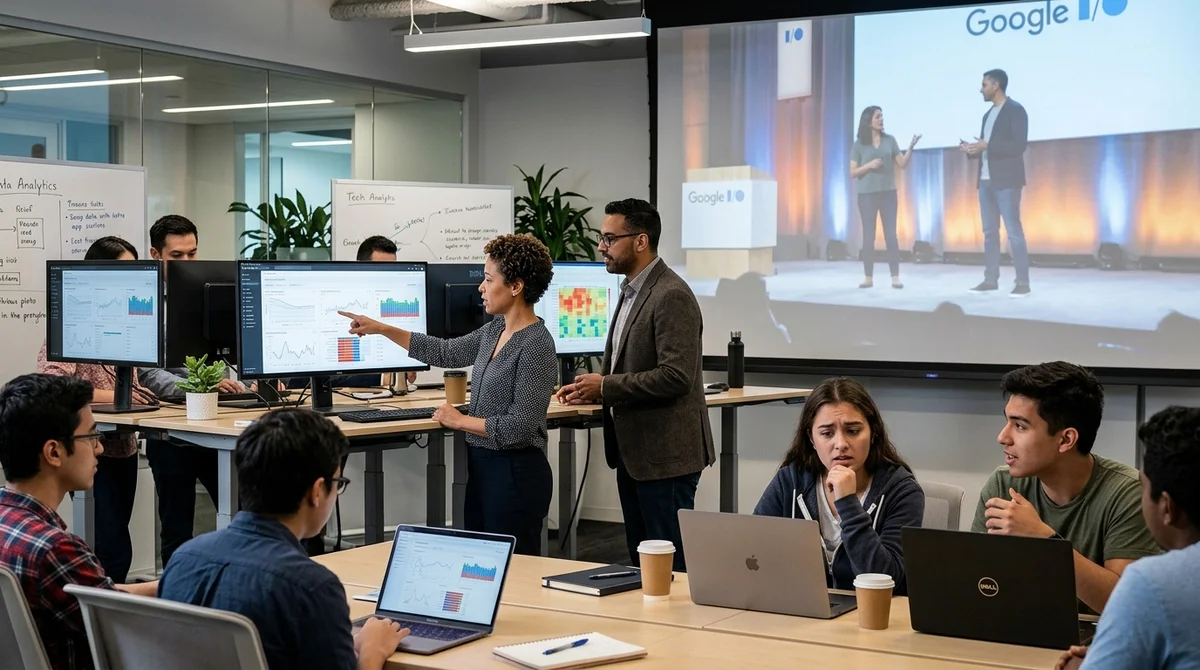
The Uncanny Valley podcast (WIRED) broke down three major tech events of the week: Meta's crisis, a radical overhaul of Google Search, and a wave of AI criticism that has reached university graduates.
Meta in Survival Mode
Meta is experiencing one of the most difficult periods in its history. The company announced mass layoffs—the second wave of cuts in recent months. This has sparked alarm among both remaining employees and investors. Mark Zuckerberg is restructuring the company under the banner of "Year of Efficiency"—a shift toward a more streamlined development model. This means: fewer experiments, closure of R&D projects, and strict focus only on products generating revenue now.
The paradox is that Meta is investing tens of billions in AI (the main R&D priority today), but simultaneously cutting the people who develop that AI. This is no longer strategy—it's panic.
Google Search Undergoes Reincarnation
At the Google I/O conference, the company unveiled a radical overhaul of search. Results are no longer just a list of links. Front and center is a generative answer that directly addresses the user's question within Google's interface.
This dismantles the traditional internet business model:
- Users get answers without visiting external sites
- Publishers lose traffic, Google captures all monetization
- SEO optimization becomes meaningless, a new strategy is needed
- The company is pouring billions into infrastructure for generating answers at scale
For media, this is potential destruction. For Google, it's a desperate attempt to retain users and not lose search to a new generation of AI assistants like ChatGPT.
AI—From Dream to Protest
University graduates have begun protesting during presentations by AI company representatives. The younger generation isn't criticizing the tool itself, but its consequences:
- Economic inequality: profits concentrate in the hands of a few companies
- Environmental crisis: data centers require massive amounts of electricity
- Copyright violations: models are trained on others' texts and art without permission
"AI was embraced enthusiastically by the investor class, but society's reaction is entirely different," the podcast notes.
This is ceasing to be mere annoyance. It's becoming a political movement capable of forcing regulators to reconsider the rules.
What It Means
These three stories point to one trend: the era of unbridled growth is ending. Meta is shifting into strict profitability mode, Google is capturing all search traffic through AI, and AI itself is ceasing to be perceived as mere magical technology—it's becoming subject to social and political pressure.
This is not the collapse of the industry. It's its maturation.
*Meta has been designated an extremist organization and banned in Russia.
- Oct 28, 2026A 2015 CNN Beat GPT-6 Astra and Claude Fable 5.1 at Skin Cancer Diagnosis
- Oct 28, 2026Google taught an LLM to “sleep”: SLEEP consolidates knowledge into weights, up to 10 million tokens
- Oct 28, 2026Keystone removes the model name from code: open-source LLM gateway adds 0.64 ms
- Oct 28, 2026Wired Tested 6 AI Agents in a Day: Dots Leads, Gemini Spark Fails at Lunch
Key Questions Answered
What are the key details on Meta in Survival Mode?
Meta is experiencing one of the most difficult periods in its history. The company announced mass layoffs—the second wave of cuts in recent months. This has sparked alarm among both remaining employees and investors. Mark Zuckerberg is restructuring the company under the banner of "Year of Efficiency"—a shift toward a more streamlined development model. This means: fewer experiments, closure of R&D projects, and strict focus only on products generating revenue now. The paradox is that Meta is investing tens of billions in AI (the main R&D priority today), but simultaneously
What are the key details on Google Search Undergoes Reincarnation?
At the Google I/O conference, the company unveiled a radical overhaul of search. Results are no longer just a list of links. Front and center is a generative answer that directly addresses the user's question within Google's interface. This dismantles the traditional internet business model: Users get answers without visiting external sites Publishers lose traffic, Google captures all monetization SEO optimization becomes meaningless, a new strategy is needed The company is pouring billions into infrastructure for generating answers at scale For media, this is potential des
What are the key details on AI—From Dream to Protest?
University graduates have begun protesting during presentations by AI company representatives. The younger generation isn't criticizing the tool itself, but its consequences: Economic inequality: profits concentrate in the hands of a few companies Environmental crisis: data centers require massive amounts of electricity Copyright violations: models are trained on others' texts and art without permission "AI was embraced enthusiastically by the investor class, but society's reaction is entirely different," the podcast notes. This is ceasing to be mere annoyance. It's becomin
Test Frontier LLMs & Autonomous Agents in One Workspace
Run Claude Opus 5.5, GPT-6, Gemini 3.1, and DeepSeek side-by-side in Nomad AI (nomadnet.ai) — unified model routing, deep research, and multimodal workflows under one subscription.
The AI world, distilled — once a week
Seven stories that actually mattered, hand-picked. No noise, no reposts, no press releases.
Done! Check your inbox for a confirmation.