AI in Radiology: How AWS Is Optimizing Diagnostics
AWS has shown how AI agents address a core problem in radiology: traditional systems don't account for a radiologist's specialty, fatigue, or case complexity. Radiologists pick the easy tasks, and complex studies get pushed back. An analysis of 2.2 million images from 62 hospitals confirmed the effect of the new system.
AI-processed from AWS Machine Learning Blog; edited by Hamidun News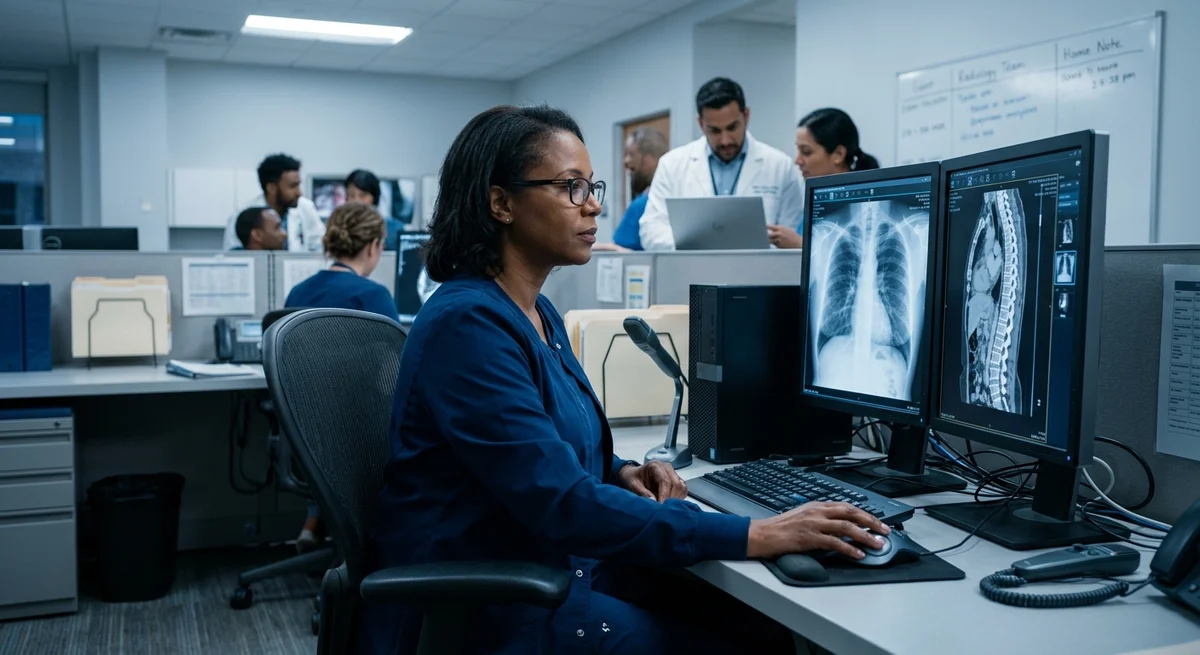
AI agents come to radiology: AWS has unveiled a solution for optimizing radiologist workflows. Instead of relying on rigid rules, it weighs a range of contextual factors that affect diagnostic quality and hospital economics.
How are AI agents changing radiology work?
Instead of rigid rules (study urgency, arrival time, equipment type), AI agents factor in contextual signals, including the specialty of each individual radiologist, which improves diagnostic quality.
How do you bring AI into healthcare?
AWS proposed a solution built on AI agents to replace the rigid rules of worklist prioritization systems. The agents account for contextual factors: study urgency, arrival time, equipment type, and the radiologist's specialty.
Why are traditional worklist systems ineffective in radiology?
Traditional systems run on simple rules: study urgency, arrival time, equipment type. They ignore contextual factors, such as an individual radiologist's specialty, that actually affect productivity and diagnostic quality.
- Nov 2, 2026The Verge reviewer builds a $50 Meta Muse Charm alternative with Claude Code
- Oct 31, 2026Worldwide Express hands disputed invoices to AI agents and cuts unresolved disputes by 75%
- Oct 30, 2026AWS gives coding agents a live site preview straight from an isolated session
- Oct 30, 2026Agent traffic on Zocdoc is up 30x since July, and ChatGPT faces two health lawsuits
Key Questions Answered
How are AI agents changing radiology work?
Instead of rigid rules (study urgency, arrival time, equipment type), AI agents factor in contextual signals, including the specialty of each individual radiologist, which improves diagnostic quality.
How do you bring AI into healthcare?
AWS proposed a solution built on AI agents to replace the rigid rules of worklist prioritization systems. The agents account for contextual factors: study urgency, arrival time, equipment type, and the radiologist's specialty.
Why are traditional worklist systems ineffective in radiology?
Traditional systems run on simple rules: study urgency, arrival time, equipment type. They ignore contextual factors, such as an individual radiologist's specialty, that actually affect productivity and diagnostic quality.
Test Frontier LLMs & Autonomous Agents in One Workspace
Run Claude Opus 5.5, GPT-6, Gemini 3.1, and DeepSeek side-by-side in Nomad AI (nomadnet.ai) — unified model routing, deep research, and multimodal workflows under one subscription.
The AI world, distilled — once a week
Seven stories that actually mattered, hand-picked. No noise, no reposts, no press releases.
Done! Check your inbox for a confirmation.