How AI Is Stealing Memory from Budget Smartphones. The DRAM Shortage and the End of the Cheapness Era
Data centers training AI models are buying up DRAM memory faster than it's being produced. Makers of budget phones like Tecno can no longer compete on price. Me
AI-processed from TNW; edited by Hamidun News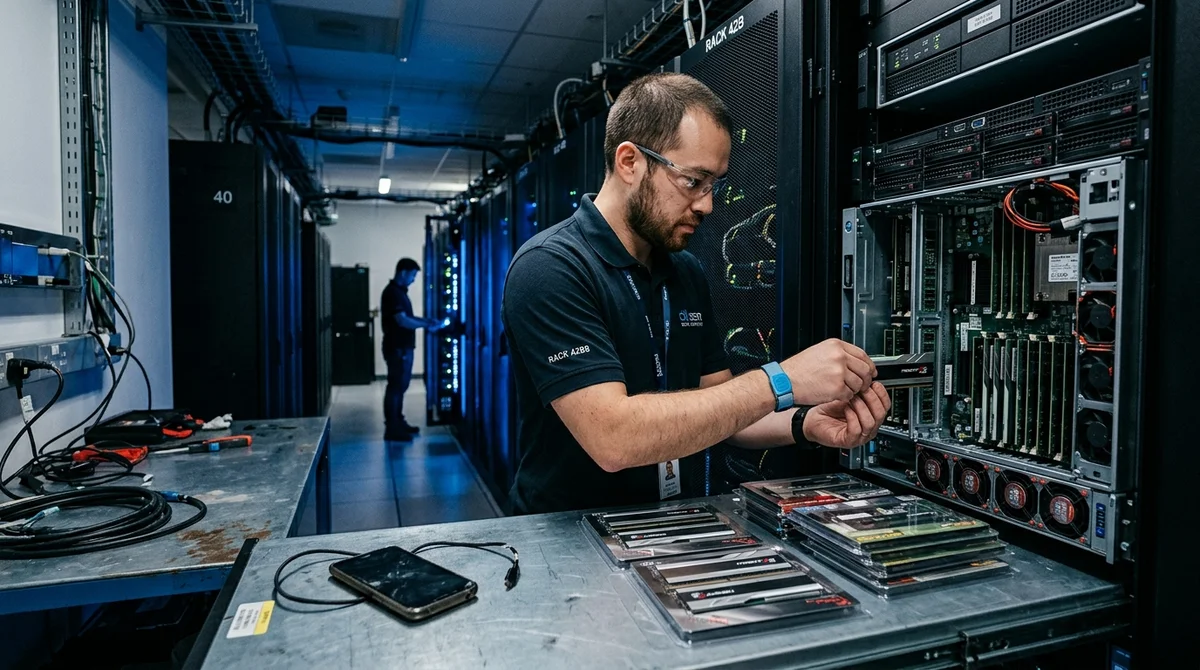
Over forty years, the cost of computing power has fallen by roughly a trillion percent. In 1985, the best personal computer that an average American could afford — the IBM PC AT — cost $19,400 in today's money. Today, a simple Tecno Spark Go, sold on a street market in Nairobi, costs just $30 and contains a processor that is billions of times more powerful than that computer. Throughout all of human history, no product has experienced such a massive price drop while increasing in quality. This cheapness changed the world — it provided education and access to information to billions of people. But the wonderful era of affordability is ending, and one unexpected thing is to blame: memory.
When DRAM Became Gold
We're talking about DRAM memory — random-access memory, which is necessary for every electronic device to function. Ten years ago, memory was a very cheap commodity, produced in huge quantities, and seemed like an infinite resource, like water or air. Manufacturers invested in new factories, and prices fell every year.
But in the last five years, the picture has changed radically. The reason is simple: data centers for training AI models like GPT-4 and Claude have begun consuming memory in quantities that no one foresaw even five years ago. Training a single modern large AI model requires hundreds of petabytes of random-access memory, working at maximum speed simultaneously.
Training must be fast and continuous, because every hour of downtime costs companies millions of dollars. This means that data centers require the fastest, most reliable, and most expensive memory available on the market. DRAM manufacturers — the main ones being Samsung, SK Hynix, and Micron — have reoriented almost all of their production to this new task.
They have signed long-term contracts with OpenAI, Google DeepMind, Meta, and Microsoft for colossal sums. Prices in the contracts are above market rates, and supplies are guaranteed. Cheap smartphones ended up at the back of the queue, without access to the goods.
Memory Shortage Even for Flagships
Memory distribution on the market has become harsh, with no sentiment:
- AI company data centers — first and primary buyers, receive 40-50% of all memory produced in the world
- Flagship smartphones (Apple, Samsung Galaxy S25) compete for the remaining 20-30% amid loud outcry
- Mid-range smartphones ($1,000-3,000 rubles) are already feeling the shortage and rising prices
- Budget phones ($20-100) are almost completely excluded from access to competitive memory prices
DRAM prices have risen 40-45% over the first six months of 2026. For a smartphone with profit margins of 5-10%, this means a loss on every device sold. Budget phone manufacturers are closing production lines and exiting markets in developing countries. MediaTek, the company that supplied processors to half of the world's cheap phones, has officially announced a reduction in investments in the budget segment.
"We cannot compete with data centers for memory.
They pay three times more than we can offer," — said a manager at one of the world's largest memory manufacturers in an interview with Financial Times.
The End of a Forty-Year Period
For forty years, electronics have become cheaper and more accessible to every social class on Earth. In 2005, a smartphone cost $500 and was a toy for the rich. By 2015, quality smartphones appeared for $100.
By 2020, a decent smartphone could be bought for $30-50. Each year, hundreds of millions of people in India, Africa, and Southeast Asia touched a smartphone for the first time in their lives thanks to this price. These devices didn't just entertain — they provided access to school education, telemedicine, financial services that were previously unattainable.
The cheap smartphone changed more lives than any premium flagship for the wealthy. It was a revolution of accessibility that rewrote human history. Now the paradigm is reversing.
The technological progress that brought accessibility is beginning to destroy it. Expensive AI training computations are winning the battle for materials, labor, energy, and microchips.
What This Means
The world risks splitting into two parts: those who have access to advanced computing and AI technologies, and the rest, who will be stuck with old equipment. The AI revolution requires sacrifices, and one of the first victims could be digital accessibility for billions of people in developing countries. A strange paradox: AI, which was promised as a tool for everyone, first monopolizes the most valuable production resources.
*Meta is recognized as an extremist organization and is banned in the Russian Federation.
Want to stop reading about AI and start using it?
AI News is a curated feed of AI/tech news. Hamidun Academy teaches you to use AI systematically in your work.