Alibaba designs AI chips for agents — and that changes the race itself
Alibaba unveiled its new Zhenwu M890 chip, developed specifically for AI agents. The announcement also includes a new language model and a multi-year silicon ro
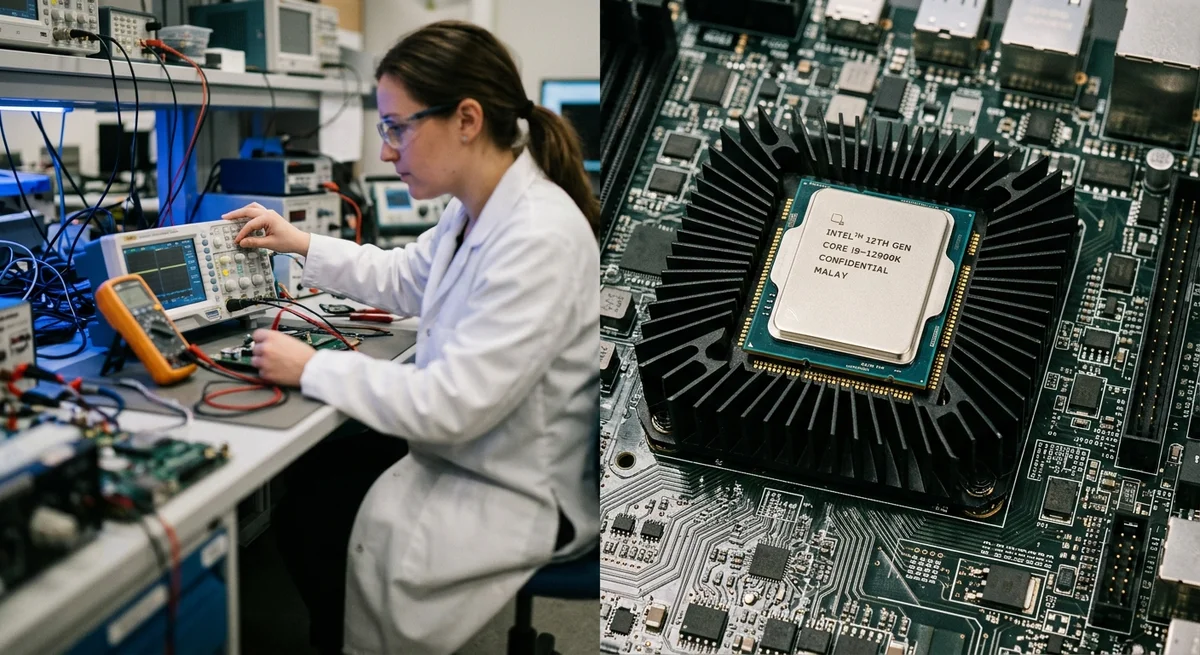
Alibaba has introduced the new Zhenwu M890 processor, specifically designed for AI agents. This is part of a broader company strategy to create a complete integrated AI stack, signaling a new stage in the technological confrontation between the West and China.
Zhenwu M890 — Architecture for Agents
The Zhenwu M890 chip is not just another AI processor. It is engineered with a deep understanding of how AI agents work, fundamentally differing from traditional large language models. While conventional LLMs are optimized for text generation, agents must simultaneously process multiple information streams: read environmental state, make decisions, take actions, and update their memory of what happened. This requires different memory architecture, computation organization, and data stream routing. Zhenwu M890 is optimized precisely for this workflow.
The chip supports an architecture where an agent quickly switches between perception, reasoning, and action without losing performance during mode transitions. Alibaba's announcement comes not only with the new chip but also the development of a new large language model from the company. Combined with a multi-year silicon roadmap, this creates a complete cycle: from processor development to training models specifically optimized for its architecture. This is integration at a different level than what most companies do.
Strategy of Independence
Context is important for understanding Alibaba's position. The US has systematically restricted the export of advanced semiconductors to China over the past several years, using technology control tools as part of a broader geopolitical confrontation. This creates a harsh dilemma for Chinese technology companies: either fall behind in the AI race or invest enormous resources in their own development with uncertain ROI timelines.
Many companies tried to minimize losses — use older components and optimize their solutions accordingly. Alibaba chose a different path. The company made a strategic decision to invest in creating a completely proprietary stack, from hardware to software, independent of external restrictions. This is expensive and requires extensive R&D, but ensures complete independence from external constraints.
Here are the key elements of Alibaba's strategy:
- Proprietary processors (Zhenwu series with multi-year roadmap)
- Proprietary large language models optimized for proprietary hardware
- Integration at the architecture level, not just compatibility
- Control over the ecosystem from silicon to applications
This approach requires time, money, and scientific resources, but creates a competitive advantage that cannot be taken away through embargo or export control.
Changing the Rules of the Race
Previously, the race for AI leadership seemed relatively simple and straightforward: whoever trains a large model faster and cheaper wins the market. Metrics were clear — model size, answer quality, training speed. Rankings on the OpenLLM Leaderboard determined a company's status in the industry.
Now the landscape has become qualitatively more complex. A new dimension has emerged: architecture and infrastructure for agents. This is not just optimization for faster computing — it is a fundamentally different organization of the system where every component, from hardware to software, must work in a single cycle.
Different companies choose different strategies. OpenAI builds an ecosystem around its models and API platform. Google offers Vertex AI as a complete managed platform. Alibaba creates its own hardware, immediately predetermining which chips will run its models. Each chooses its own level of control and vertical integration.
Developers and companies, when choosing a partner, choose not just a chip or model, but an entire ecosystem with its constraints and possibilities.
What This Means
Alibaba's announcement is not just a technical innovation or a reaction to American sanctions. It is a signal that the AI race is entering a fundamentally new phase: a phase of infrastructure control, not simply a competition of models. For businesses and developers, this means that choosing a platform and its creator becomes a strategic choice for years ahead, with long-term consequences for architecture and independence.