Musk's xAI invests $2.8 billion in gas generators for a data center
Musk's xAI will spend $2.8 billion on gas turbines for the Colossus supercomputer over a three-year period. The company is buying generators — a standard practi
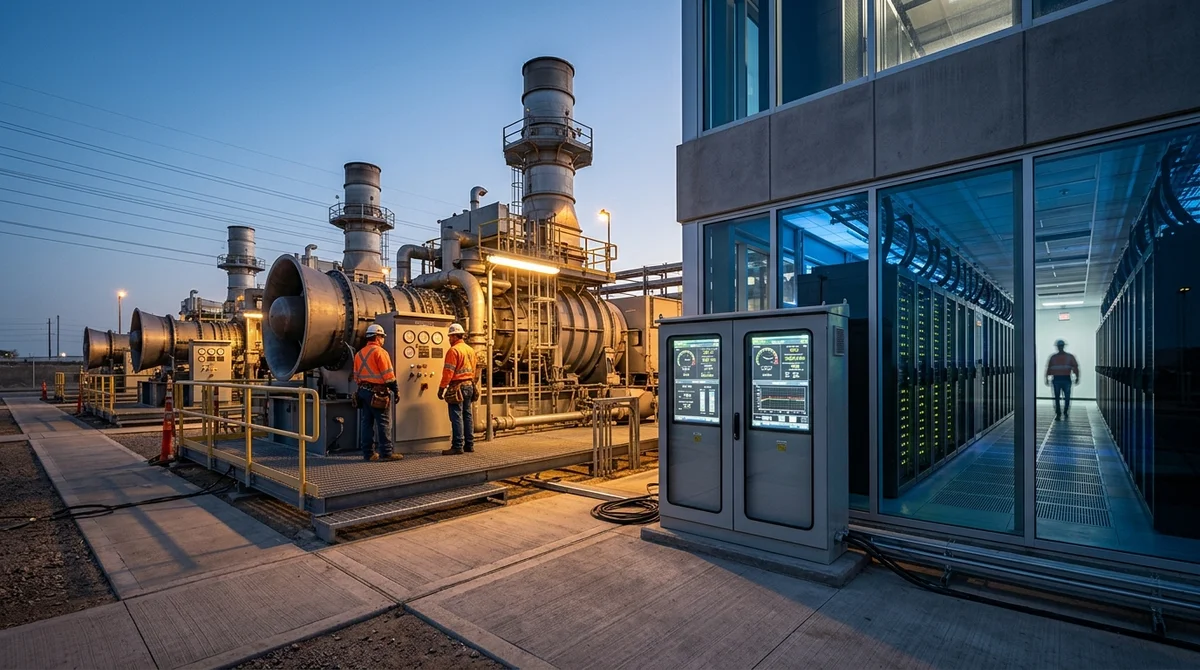
xAI Musk invests $2.8 billion in gas generators for data center
xAI is preparing for an energy explosion. The company is purchasing gas turbines and generators worth $2.8 billion over the next three years — this information surfaced in SpaceX's IPO documents. Behind this figure lies the drive for maximum power to train Grok models.
Data center as an energy black hole
The Colossus data center, which xAI is building in Texas, is not a typical server where you store your photos. It is a factory for training large language models. On thousands of chips, computations are running simultaneously, requiring stable and continuous energy.
To understand the scale: one training cycle of a modern large model can require 500+ megawatts of power at peak moments. This is like supplying electricity to an average city of 100,000 residents. And this is needed not for hours, but for months on end.
Gas turbines are one of the few ways to provide such power quickly. Solar panels and wind turbines work unpredictably (they depend on weather and time of day). And gas?
Turn on the gas — and get the power you need at any moment. xAI chose speed over ecology.
Price and timeline
$2.8 billion over three years — roughly $930 million per year. At market prices, that sum can buy about 25–35 powerful gas generators depending on the manufacturer and specifications. GE, Siemens and other manufacturers are already filling quota orders for AI data centers. The three-year procurement horizon is no accident. Companies in the AI race prefer to make future commitments to lock in prices and guarantee supply. The energy equipment market is overheated, and competition between Google, OpenAI, Meta, Amazon for generators is very intense.
Legal conflict against the backdrop of expansion
It would seem the investment is logical. But there is an uncomfortable background: xAI is already suing environmental authorities in Texas over air pollution and noise from existing generators. The lawsuit was filed by local activists and taken up by the Texas agency TCEQ (Texas Commission on Environmental Quality). The main complaints:
- Nitrogen oxide (NOx) emissions exceeding permitted levels
- Impact on air quality in adjacent areas
- Acoustic pollution — generators make noise day and night
- Lack of adequate public consultation with neighbors
xAI responds that it complies with all federal and Texas standards. But the company's strategy — to invest $2.8 billion in even more generators — looks provocative. As if the company is saying: "We're doing what's necessary, and there's nothing you can do about it."
Energy as a deficit in the AI war
xAI is far from alone in this race. OpenAI signed a contract with Oracle for cloud services. Google is investing in nuclear power plants. Meta is building new data centers in New Zealand. Amazon is buying up wind turbines. But all agree on one thing: electricity has become the scarcest resource in the AI industry. Silicon, GPUs, money — there is plenty. But stable power in the right location? That's the problem. Some analysts are already saying that by 2027–2030, energy will cost more than the processors themselves.
What this means
xAI's investment in gas generators is not a solution to the problem, but a symptom. The company is showing that it is willing to sue over the environment, pay fines and dismiss objections, just to quickly take first place in the AI race. Society must decide: is it ready for a world where computational power matters more than ecology?
*Meta has been recognized as an extremist organization and banned in the Russian Federation.