A conductor instead of an assembly line: how AI rethinks the classic pipeline
The classic development pipeline breaks down when AI agents enter every stage—from product to DevOps. Each segment now faces AI that disrupts the usual order of
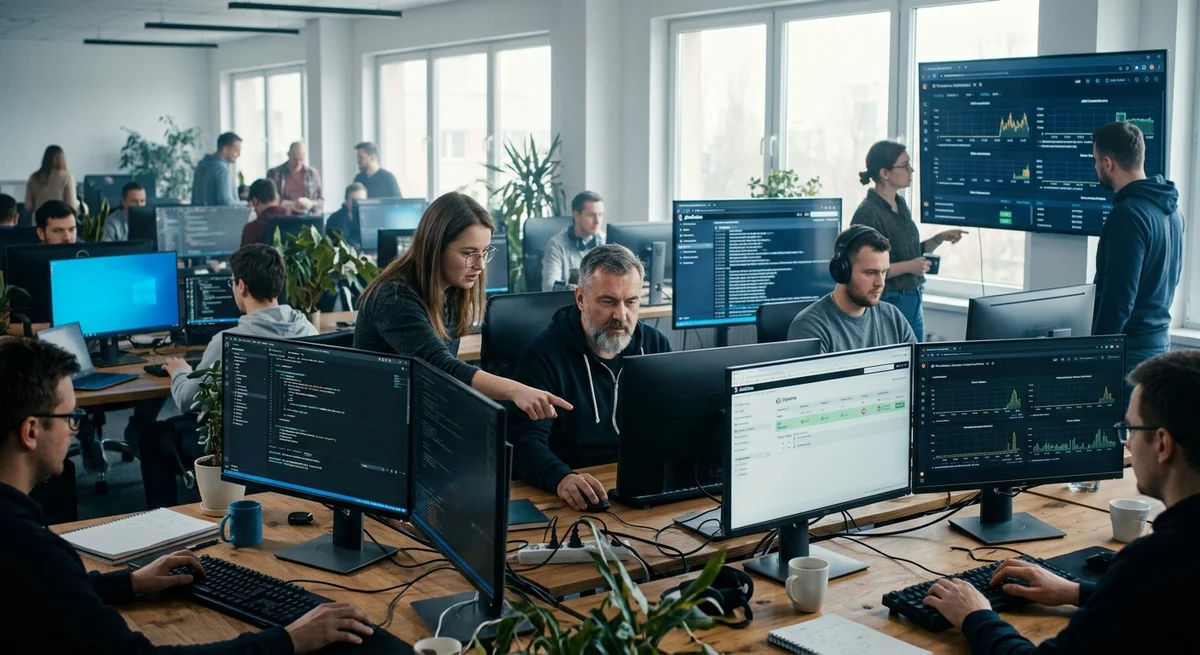
The classic development pipeline worked for 30 years. Product manager defines an idea, hands it to an analyst. Analyst writes requirements, hands it to a developer. Developer codes, hands it to QA. QA tests, hands it to DevOps. DevOps deploys to production. Everyone knows their section, everyone passes results forward. The line itself delivers the result to the user.
How the pipeline worked
This system was convenient and clear. Responsibility was sharply divided — no confusion about who is responsible for what. Knowledge was localized — the analyst didn't need to know the architecture, the developer didn't need to write specs, QA didn't need to understand the business. And the process overall was predictable — if the spec was correct at the start, the code would be correct at the end.
But the pipeline required two things. First: precise requirements at the start, otherwise revisions affect all stages. Second: strict control at the boundaries between stages, otherwise errors slip through. The system required armies of synchronization, planning, meetings. And speed was limited by the slowest section.
AI enters each stage
And then an AI agent entered each section of the pipeline. At the product level: the agent helps formulate the idea, proposes feature alternatives, analyzes competitors, writes a draft of requirements. At the analytics level: the agent analyzes the market, points out gaps in requirements, argues with product. At the development level: AI codes alongside the developer, suggests patterns, writes tests, catches architectural errors. At the QA level: the agent automates tests, finds edge cases, writes reports 10 times faster. At the DevOps level: AI prepares infrastructure, optimizes configuration, points out security issues.
The problem is not with AI itself — the problem is that these agents know the context and history. They see the entire document, all the code, the entire process. And they start talking to each other, bypassing the usual channels of transmission. The QA agent sees the requirements and tips off the developer about oversights. The developer agent argues with the analyst about interpretation. The pipeline starts to break down, because information flies everywhere instead of down the chain.
Conductor instead of operator
The old pipeline model says: do your job, pass the result, don't ask your neighbor. The new model: AI coordinates the entire process in real time, reallocates resources, takes functions from different stages, makes decisions. Not a pipeline. An orchestra, where the conductor (AI) directs the musicians.
The conductor sees the entire process at once: the spec, the code, the tests, the deployment. If the product manager didn't finish the spec, the conductor will ask the analyst to clarify before development starts. If the developer is coding incorrectly, the conductor will correct it. If QA found an edge case in the middle of development, the conductor will redirect resources there.
We cannot fix the pipeline because AI has already taken the operator's seat.
What this means
The classic pipeline was efficient, but rigid. One error in the specification meant reworking the entire chain. The new model is more flexible: AI coordinates in real time, people focus on creative solutions and strategy, not synchronization. But this requires retraining. People must work alongside AI not as subordinate with boss, but as musician with conductor. Trust is needed, synchronization is needed, new discipline is needed. For the entire industry, this means: abandon the old safety of the pipeline and embrace the new flexibility of the orchestra.