Lyapunov Against the System: How Forbidden Cybernetics Was Developed in the USSR
In 1954, cybernetics in the USSR was declared reactionary pseudoscience. But mathematician Alexei Lyapunov opened its seminar at Moscow State University…
AI-processed from Habr AI; edited by Hamidun News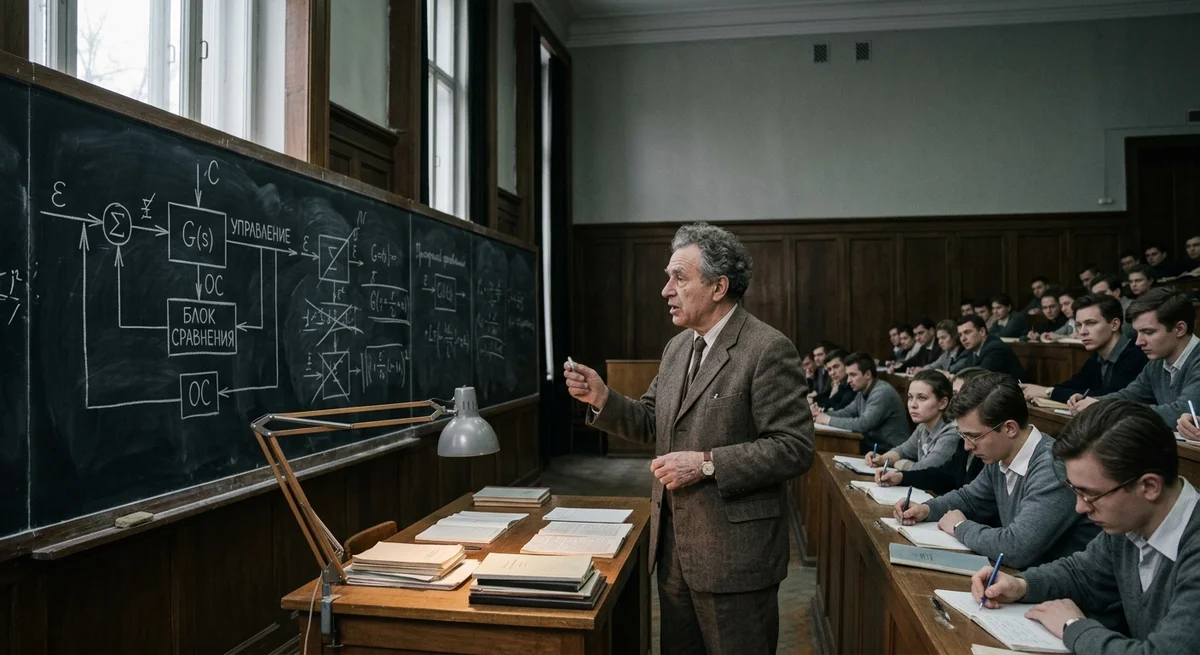
In 1954, when cybernetics in the USSR was officially considered reactionary bourgeois pseudoscience, mathematician Alexei Lyapunov opened a seminar on its study at Moscow University. It was an act of scientific courage—a refutation not so much of the science itself, but of an ideological verdict.
When Feedback Was the Enemy
At the turn of the 1940s-50s, Soviet ideology declared cybernetics enemy number one in science. The issue wasn't with the discipline itself—it was that cybernetics studied information and control without a Marxist human at the center of the system. Feedback, self-regulation, information flows—all of this Soviet ideologists considered signs of bourgeois mechanicism, an attempt to reduce the development of society to machine algorithms.
Mathematician Against Philosophers
Alexei Andreyevich Lyapunov was neither a dissident nor a politician—he was a mathematician, a specialist in mathematical logic. But he believed in a simple idea: feedback exists regardless of whether ideologists of the proper bent approve of it or not. In 1954, when it was dangerous to study cybernetics officially, he opened a seminar at Moscow State University. It was like reading forbidden literature in the reading room of a public library—except the public library was Moscow State University itself. He did not hide and did not wait for permission. The seminar operated openly, attracting students and graduate students who eagerly absorbed knowledge about control and information—all that which was officially classified as reactionary fiction.
Why It Mattered
- He attracted the first generation of Soviet scientists to cybernetics in a safe academic environment
- Lyapunov's seminar became a bridge between the ban of the 1950s and the rehabilitation of cybernetics in the early 1960s
- The ideas of feedback later became the foundation for the development of computing technology in the USSR
- A tradition of informal education was created—a way of transmitting knowledge when the official system blocked it
Legacy in the Age of AI
Lyapunov's story reveals a fundamental truth: the development of AI cannot be stopped even by powerful ideology. Cybernetics is the direct predecessor of modern neural networks, machine learning, and autonomous systems. The concept of feedback, which Lyapunov defended in an unofficial seminar, is now used at OpenAI, DeepMind, and in all major AI laboratories around the world.
What It Means
When new technology encounters a political system that fears loss of control, science finds a way to survive. Lyapunov was not a revolutionary hero—he was an ordinary scientist who refused to believe that some ideological committee could prohibit mathematical reality.
Want to stop reading about AI and start using it?
AI News is a curated feed of AI/tech news. Hamidun Academy teaches you to use AI systematically in your work.