MIT scientist teaches AI to understand chemistry for developing new drugs
MIT researcher Connor Coley is developing AI models trained not just on statistical patterns, but on the fundamental principles of chemistry. Such systems can i
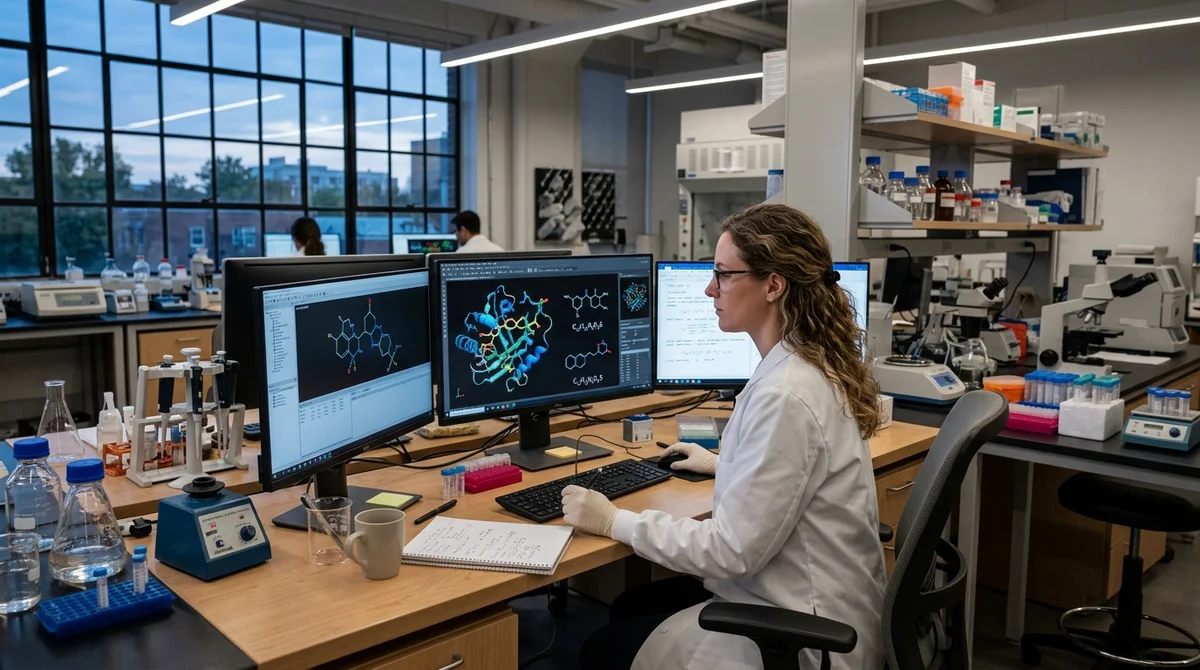
Connor Kolja from MIT works at the intersection of chemistry and machine learning. His new approach helps AI systems not just find patterns in data, but understand fundamental principles of chemistry — and use this knowledge to develop new drugs.
Why Standard ML Isn't Enough
Traditional machine learning models are trained on huge volumes of data and search for patterns. But in chemistry, this is insufficient: a molecule that looks similar statistically may have completely different properties. AI needs to understand real chemical rules — how atoms interact, why electrons distribute in particular ways. That's why Kolja built chemical principles into his models. AI now doesn't guess; it reasons — like an experienced chemist.
How It Works
Kolja's approach uses so-called physics-informed neural networks. They combine the power of deep learning with explicit constraints derived from chemistry. The model can propose a molecule that:
- Has never appeared in the training data
- But complies with chemical laws — doesn't violate valence, electron balance
- And likely possesses the desired properties for a drug
It's like giving AI not just a set of examples, but a chemistry textbook and asking it to solve a creative problem.
Applications and Potential
"We want AI not just to predict which molecules will work, but to explain why," says
Kolja.
This approach already shows results. AI finds drug candidates that human chemists would overlook — because they're unusual or atypical, yet nonetheless functional. This accelerates the early stages of development: instead of synthesizing hundreds of compounds, researchers can first filter down to the 10–20 best candidates. For pharmaceutics, this is critical: developing a single drug costs billions and takes years.
What This Means
This signals how machine learning is changing. The first generation of AI was purely statistical — it guessed patterns. The second generation embeds expert knowledge and physical laws. AI becomes not just a search tool, but a researcher that reasons by the rules. For chemistry and biology, this could mean accelerating not only drug development but also the discovery of new materials and catalysts.