Barclays: humanoid robots will cover 60% of China's labor shortage
Barclays' research division has released a report on the outlook for humanoid robotics in China. According to the bank's forecast, robots could cover 60% of the
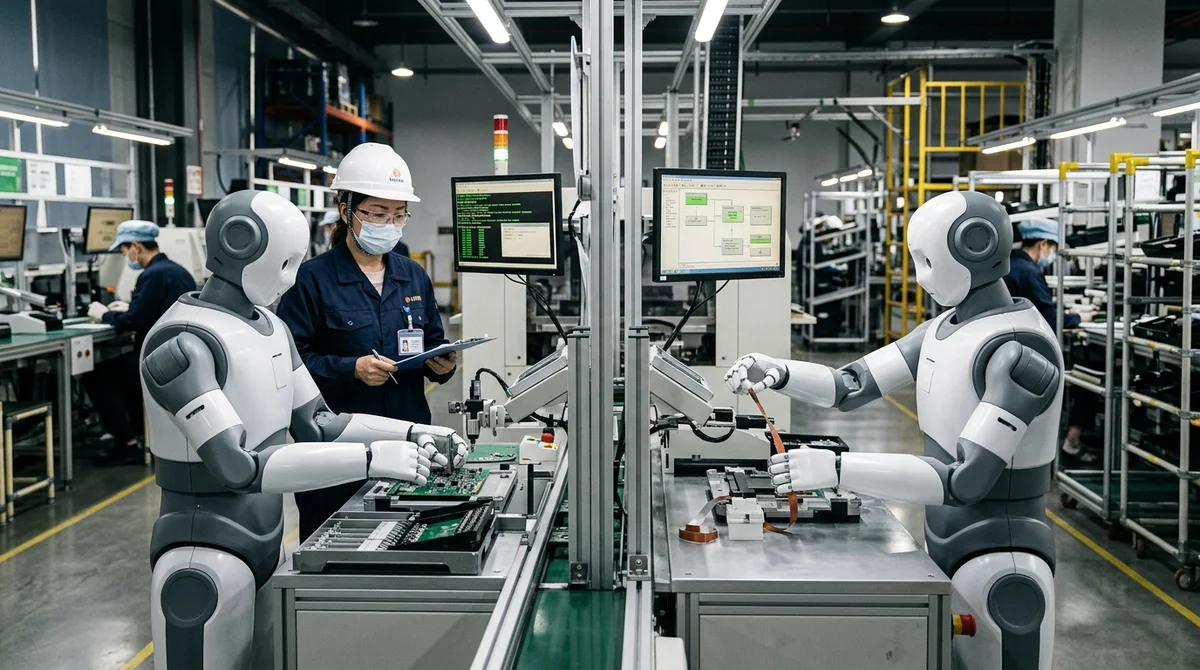
Analysts at the British bank Barclays have released a report assessing the potential of humanoid robots as a solution to China's acute demographic crisis. According to the researchers' calculations, deploying approximately 24 million humanoid machines could compensate for 60% of the decline in the workforce by 2035, mitigating the consequences of massive reductions in the working-age population.
The Scale of the Demographic Problem
China's demographic statistics are alarming: over the next decade, the country's working-age population will shrink by 37 million people. This is the result of decades of the one-child policy, which is now manifesting itself in rapid societal aging. Low birth rates and rising life expectancy have created a long-term deficit of young workers. Without decisive action, such a reduction could trigger an economic shock, especially in sectors requiring intensive manual labor — manufacturing, logistics, construction, and the production of complex goods. China is already experiencing labor shortages in industry, leading to rising wages and a loss of competitive advantage in the global market.
Roboticization as a Response to the Crisis
Barclays suggests that deploying 24 million humanoid robots could fill approximately 60% of the 37 million lost jobs. The remaining deficit could be compensated by alternative measures:
- Modernization of production and increased labor productivity
- Personnel retraining and professional development programs
- Labor migration from less developed regions of China
- Engaging retirees on flexible terms
- Relocation of manufacturing capacity to neighboring countries
According to the analysts, humanoid robots should handle repetitive physical tasks — assembly, cargo handling, packaging, and simple conveyor line operations. This would free human workers for more complex activities that require creativity and adaptability.
The Harsh Reality of Implementation
However, Barclays' projection should be viewed as a long-term forecast rather than a ready-made business plan. Full-scale deployment of 24 million humanoid robots is an unprecedented challenge requiring massive investments, factory restructuring, electrical grid upgrades, and the establishment of a legal framework. The bank does not provide a precise cost estimate for such a project, but it is clear that hundreds of billions of dollars are involved. At the same time, humanoid robotics technology is still in a relatively early stage of development — current robots still often require human supervision and cannot fully operate autonomously in all the complexities of a production environment.
"Humanoid robots are a powerful tool, but not a panacea," note
Barclays analysts, emphasizing the need for a comprehensive approach to the demographic crisis.
What This Means for the Industry
The Barclays report signals that major global financial players are increasingly viewing humanoid robots as a tool for solving macroeconomic problems. For China itself, this could mean a sharp increase in investments in robotics and automation. For humanoid manufacturers — from Boston Dynamics to Chinese startups — this opens an enormous potential market. But the main message is simple: the world stands at the threshold where roboticization will cease to be a convenience and become an economic necessity. Within ten years, the presence of humanoid robots in production will not be a competitive advantage but a basic requirement for survival in the global economy.