LetinAR: микролинза размером с ноготь станет основой AI-очков
LetinAR (Южная Корея) разработала микролинзу размером с ноготь — технологию, которая может стать оптической основой для AI-очков нового поколения. Стартап прете
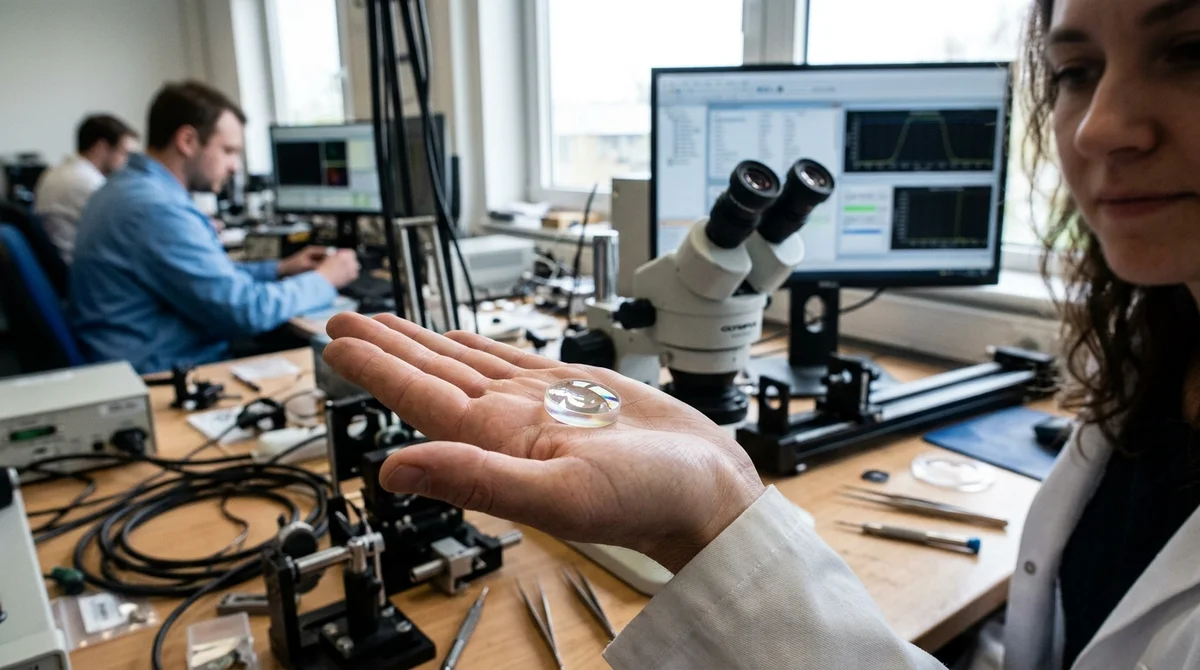
South Korean startup LetinAR has developed a micro-lens the size of a fingernail that could become the optical foundation for AI glasses and next-generation XR devices. The technology could transform the entire wearable device market.
How the Micro-Lens Changes Optics
LetinAR created more than just a lens—it solved one of the main technical challenges of modern optics: how to fit high resolution, a wide field of view, and minimal weight into a tiny device that a user will wear on their face all day. Traditionally, AR/XR optical systems required bulky lenses, special mirrors, and compensating filters. LetinAR applied micro-optics and nanotechnology to compress all of this into a component no bigger than a fingernail.
The result: glasses become lighter, thinner, and cheaper to manufacture. The startup positions itself not as a manufacturer of finished glasses but as a supplier of optical components—layer 0 in the AR/XR device stack. The role is similar to TSMC in the chip industry: you won't see the LetinAR logo on the glasses, but the technology inside is theirs.
After Chips Comes Optics
Following neural network chips (Qualcomm, NVIDIA, Apple) and batteries, the industry is beginning to deeply tackle hardware challenges of a new class: processor cooling, energy efficiency, optics, form factor, weight. LetinAR arrives at this wave at the right moment. The company is positioning itself as the optical supplier for major players:
- Apple (Vision Pro and upcoming lightweight AR glasses)
- Meta (Ray-Ban and future AR devices)
- Microsoft (HoloLens and commercial XR solutions)
- other players in the AR/XR space
Optics determine the entire user experience: resolution, field of view, clarity, weight, even battery life. The company that supplies it gains strategic weight in the industry.
"Optics is not just a component, it's the soul of AR glasses," — a
typical industry comment.
Signal of the Transition from Science to Manufacturing
LetinAR is moving out of the R&D stage and starting pilot production. This is not a promise for 2030, but real technology that needs to be integrated into major companies' current projects. For users, this means: the first commercial AR/XR devices will become lighter, clearer, and cheaper. For investors: a new class of hardware companies whose stacks have long been undervalued.
What This Means
LetinAR's micro-lens is the green light that AI glasses are moving out of laboratories into pilots, and then into production. Following chips, batteries, and design, the industry is solving optics. This means that mass-market AR/XR devices are not far away.