AI in drug development: will the technology justify Big Pharma’s investments?
Pharmaceutical giants are pouring record billions into AI-driven drug development, hoping to revolutionize the process of creating new medicines. However, exper
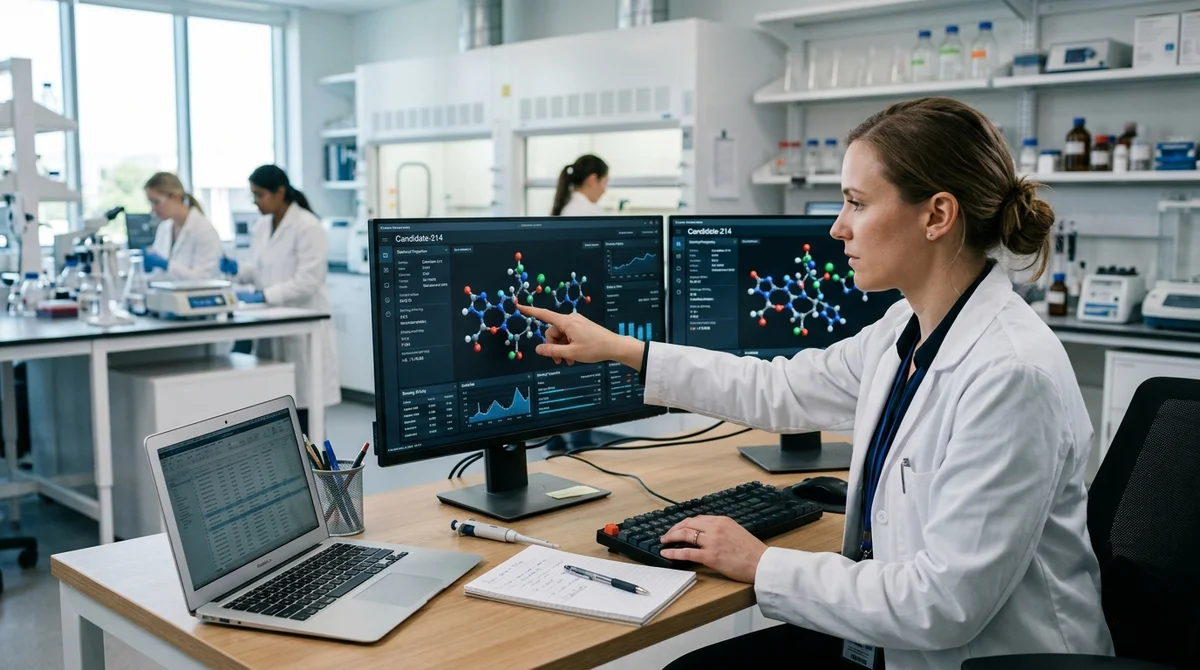
Pharmaceutical companies are investing record sums in drug development with the help of artificial intelligence. However, a key question remains: will the technology live up to investors' hopes and actually accelerate the creation of effective drugs?
Big Money on AI
Companies like Pfizer, Merck, and GSK are actively financing startups working with AI for drug discovery. Annual investments in this segment have exceeded several billion dollars. Pharma sees in AI a way to speed up the discovery of new molecules, reduce drug development costs, and shorten time to market. The technology promises a true revolution: instead of the traditional 10-15 years to develop a single drug — just 3-5 years. Instead of standard 2-3 billion dollars in costs — 500 million. For pharmaceutical companies, this sounds like genuine salvation, capable of transforming the entire industry.
Where Are the Real Proofs?
But serious analysts and investors are asking an uncomfortable question: where are the real successes? How many drugs actually developed with AI have truly passed all phases of clinical trials and received regulatory approval? The answer is sad: so far, almost nothing. Most AI projects are still at the very early stage — this is the stage of discovering candidate molecules. From idea to an actual drug in a pharmacy — this is a completely different test, in which AI can help very little.
- Most AI projects are at the molecule discovery stage, long before clinical trials
- Clinical evidence of efficacy is still almost non-existent
- Investors are waiting for concrete commercial results, not beautiful presentations
- In 2024-2025, only a few drugs reached advanced (Phase II-III) trial stages
Specific Examples Are Not Impressive
Let's look at specific examples. Exscientia, one of the most funded AI startups in pharmaceuticals, received over $500 million in investments. But the first drug developed with their AI is still in early clinical trials. No approvals, no victories. BenevolentAI — another giant in this space — spent hundreds of millions but also has not shown concrete commercial successes on the market. These are not small companies, but world leaders in AI-pharmaceuticals. And even they are struggling hard to move from promises to results.
Skepticism Is Growing in the Industry
More and more experienced analysts believe that Big Pharma has overestimated AI's potential for the next 5-10 years. Of course, the technology is good for searching molecules — AI really is well-suited for this. But after that come the real challenges: clinical trials, regulatory approval, proof of safety for humans. Each of these stages requires many years and enormous sums of money. AI can help here with data processing, but cannot solve the fundamental question — does the drug work in humans? This requires careful work by doctors, researchers, and patients.
"The hype is ahead of reality by several years," say investors,
pointing to the complete absence of commercial successes and real approved drugs.
Money Does Not Guarantee Results
An interesting paradox: even enormous investments do not guarantee success. The first AI startups in pharmaceuticals received hundreds of millions of dollars, but to this day have not brought a single drug to market. Time passes, cash reserves run out, and there are no concrete results. For investors, this becomes a painful question and a test of trust. For companies, it is a real and growing danger of losing face and spending enormous sums in vain.
What This Means
AI in pharmaceuticals is a useful tool, but not a panacea and not salvation for the industry. Companies need concrete results, not marketing and promises. The next 3-5 years will show whether Big Pharma truly invested in real technology or simply invested in a beautiful story riding the AI fever wave.