Perplexity in court over content: the four founders behind the $21 billion scandal
Perplexity is an AI search engine being sued over content copying. The New York Times and the BBC are seeking damages for the unlicensed use of their materials. Four founders built a $21 billion startup in just three years. But who are they really?
AI-processed from Habr AI; edited by Hamidun News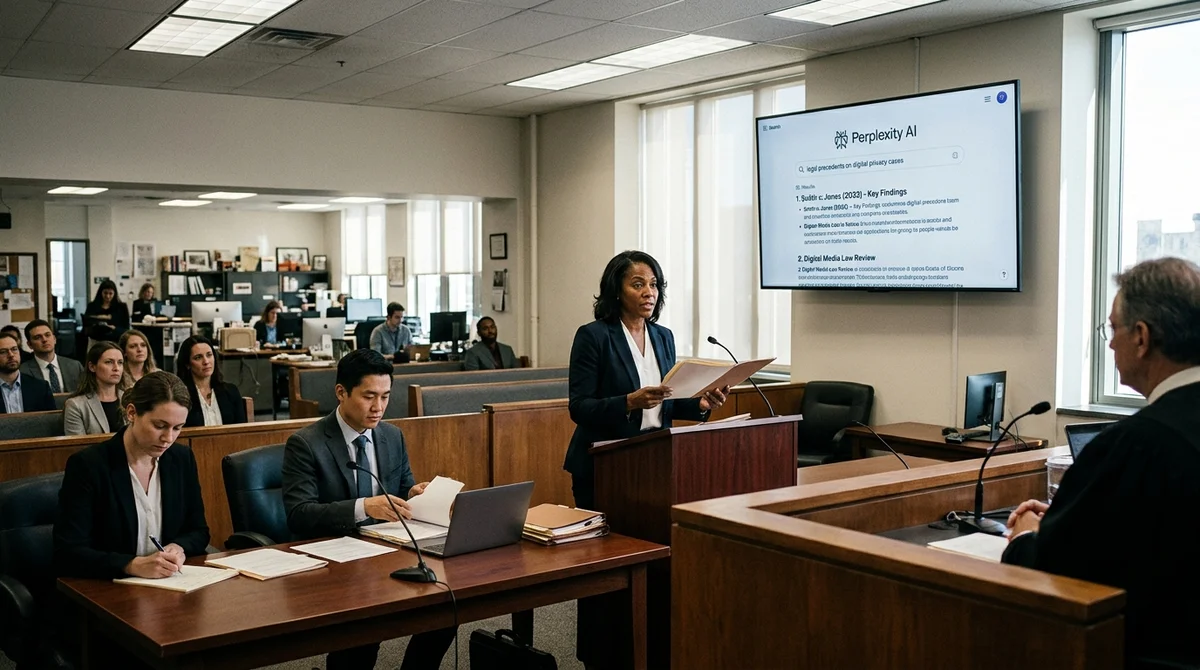
Perplexity was launched by four founders in August 2022. By May 2026, the company is valued at $21 billion — rapid growth for an AI startup. But this success is already overshadowed by legal scandals.
Alternative to Google in Three Years
Perplexity positions itself as a next-generation AI search engine. Unlike Google, which provides links to web pages, Perplexity summarizes information from multiple sources and delivers a complete, detailed answer with direct citations. This approach fundamentally differs from traditional search and has attracted millions of users. Investors quickly noticed the potential. In four years, Perplexity grew from a four-person startup to a company valued at $21 billion. This is one of the fastest rises in AI startup history. For comparison: Google took approximately five years (from 1994 to 1999) to reach its first billion-dollar valuation.
Media Scandal: Copying or Citation?
But Perplexity's growth has not come without consequences. The New York Times, Dow Jones, and BBC filed lawsuits against the company. The main accusations: unlawful use of journalistic materials, mass content copying, and website scraping without permission. Here is what the plaintiffs specifically demand:
- The New York Times — compensation for the use of its materials in Perplexity answers without a license
- Dow Jones — penalties for copying news articles in the search engine's summaries
- BBC — lawsuit over systematic content scraping from its website
- Absence of explicit consent from media companies for using their content in training Perplexity's model
Perplexity defends itself: the company says it always cites sources and references original articles. However, publishers are not convinced. They argue that content synthesis in Perplexity effectively replaces the need for users to visit the original website, depriving publishers of traffic and advertising revenue.
"It's not just copying text.
It's an entire system that intercepts a user's query and provides an answer without sending the person to our website. This is economic displacement," — noted representatives of one of the plaintiffs.
The Criminal Quartet of Founders
The SpeShu.AI dossier promises psychological profiles of the four Perplexity founders. Although the full text requires reading on Habr, it is clear: this is a typical combination of successful AI entrepreneurs. Young, ambitious, with deep expertise in machine learning, information retrieval, and frontend development. Aravind Srinivas (CEO) assembled a team of people who previously worked at major tech companies and AI laboratories. They were united by a single idea: Google monopolized search, but that monopoly is not eternal. The right technology plus the right team can change everything in just a few years.
What This Means
Perplexity demonstrates an acute conflict between traditional media economics and the AI revolution. When artificial intelligence can synthesize information better than any journalist, publishers lose control over their own content. The lawsuits are a battle for the future of media economics in the age of AI. The outcome of these cases will set the rules for the entire AI search industry.
Want to stop reading about AI and start using it?
AI News is a curated feed of AI/tech news. Hamidun Academy teaches you to use AI systematically in your work.
The AI world, distilled — once a week
Seven stories that actually mattered, hand-picked. No noise, no reposts, no press releases.
Done! Check your inbox for a confirmation.