AI agents with vision proved several times more expensive than a standard API
Browser agents with vision proved several times more expensive than standard APIs. Every screenshot the agent sees has to be processed by an expensive vision mo
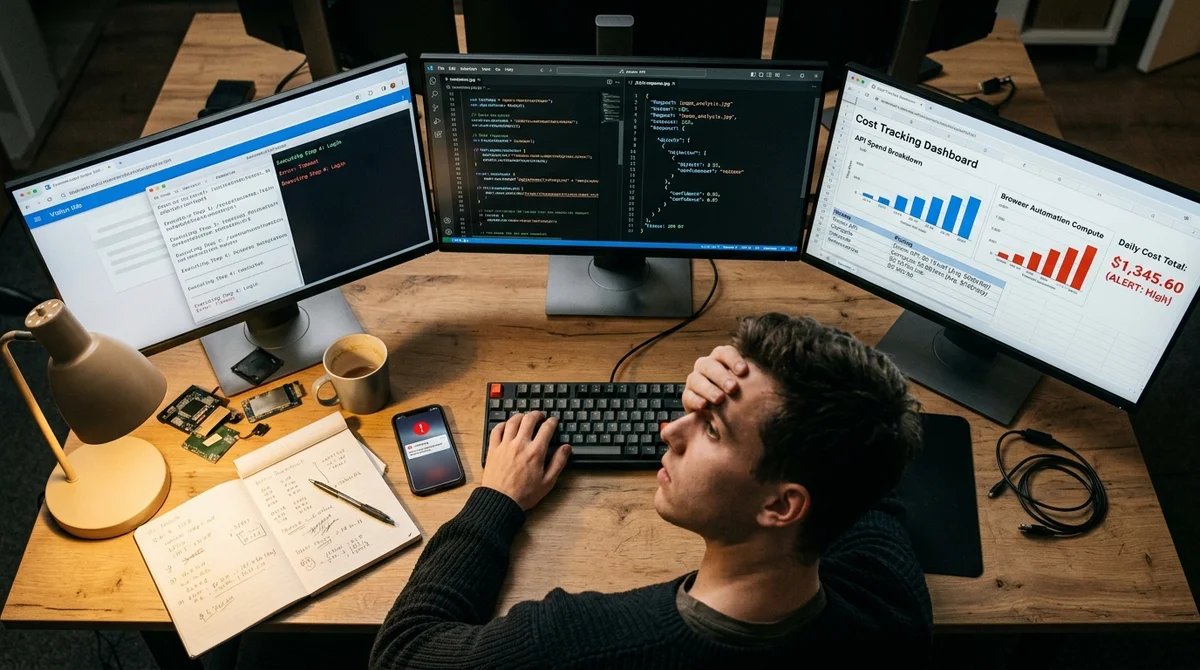
Browser-based artificial intelligence agents that see the screen and imitate human behavior cost companies orders of magnitude more than regular text-based AI models. Company Reflex conducted a cost analysis and found that the price for vision agents far exceeds the costs of standard API requests.
Why Vision Is More Expensive Than Text
When an agent processes only text, the task is relatively simple and cheap. The API takes its cut, the model processes the request — and that's it. But when that same agent sees a screenshot of the screen, browser, web form, a vision model is activated that requires significantly more computational resources and costs more.
The price for a single screenshot can be higher than the cost of processing an entire text session of dozens of sentences. A single browser agent click can cost a company more than a full dialogue with a text chatbot. This is not a hypothesis — it's an observation from developers who have scaled browser agents to industrial use.
The problem is compounded by the fact that the agent cannot "reuse" a single screenshot. Every time something changes on the screen (which happens after each agent action), a new image is needed, a new vision-API call, new costs. This creates a situation where prices grow exponentially with the increase in the number of actions.
How to Calculate This in Practice
When an agent fills out a form on a website, the workflow looks like this:
- Take a screenshot of the screen (vision model is activated)
- Understand what the agent sees: buttons, fields, errors, hints
- Decide what action to perform (this is cheaper, logic)
- Perform a click, fill in a field, press a button
- Take another screenshot — and another vision-API call
Each cycle with vision — a separate charge. When ordering food through DoorDash, an agent might take 5–10 screenshots: searching for a restaurant, selecting a restaurant, viewing the menu, adding dishes to the cart, processing payment. That's 5–10 calls to an expensive vision model for a single task. When scaling to thousands of such operations a day, costs become unsustainable. A company quickly discovers that it has spent on one day of agent work more than on a month of maintaining text models. The numbers speak for themselves: if a vision request costs 10 times more than a text one, and the agent takes 10 screenshots per task, then costs increase by 100 times.
The Scaling Problem
Companies that experimented with browser agents often discover hidden costs. What seemed more economical than hiring a person (one agent-bot for a month is cheaper than a freelancer), in practice costs more if you need to process tens of thousands of screens a day.
"The economics of vision agents are completely different from text ones.
Companies miscalculate ROI," — say the developers.
This doesn't mean browser agents are unprofitable. It means they cannot be launched without careful calculation. A honest calculation is needed: how much does one agent cycle cost, how many cycles per task, how many tasks a day, what result. Without this, you can spend the entire budget faster than expected.
What This Means
The development of browser agents requires new approaches to pricing. Companies need to understand the cost of vision models before deploying to production, not after the bill arrives. Otherwise, savings on automation will turn into unexpected expenses. This will temporarily slow the adoption of such agents, but will force decisions to be made consciously.