Demand for Arm processors surged on the AI wave — order volume doubled to $2 billion
Arm is seeing an unprecedented surge in demand thanks to AI computing in data centers. In five weeks, order volume doubled to $2 billion. CEO Rene Haas called i
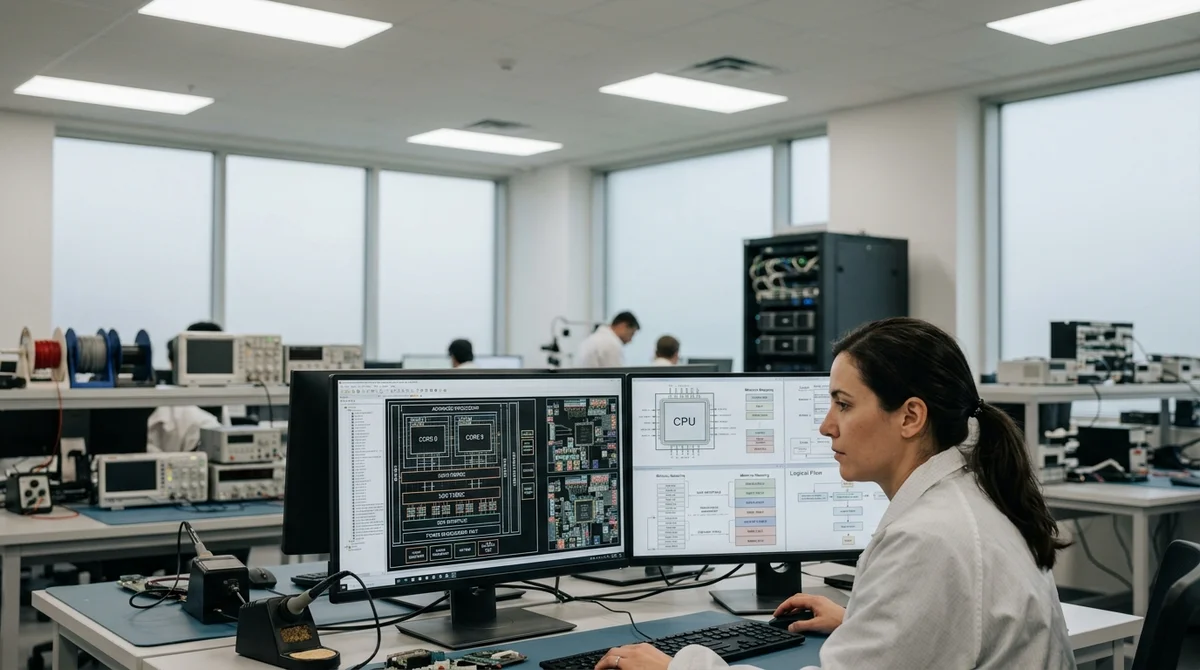
Arm Holdings is experiencing unprecedented demand for its CPU architectures. The company's CEO Rene Haas stated that order volumes in recent weeks have skyrocketed: over five weeks, the company received orders worth $2 billion, which is twice the usual monthly volume. According to the CEO, they have never seen such growth before, and the wave is just beginning.
Why AI is Opening a Front at Arm
The main driver of demand is AI computing in data centers. Cloud providers are massively switching to Arm architecture to service large language models. While server rooms were previously dominated by Intel and AMD with their x86 architecture, Arm is now actively capturing the market as an alternative with significantly higher energy efficiency and lower total cost of ownership.
This migration is happening because training modern AI models requires petabytes of computing power and weeks of operation of large clusters. Cloud providers facing such volumes confront colossal electricity bills — sometimes billions of dollars for a single run of training a large model. Arm chips allow reducing energy consumption by 30-40% compared to x86, which means saving billions of dollars over several years of operation.
Key advantages of Arm for cloud providers:
- Energy consumption 30-40% lower than x86 architecture — savings on electricity and cooling
- Architecture scales for clusters of thousands of servers without losing efficiency
- Support from cloud giants (AWS Graviton, Google TPU, Microsoft Cobalt) guarantees tools and software
- Reduction of total cost of ownership of a cluster by 20-25% even with licenses
Smartphones Retreat, Servers Advance
Against this background, the smartphone market — historically Arm's main revenue source — is experiencing serious stagnation. Flagships are released rarely, consumers keep old phones longer, manufacturers freeze the release of new lines. Competition prevents price increases. The mobile segment, which was the growth engine for Arm in 2010-2020, is no longer growing.
But this is a blessing for the company, not a disaster. Demand for server chips for AI infrastructure fully compensates for the decline in the mobile segment with a large margin. According to analysts' forecasts, data centers will become Arm's main source of revenue by 2026-2027 — a turning point in the company's history.
"This is an explosion of demand that we have never seen before," said
Rene Haas.
What This Means
Arm is transforming from a mobile specialist into the leading supplier of chips for AI infrastructure and cloud computing. This will reshape the entire processor market over the next 5-7 years and sharply increase competition among cloud providers for the most efficient and cost-effective solutions for training large models. Companies that are not switching to Arm now risk falling behind in the race for computing power.