Wayve proves: embedded AI is reshaping self-driving car development
Wayve CEO Alex Kendall described a new approach to self-driving cars: instead of rigid programming, they use embedded AI that learns on real roads. This makes i
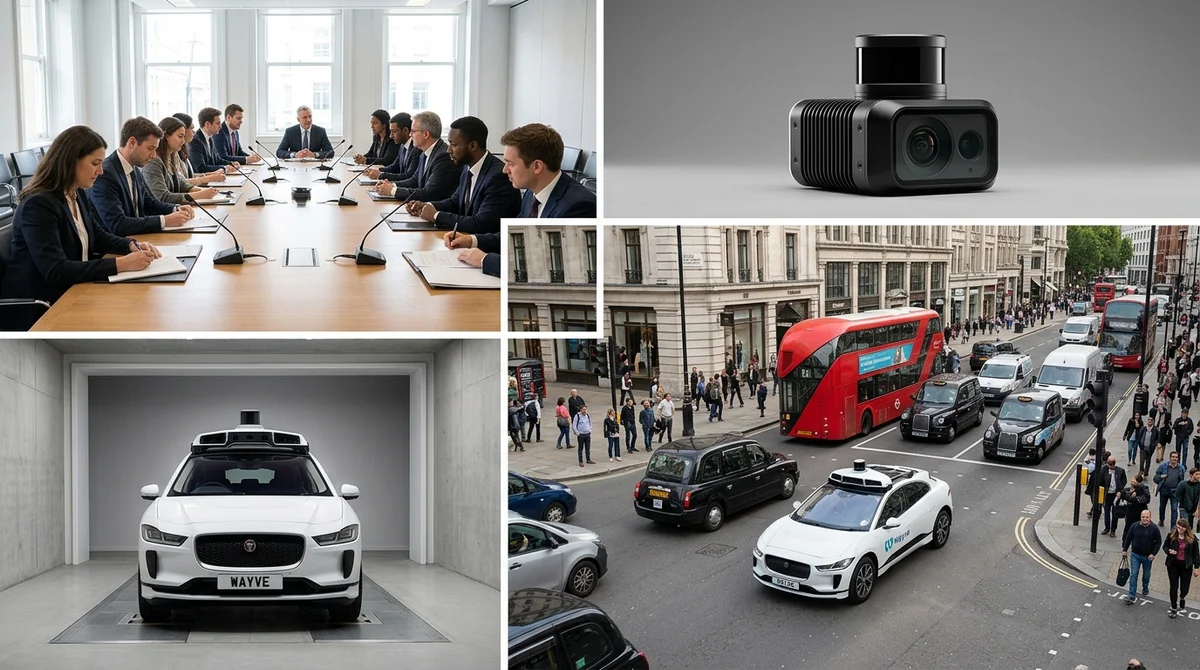
Embedded AI and learning on real roads is what's transforming autonomous vehicle development today, according to Wayve CEO Alex Kendall in an interview with Bloomberg's Tom Mackenzie.
How the AI approach to autonomous vehicles works
The traditional path for developing autonomous cars is to write code manually. Every rule for every situation: what to do at a red light, how to navigate around a parked car, how to park in a tight space. Engineers describe rules for anticipated scenarios and then test the vehicle in those same scenarios. Narrow and time-consuming.
Wayve chose a completely different path. Instead of hard-coded programming, they equipped their vehicles with embedded AI that observes real roads like a driver, learns from real-world situations, and continuously improves. Cameras, lidar, and radar collect video data, neural networks process it in real time, and make decisions about turning, acceleration, and braking. The key to this approach is not confining the vehicle to a controlled environment for training, but deploying it on real streets with real people. This sounds dangerous, but Wayve claims the vehicle learns millions of times faster this way than in ideal simulations. Every trip is a lesson. Every encounter with a new scenario improves the model.
Why this accelerates robotaxi scaling
The main problem with the traditional approach is adaptation to new cities. Each city is unique: different roads, signs, climate, driver behavior. With manual development, companies spend years adapting a vehicle for London, then more years for San Francisco. With the AI approach, the vehicle adapts itself. Deploy it in London for a month—it will learn all the peculiarities of London roads, pedestrian behavior, climate. Then San Francisco—and the cycle repeats, but much faster, because the knowledge of how to learn is already built into the model. This gives Wayve a huge advantage:
- Embedded AI learns from every trip—no need for massive manually annotated datasets
- Updates are pushed over-the-air to all vehicles simultaneously
- Scaling doesn't require reprogramming for each city
- Robotaxi becomes economically viable sooner
Wayve has already deployed autonomous taxis in London and is expanding to new markets. Competitors like Tesla and Cruise use similar AI approaches, but Wayve is clearly betting more heavily on this, abandoning simulations and large manually labeled datasets.
What this means
If embedded AI works at scale, then autonomous vehicles transition from scientific experiment to industry. This means robotaxis will be available in more cities sooner than analysts predicted. Costs will fall because companies won't need to spend millions adapting to each region.