Wayve vs Tesla and Waymo: why AI licensing scales faster
Wayve CEO Alex Kendall said in an interview with Bloomberg why his company chose an end-to-end approach to self-driving systems instead of the modular architect
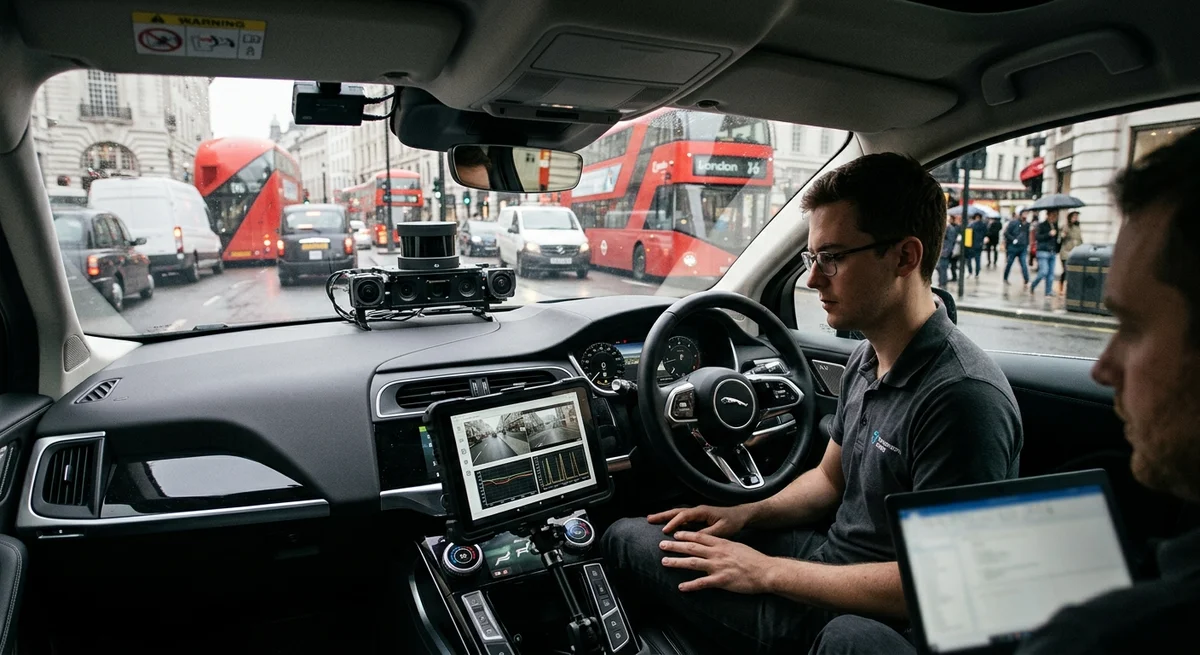
Wayve approaches autonomous driving differently than Tesla or Waymo. Instead of manually programming rules for every situation on the road, the company uses end-to-end learning — a single neural network sees cameras and immediately outputs control commands. This is a fundamentally different approach, and CEO Alex Kendall explained in a Bloomberg interview why he believes it's the future of the industry.
One algorithm instead of modular architecture
Tesla and Waymo break their autopilots into separate modules. One recognizes objects on the road, a second predicts their movement, a third plans the route, a fourth controls the accelerator, brake, and steering. Each module is trained separately, and results are passed to the next in the chain.
Wayve says this is archaic. Their approach is closer to how the human brain works: you look at the road — and immediately know what to do with the steering wheel. No intermediate steps, no data transfer between modules, no failure points.
This simplifies the system and accelerates adaptation to new conditions. If lane markings in London differ greatly from those in San Francisco, there's no need to retrain three different modules — it's enough to refine one algorithm.
"The modular approach looks prettier on paper, but end-to-end works better in reality,"
Kendall explained in an interview.
Licensing as a fast path to scale
Tesla manufactures cars itself and embeds autopilot directly into the hardware. Waymo builds its own robotaxi fleet. Both invest enormous amounts of money in manufacturing, logistics, and maintenance. Wayve chose a third path: they license their AI algorithm to automakers. Partners embed the code in their cars — and that's it. Wayve doesn't need to invest billions in car production, delivery, and fleet maintenance. They simply sell a software license, and partners finance development through payments.
- Minimal capital expenditure for scale
- Partners self-finance technology development
- One algorithm runs on millions of cars from different manufacturers
- Wayve focuses solely on AI, not hardware and logistics
What a small startup is betting on
Competition is fierce. Tesla has already equipped millions of cars with cameras and collects telemetry every day. Waymo is backed by Google and has years of testing on American roads. Wayve is a small London startup next to these giants. But Kendall doesn't panic. He bets that the right algorithm and the right business model are stronger than scale and corporate weight. If AI licensing becomes the industry standard, Wayve could outpace both.
What this means for the industry
The future of autopilots might not be a battle between a few titans at all. It could be an ecosystem where one or two best AI algorithms are licensed to hundreds of partners. If Wayve calculated correctly, the industry flips: instead of a race to produce cars — a race for algorithms and licensing contracts.