US suspects Nvidia chip smuggling via Thailand to Alibaba
The US is investigating large-scale smuggling of Super Micro Computer servers with advanced Nvidia GPUs via Thailand to Alibaba and other Chinese companies. A T
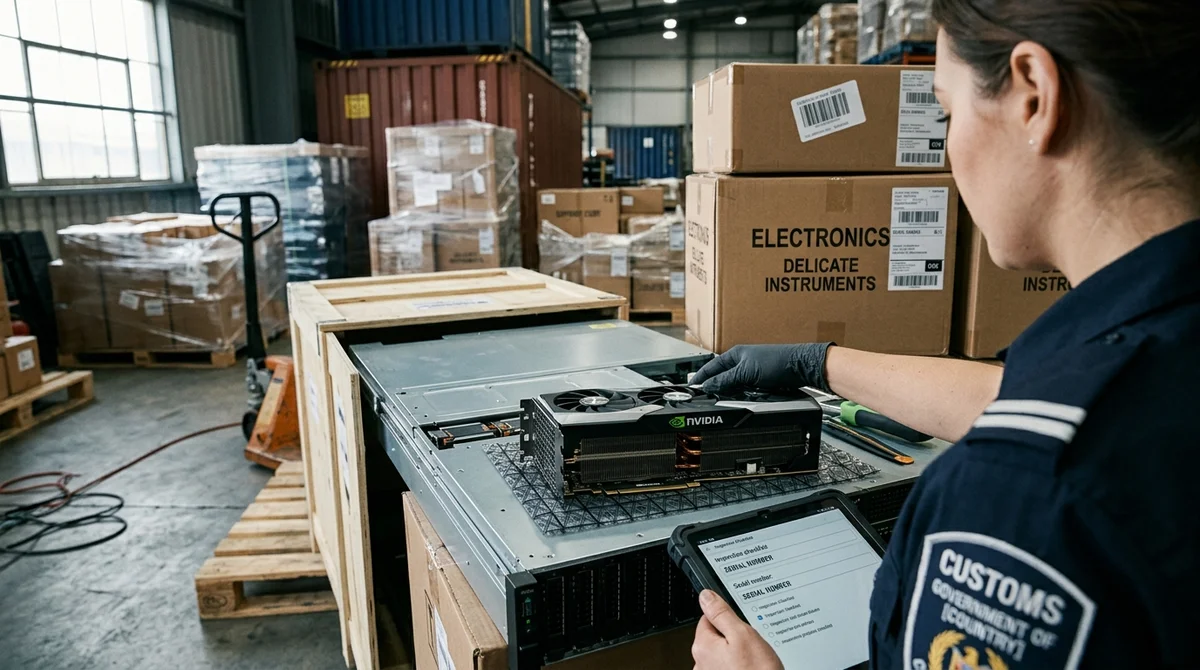
The USA has suspected a Thai company of smuggling servers with advanced Nvidia GPUs to China, including supplies for Alibaba. According to people familiar with the investigation, it involves billions of dollars worth of equipment and a systematic circumvention of American export restrictions.
Smuggling Chain
The central figure in the investigation is a company behind one of Thailand's key artificial intelligence development projects. According to Bloomberg, this company helps redirect Super Micro Computer servers equipped with advanced Nvidia GPUs from Thailand to China. Alibaba Group is one of the main end consumers, although other major Chinese technology companies are also involved in the scheme.
The mechanism works simply but effectively. A server is officially supplied to Thailand as a legal commodity—for the development of national AI infrastructure. However, upon arrival, instead of being used locally, it is redirected to China. Thailand is geographically ideal for this: it is in close proximity to China, is not on US sanctions lists, and has a reputation as a regional technology hub.
Why the USA is Tightening Screws
The American government has spent years building a system of export controls on the most advanced chips. Nvidia GPUs are not just computer components; they are the foundation for training large artificial intelligence models. Without a sufficient quantity of quality processors, it is impossible to launch large-scale training of models like GPT-5, Claude, or Chinese equivalents.
Export restrictions exist for simple logic: chips in China's hands mean accelerated growth of its AI capabilities. And AI is not entertainment. It is a strategic asset: autonomous systems, intelligence, defense, surveillance. Every missed server brings China closer to technological parity with the West.
- Restrictions concern the most powerful GPUs: Nvidia H100, H200, A100
- Export lists are reviewed and tightened annually
- Attempts to circumvent through third countries are a natural occurrence and a criminal offense
- The cost of smuggling indicates the length and scale of the operation
Thailand in a Bind
Thailand finds itself in an awkward position. On one hand, the country wants to develop its own AI sector and not fall behind its neighbors. On the other—participation in smuggling (even through its companies) violates its status as a trusted US partner.
If the allegations are confirmed, Thailand could face serious consequences: sanctions, restricted access to technology, diplomatic pressure.
What This Means for the Industry
The story of GPU smuggling is not just criminal news. It is a mirror reflecting the growing technological divide between the USA and China. Every server delivered to China adds to its AI capabilities. Hence the harsh US restrictions and the hunt for workarounds.
Super Micro Computer, the server manufacturer, may face reputational damage and additional scrutiny. Nvidia will be even stricter in tracking end consumers. The American government will intensify monitoring of supplies to third countries and China's neighboring countries.
What This Means
Thailand is choosing between two uncomfortable scenarios: remain a reliable US partner or gain access to advanced technologies necessary for developing its own AI market. This story shows that in an era of technological divide, there is practically no third option.