AI for selecting hypertension treatment in children: MIPT model predicts the drug with 98% accuracy
MIPT student Anastasia Adamson developed an ML model that predicts an effective drug for treating arterial hypertension in children with 98% accuracy. Instead o
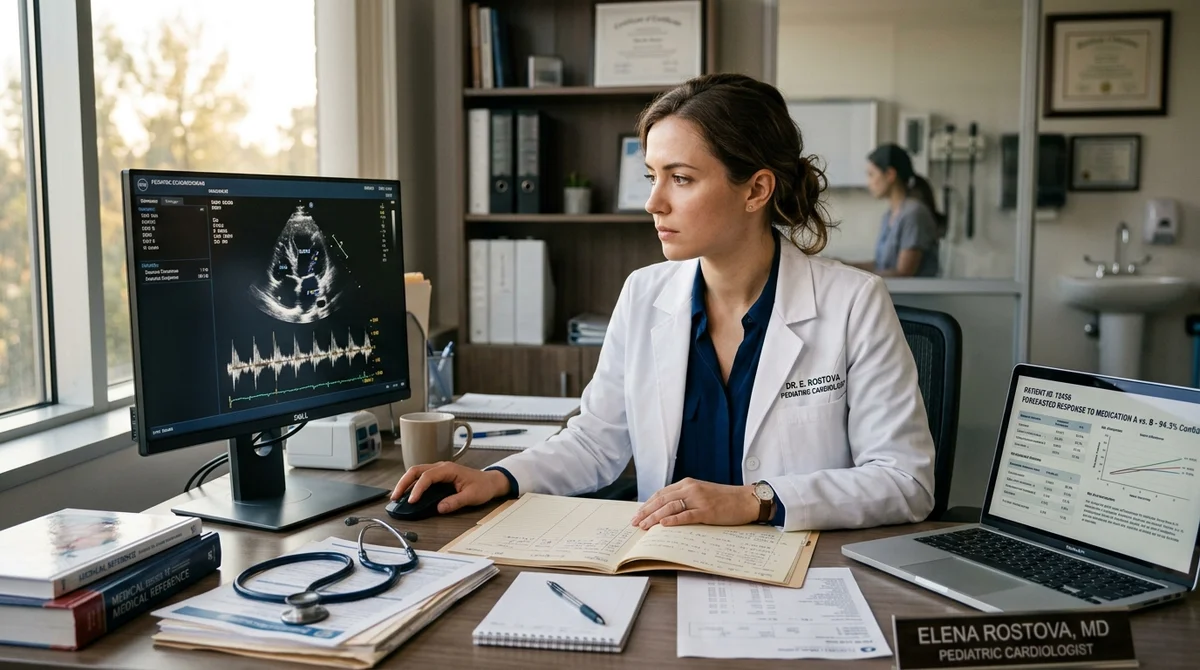
The number of children with arterial hypertension in Russia has increased by 17% over the past five years. Doctors select treatment through trial and error — choosing one of five approved drugs and waiting for results for 2–3 months. MIPT graduate student Anastasia Adamson developed a machine learning model that solves this problem: it analyzes 154 clinical features and predicts an effective drug with 98% accuracy, allowing doctors to choose the right treatment on the first attempt.
Months of Wasted Waiting
Arterial hypertension in childhood is becoming an increasingly common problem. On the surface, the solution looks simple: a doctor chooses one of five approved drugs and begins therapy. But here lies a fundamental complexity of medicine — the individuality of each organism.
One child responds well to Lisinopril, another will respond better to Amlodipine, a third will benefit from Nebivolol, a fourth needs a combined approach. The doctor doesn't know this in advance. If the choice proves unsuccessful, a month or two is wasted.
During this time, the child's blood pressure remains elevated, blood vessels experience additional stress, and the risk of left ventricular hypertrophy and other complications increases. Then a new drug is prescribed and the waiting begins again. This cyclical error affects not only the patient's health but also the child's psyche — months of uncertainty and ineffective treatment leave their mark.
How the Model Predicts Results
Adamson trained the algorithm on data from 272 patients. But the key is not just the amount of data, but its multilayered nature. The model accounts for 154 features covering the full clinical profile of the child:
- Demographics: age, weight, body mass index, height
- Cardiology: heart ultrasound, left ventricular size, echocardiography
- Vascular system: carotid ultrasound, intima-media thickness
- Hemodynamics: systolic and diastolic pressure under different conditions
- Hormonal status: levels of renin, aldosterone, catecholamines
- Laboratory diagnostics: kidney and liver function, electrolytes, urinalysis
The machine learning algorithm processes this mosaic and finds hidden patterns. It understands which combinations of parameters indicate the effectiveness of each drug. The result: with 98% accuracy, the model predicts which of the five drugs will work for this specific child, even before the first prescription.
Doctor's Discoveries in Numbers
The most interesting part — the model discovered statistical relationships that doctors had suspected for years but could not strictly prove. For example, it revealed a clear correlation between a child's overweight and high effectiveness of Lisinopril in this subgroup. Doctors noticed this in practice but had no formal documentation.
"This is not a replacement for a doctor, but a powerful support tool," says Adamson.
The final decision remains with the pediatrician or cardiologist. But now the specialist receives a scientifically grounded recommendation instead of pure guesswork.
What This Means for Pediatrics
Adamson's research shows how artificial intelligence integrates into real medical practice. Instead of unsystematic trial and error, a doctor will have a personalized prognosis based on big data analysis. This means reducing the time to select therapy from months to days, reducing periods of uncontrolled pressure, and reducing the risk of complications for each patient. AI here is not a magician but an assistant that expands the doctor's diagnostic and therapeutic capabilities.