Customs service to receive AI for detecting suspicious operations
Russia's customs service will undergo a full modernization of its IT systems. The contractor is a Rosatom unit. The project includes a transition to domestic te
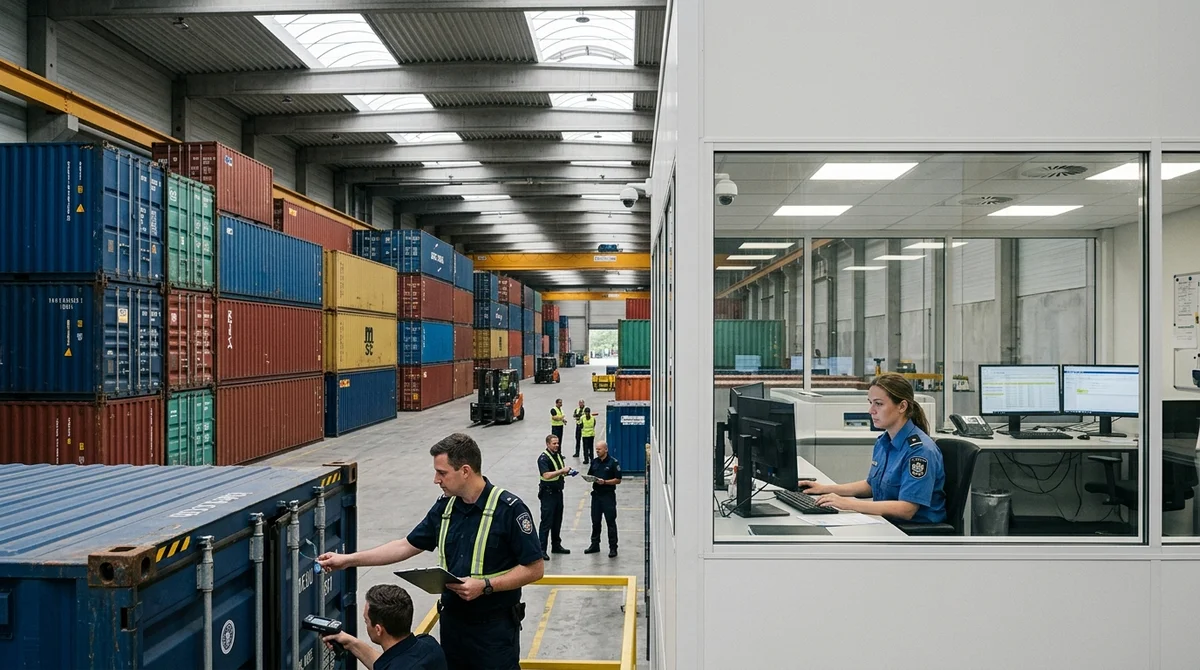
A Rosatom structure has received an order for a large-scale modernization of the Russian customs service's information systems. During the process of transitioning the agency to domestic technologies, a range of artificial intelligence-based functions are planned to be implemented.
Import Substitution at Customs
The customs service is one of Russia's key agencies, in which a significant share of foreign software and equipment still remains. Current information systems are based on solutions that fell under sanctions and supply restrictions. This creates a critical vulnerability: if Western companies cut off access or stop supporting the systems, the entire customs control system could shut down in a single day.
Additionally, the archaic architecture of existing systems slows down the processing of declarations amid growing trade turnover, increasing logistics complexity, and the need to analyze goods under sanctions conditions. The Rosatom project aims at a complete replacement of this technology stack. Customs will receive domestic alternatives — from operating systems to specialized software for processing cargo, declarations, and statistics.
AI for Detecting Violations
Beyond import substitution, the new system will receive built-in artificial intelligence functions that will transform customs into a more intelligent player in the fight against economic crimes. The key function is the automatic detection of suspicious financial operations. The system will analyze declarations, accompanying documents, trader histories, commodity prices, and delivery routes in real time. Algorithms will identify hidden contraband, underpayment of duties, attempts to circumvent sanctions through shell companies and intermediate countries. They will account for complex factors: global market prices, seasonal demand patterns, competitor supply routes, the financial condition of importers and their partners. This will allow customs officers to focus on the most risky cargo shipments instead of mechanically inspecting every container.
What Tools Will Customs Receive
According to the plan, the AI system will have the following capabilities:
- Real-time detection of suspicious financial schemes and operations
- Contraband risk analysis by commodity type, country of origin, and delivery methods
- Prediction of violation probability based on trader history and counterparties
- Automation of processing standard declarations without human involvement
- Integration with accounting systems, statistics, and other agencies
Developers promise that such a set of tools will accelerate customs operations by 30–40% while simultaneously reducing the number of violations.
What This Means
Import substitution at customs is not merely a replacement of outdated code, but a strengthening of Russia's economic security. Domestic technologies and AI solutions will make the agency less dependent on Western software suppliers. At the same time, systems will operate faster, and the service will receive tools to combat economic crimes under the new trade reality. The project demonstrates that Russia is developing its own software not only for theoretical research, but for critical infrastructure. If the customs modernization succeeds, similar AI solutions could be implemented in the tax service, customs in neighboring countries, and other government agencies.