Energy could give China an edge in the AI race — here's why
Energy is becoming the main arena of competition between the US and China in the race for dominance in AI. Americans are ahead in developing chips and algorithm
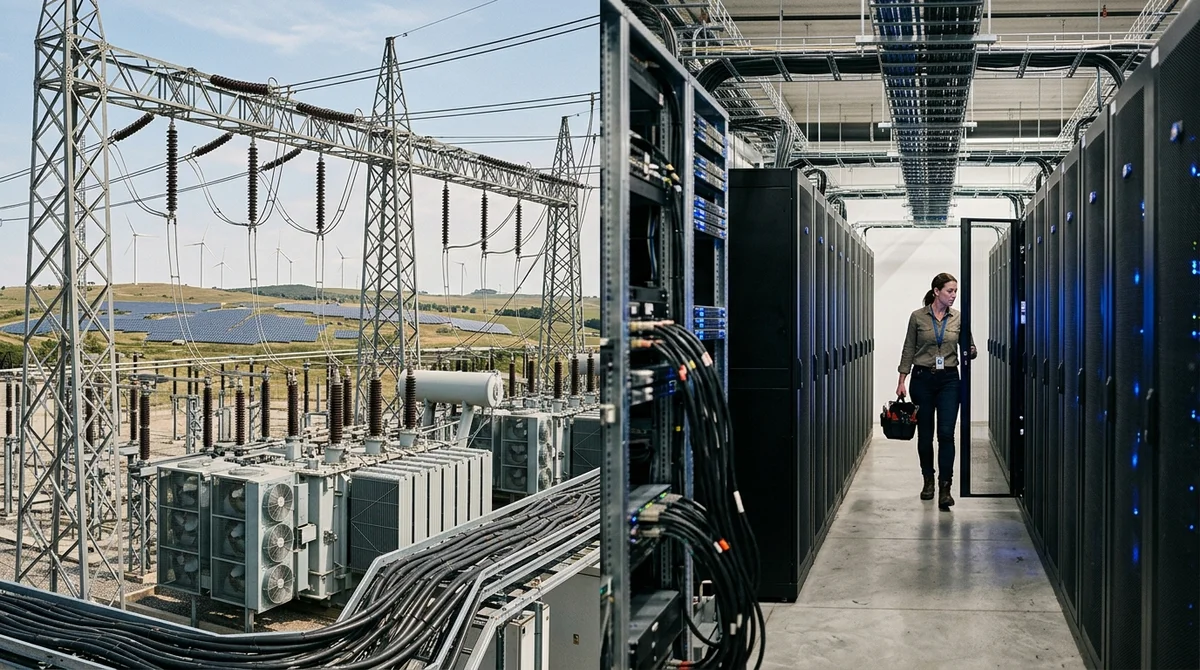
Wars are won not only on the battlefield, but often through logistics and resources. In the USA and China race for AI dominance, logistics looks like this: electricity. If Americans are ahead in chip and algorithm development, then the Chinese were among the first to recognize the critical vulnerability of their competitor — without reliable and cheap electricity, it's impossible to scale AI systems.
America's Bottleneck
Former US Treasury Secretary Hank Paulson warns directly: while America maintains its lead in AI technologies, a severe shortage of electricity threatens to become the main constraint on industry development. Demand for data centers is growing exponentially. Each transformer, each layer of a neural network requires megawatts. Fuel for AI is not silicon, but electrons.
What China is Investing In
According to estimates by former US Ambassador to China Nicholas Burns, Beijing's massive investments in energy are already reshaping global supply chains. China's strategy covers several levels at once:
- Expansion of generation capacity, including solar and wind installations
- Modernization of high-voltage transmission networks for long distances
- Development of energy storage systems (batteries, flywheel accumulators, hydroelectric accumulators)
- Construction of large-scale data centers to serve national AI demand
- Capturing a share of the global AI infrastructure market
Each dollar (or yuan) invested is another brick in the wall of protection against energy collapse.
Energy as a Lever of Geopolitical Influence
Elizabeth Economy, a senior fellow at the Hoover Institution, understands Beijing's true motives more deeply. For China, a clean energy strategy is not only about climate agenda. It's a tool of economic and geopolitical power. Control over the production of batteries, solar panels, wind turbines — control over the infrastructure on which tomorrow's global economy will rest.
"The race for AI may be lost by whoever doesn't have electricity," —
this logic essentially summarizes.
What This Means
The race for AI leadership has turned out to be a race for megawatts no less than for megaparameters. The USA can remain ahead in chips and software, but if the data center network faces an energy crisis, all technological advantage will prove useless.