Halliburton sped up seismic workflows by 95% with Amazon Bedrock
Halliburton created an AI system based on Amazon Bedrock to automate seismic data processing. The system turns natural language descriptions into ready-made workflows, accelerating work by 95%. This helps new specialists become productive from day one without months of training.
AI-processed from AWS Machine Learning Blog; edited by Hamidun News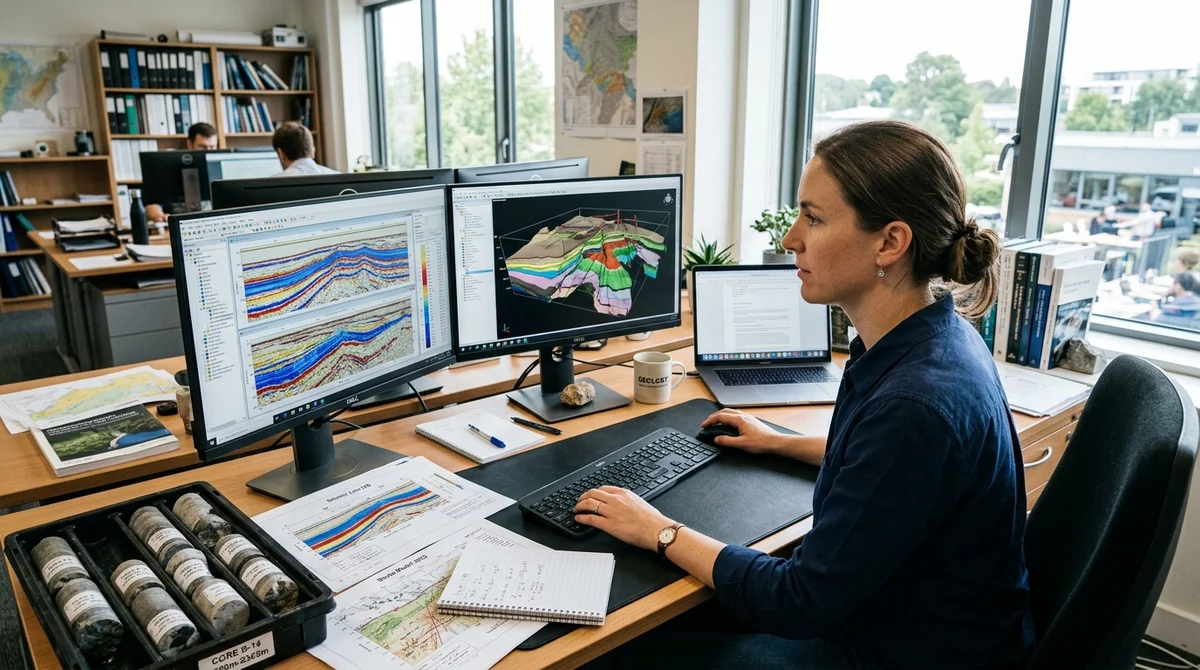
Halliburton, one of the largest service providers in the oil and gas industry, developed a prototype based on Amazon Bedrock that transforms natural language into executable seismic workflows. The system demonstrated 95% acceleration in processing — this could become a breakthrough for automation in the energy sector.
Problem of Complexity and Barriers to Entry
Creating seismic workflows requires deep knowledge of Seismic Engine tools and their nuances. Even experienced geophysicists and engineers spend hours configuring parameters, debugging step sequences, and checking component compatibility with each other. This slows down analytics, increases time to market for results, and creates a high barrier for new specialists who are forced to spend years mastering the platform.
How Generative AI Solves the Problem
The system uses large language models through Amazon Bedrock to analyze natural language descriptions and transform them into workflows. Key capabilities:
- Interpretation of tasks without reading documentation — the system understands user intent
- Transformation into correct Seismic Engine API calls with the required parameters
- Answering questions about features, capabilities, and syntax of tools
- Automatic validation — checking the correctness of the constructed workflow
Instead of searching documentation, a specialist simply describes the result: "Apply a low-pass filter to the data and perform a stack with dynamic correction." The system will independently assemble the correct sequence of operations, set parameters, and the workflow can be run immediately.
Testing Results
The evaluation showed 95% acceleration when creating standard workflows. Beyond speed, the system works as a built-in assistant, helping to understand platform features in real time. This significantly reduces the learning curve for new team members — instead of weeks of documentation study, newcomers become productive from day one. Halliburton tested the solution on real data and scenarios. The system showed stability when working with various types of seismic tasks — from basic filtering to complex multi-stage workflows.
What This Means
Generative AI is penetrating the most specialized domains. For oil and gas and energy — this is the path to automating complex analytics without retraining teams. This could reshape the entire seismic data preparation and processing chain, making it more accessible and faster.
Delegate Deep Research, Coding & Workflows to an AI Agent
Deploy autonomous multi-step execution with NomadNet Agent (agent.nomadnet.ai) — automated web research, data synthesis, code generation, and complex task orchestration.
The AI world, distilled — once a week
Seven stories that actually mattered, hand-picked. No noise, no reposts, no press releases.
Done! Check your inbox for a confirmation.