Akamai allocated $1.8B to AI cloud and moved away from hyperscalers
Akamai announced a $1.8B investment in an AI cloud and is ready to abandon hyperscaler services. CEO Tom Leighton explained that edge computing is critical for
AI-processed from Bloomberg Tech; edited by Hamidun News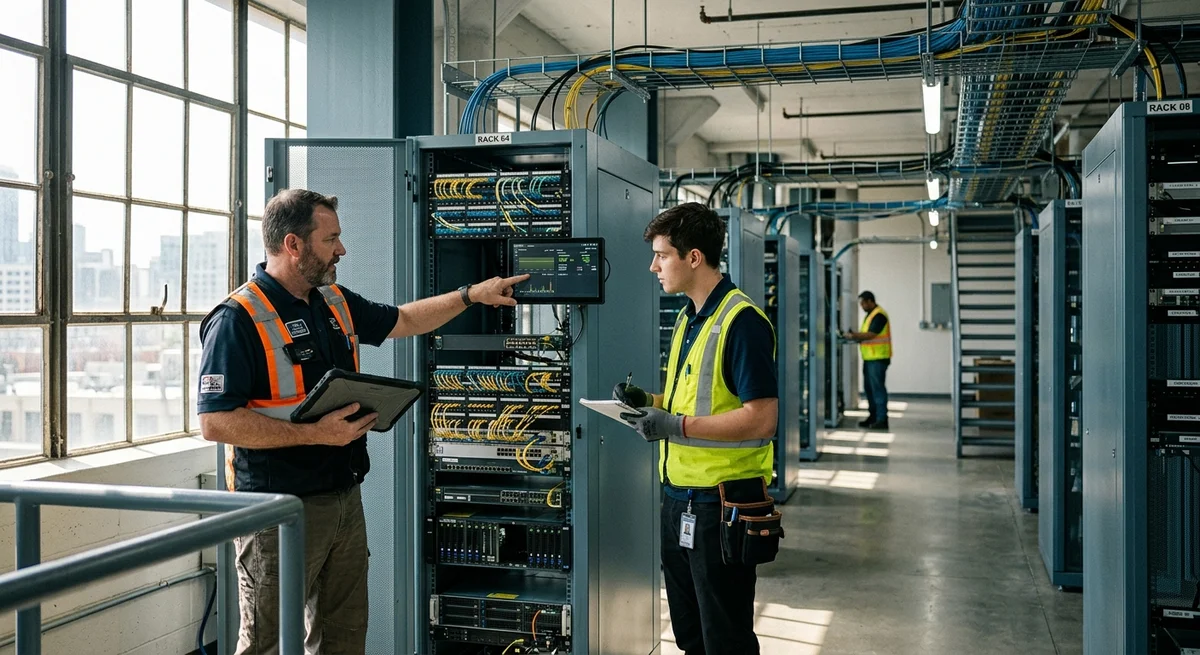
Akamai announced a $1.8 billion investment in developing an AI cloud. CEO Tom Leighton explained in detail in a Bloomberg Open Interest interview that this is a strategic move: the industry is shifting from the hyperscaler model (AWS, Google Cloud, Azure) to edge computing — computations at the edge of the network, as close as possible to the end user.
New
Cloud Architecture Edge computing fundamentally changes the topology: instead of sending data to distant Google or Amazon data centers, processing happens locally — on telecom operator servers, in client offices, on factory floors. For AI applications, this is critical. First, speed: if a model runs within milliseconds of the user, latency drops from 50-100ms to 10-20ms. This means real-time responses. Second, security and privacy. Data doesn't travel back and forth through public cloud: the risk of leaks decreases, control stays with the company. Third, cost: if you don't pay for egress traffic and don't rent GPUs from Amazon at $1/hour, bills drop by 30-50%.
Why Protection from AI Attacks Became Central Leighton gave particular attention to cybersecurity.
AI-powered attacks evolve quickly: tokens leak from cloud APIs, models train on stolen data, phishing becomes personalized through generative AI. If your model runs locally, it's harder to compromise through a strike against a cloud provider. This is especially relevant for the financial sector, healthcare, and government — industries where breaches cost dearly. Plus: local computations are easier to monitor and control. There's no black box in the cloud, no surprises from API updates.
Three Pillars of Edge Migration Companies are moving to edge for good reason.
Here are the main drivers: Protection from cyberattacks. AI-powered attacks become smarter every month. Local processing reduces the attack surface and simplifies compliance control. Reducing operating costs. You don't pay giants for traffic and GPUs. Edge hosting is cheaper, especially if you're a large corporation with your own infrastructure. * Data sovereignty. Medical companies, banks, governments don't want their data to train competitors through cloud-based Google models. Edge allows you to keep everything in-house.
Hyperscalers
Fight Back, But It's Too Late For AWS, Google Cloud, and Azure, this is an existential threat. Cloud was their monopoly. Now competitors — Akamai, Cloudflare, Oracle, Equinix — convince clients that edge is cheaper, faster, and safer. Giants are launching their own edge services (AWS Local Zones, Google Distributed Cloud, Azure Edge Zones), but the market has already recognized the shift. Investments like Akamai's $1.8B — not just a corporate move, but turning what was once an experiment into an industry.
What This Means The cloud landscape is stratifying before our eyes.
Hyperscalers remain for large analytical tasks, model training, archives. Edge providers capture everything else: real-time AI, privacy, local security. In the next 3-5 years, this division will become the standard. Akamai's $1.8B bet — a signal to the industry about where money is growing in cloud AI.
Want to stop reading about AI and start using it?
AI News is a curated feed of AI/tech news. Hamidun Academy teaches you to use AI systematically in your work.