Baillie Gifford investor: AI's main threat is not unemployment, but the loss of expertise
Tom Slater, manager of the Scottish investment fund Scottish Mortgage Investment Trust, has published a provocative study: AI threatens not so much jobs as the
AI-processed from Bloomberg Tech; edited by Hamidun News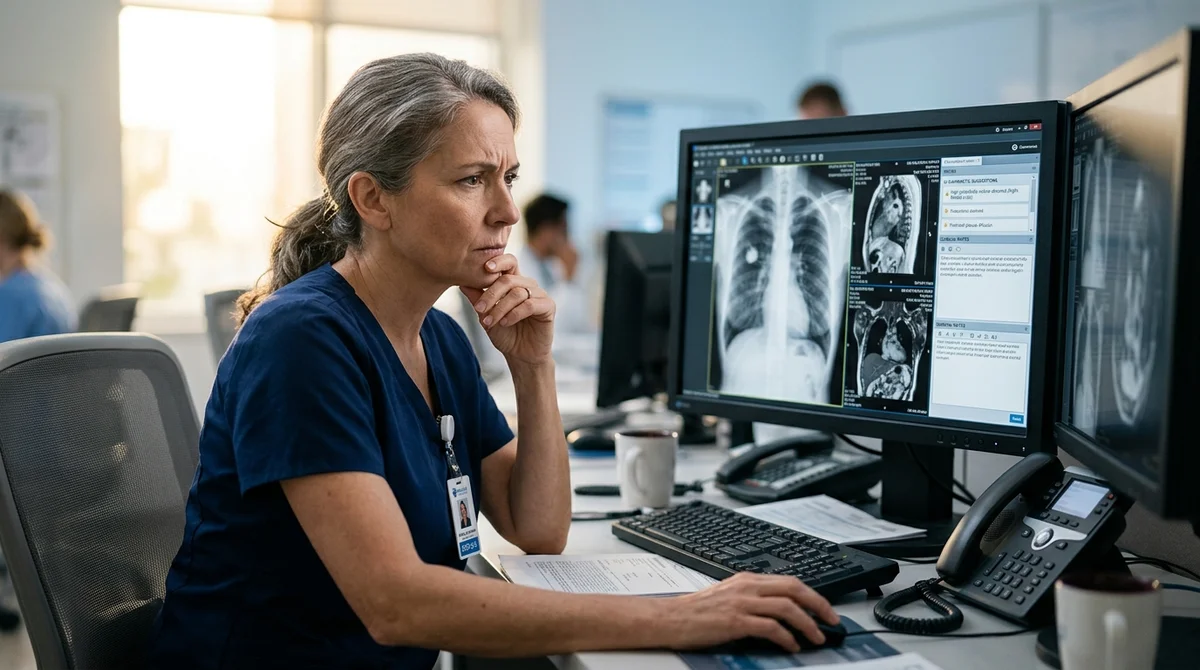
Manager of Scottish investment fund Scottish Mortgage Investment Trust Tom Slater published a provocative research titled: "AI will come not for work, but for the mind." In an interview with Bloomberg, he explained why the main threat of artificial intelligence lies not in a wave of unemployment, but in people's gradual loss of ability to learn, analyze independently and make well-considered decisions.
Visibility Hides Essence
Slater does not deny that AI will displace jobs. But the true danger, in his conviction, lies much deeper. When people shift intellectual work to machines, they stop developing their own cognitive abilities.
The brain, like a muscle, atrophies if not used. Society may look more productive on the surface — productivity grows, costs fall, profits increase — but it is actually losing the ability for independent analysis and critical thinking. The most insidious aspect of this scenario is its complete invisibility.
At the level of a corporation or national economy, everything looks wonderful. Graphs are rising, metrics are improving, investors are satisfied. But if you look deeper, you see a disheartening picture: people have forgotten how to analyze information independently, lost skills in handling unusual tasks, forgotten how to learn from experience.
"The world may seem more productive, but is quietly losing the
judgment, learning and expertise that make progress possible."
From Medicine to Energy
Take a doctor who works for years with an AI diagnostic system. At first, the technology is a useful assistant. Gradually, the doctor forgets how to read images and analyze symptoms independently. His expertise atrophies. When the algorithm encounters an unusual case or fails, the doctor is lost. He forgot how to think independently. The same thing happens in engineering, management, finance, aviation. Critical industries are losing specialists capable of thinking outside the box and making decisions under uncertainty. Organizations become more fragile despite apparent productivity growth.
- People forget how to make decisions under uncertainty
- Specialists who can critically evaluate algorithm results disappear
- Systems become vulnerable to rare events and anomalies
- Innovation slows because all work follows well-trodden paths
Why This Matters to Investors
Slater is not just a theorist discussing abstract dangers. He is an investor managing billions and thinking about long-term asset value. A company that has completely abandoned its own expertise will be vulnerable to crisis. One must choose companies that use AI as an amplifier of human thinking, not as a replacement. Those who allow their team to degrade will lose to competitors who managed to preserve competence.
What This Means
The threat of AI is not a machine uprising or simply a wave of unemployment. It is the slow loss of human competence and the ability for independent thinking. The world may look more productive, but internally it is losing the ability to adapt and be creative. This is a challenge for both each company and society as a whole.
Want to stop reading about AI and start using it?
AI News is a curated feed of AI/tech news. Hamidun Academy teaches you to use AI systematically in your work.