Robot instead of soldier: Hyundai to help South Korea address troop shortages
The South Korean military is seeking a partnership with Hyundai to deploy robots to combat positions. The reason is a critical shortage of young people to replenish the armed forces because of the demographic crisis. Seoul is rapidly investing in AI and unmanned systems to make up for shrinking troop numbers.
AI-processed from Bloomberg Tech; edited by Hamidun News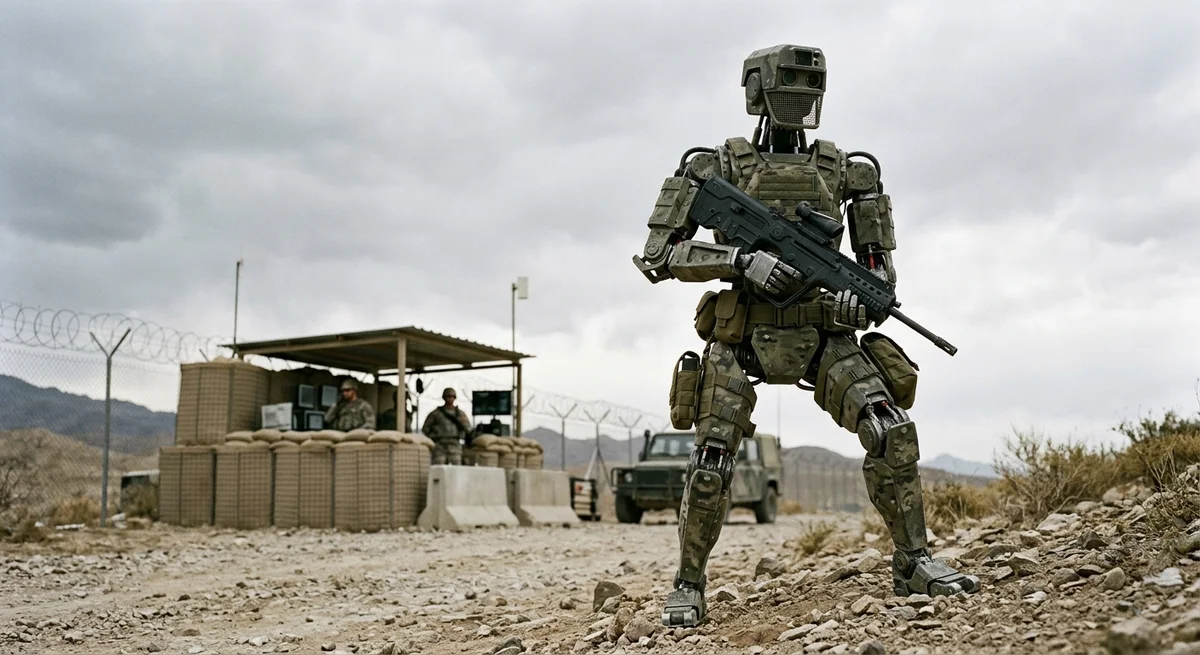
South Korea's military has begun negotiations with Hyundai Motor Co. to deploy combat robots to compensate for a growing shortage of personnel. The country is rapidly investing in AI systems and unmanned complexes in response to a demographic crisis that threatens to undermine the military's combat capability.
Demographic Collapse of the Armed Forces
South Korea faces a critical shortage of young conscripts. Low birth rates (among the lowest in the world), an aging population, and growing urbanization mean that each year fewer young people enter the military. By 2040, the conscript pool will shrink by 30 percent. At the same time, North Korea maintains a million-strong army, which Seoul cannot afford to demobilize. Reducing the size of its own armed forces is simply impossible without risking the country's security. The government is seeking ways to maintain combat readiness without directly increasing the number of soldiers — it needs technology that can compensate for the loss of manpower.
Robot as an Alternative to Man
This is where AI and unmanned systems come into play. Combat robots can perform routine and dangerous tasks that currently require a live soldier: border patrols, frontline duty, mine clearance, reconnaissance in a combat zone. A robot works 24/7 without shifts, fatigue, or stress — maintaining a steady combat rhythm and constant readiness.
The key advantage: one operator can coordinate multiple combat platforms simultaneously thanks to AI assistants. This allows a small number of people to control vast territories and fronts. A robot feels no fear, doesn't surrender, requires no medical care, barracks, or leave.
There are drawbacks: a robot can fail due to interference, cyberattacks, or battery depletion. It cannot learn from combat experience like a live soldier. But as a complement to a live army, not a replacement for it, robots solve an acute personnel problem.
Partnership with Hyundai: Why an Automaker?
The choice of Hyundai Motor Co. is no accident. The company has experience in manufacturing automation, AI systems development, and robotics. It has factories, engineers, logistics, and capital to scale combat platforms from scratch to mass production in just months. This isn't a startup—it's an industrial machine. Details of the agreement have not yet been revealed, but it involves a long-term partnership between Seoul's defense ministry and the Korean giant. Hyundai will develop platforms, integrate AI, organize production, and supply the military. The contract is potentially worth billions of dollars.
"Investment in AI and robotics is not a whim but a question of survival for our armed forces in the face of a demographic crisis," said a
Korean military analyst.
What This Means
Demographic challenges are pushing developed countries to urgently implement combat robots and unmanned systems. If Seoul and Hyundai successfully develop this technology and deploy it on the border with North Korea, it will reshape the region's geopolitics. A new class of warfare may emerge: a conflict where most combat units are unmanned.
Access Frontier LLMs & Multimodal AI in One Workspace
Discover NomadNet AI (nomadnet.ai) — unified access to frontier language models, research synthesis, and multimodal workflows.
The AI world, distilled — once a week
Seven stories that actually mattered, hand-picked. No noise, no reposts, no press releases.
Done! Check your inbox for a confirmation.