Stores Turn to Facial Recognition to Fight Shoplifting
Stores, from supermarkets to small shops, are beginning to use facial recognition systems to fight shoplifting. Police and private companies see the technology as a powerful tool against crime. But experts say it expands video surveillance into public spaces and does not always deliver accurate results, raising new privacy questions.
AI-processed from Guardian; edited by Hamidun News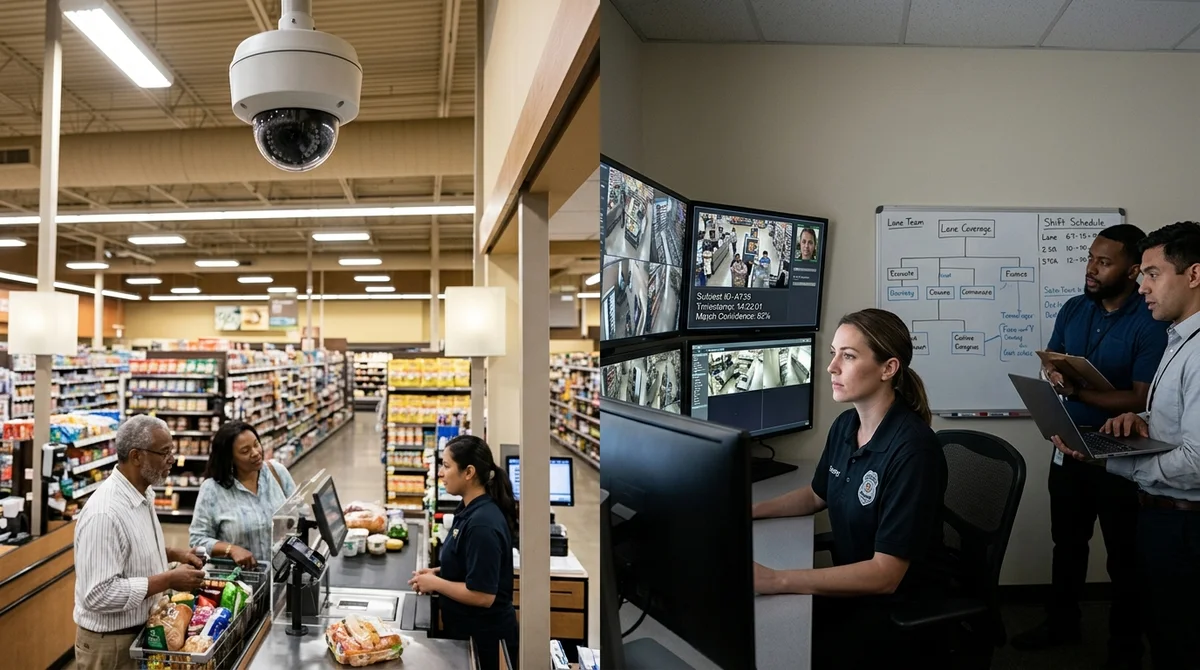
Live facial recognition is coming to retail. Facial recognition systems, which law enforcement agencies are already actively using to solve crimes, are now being implemented by supermarkets and neighborhood stores. The goal is one — to stop the wave of retail theft that costs the retail sector billions.
What stores promise
Retailers see facial recognition as a powerful tool to prevent theft. The systems work in real time: cameras scan the face of each visitor and compare them to a database of known thieves, people involved in thefts in the past, or those suspected of suspicious activity. If the system finds a match, store staff receives an alert on a tablet or smartphone and can discreetly track the person or call security. System manufacturers claim they have helped reduce theft losses by 30–50%. Police are also actively implementing this technology for investigating crimes, tracking suspects, and searching for missing persons.
How the technology works
Modern facial recognition systems analyze geometric features: the distance between the eyes, the shape of the nose, the placement of cheekbones, the width of the mouth. These unique characteristics are converted into a digital code, which is then compared to thousands or millions of records in databases. It sounds simple, but in real life everything is more complex. The technology requires good video quality, optimal lighting, and a direct angle to the camera. And people wear masks, hats, sunglasses, the lighting in the store changes, viewing angles are never ideal. The result is that the system's accuracy often drops, especially for faces with different skin tones.
Why this is dangerous
Despite attractive promises, the implementation of facial recognition in stores raises serious concerns:
- Identification errors — systems regularly make mistakes, leading to false accusations of innocent people
- Expansion of video surveillance — surveillance is now not just for goods, but for every shopper
- Lack of transparency — most customers don't know their faces are being scanned and analyzed
- Data breaches — collected data can be sold to third parties or misused
- Discrimination — algorithms can disproportionately target people of certain demographic groups
The Guardian correspondent Jessica Murray points out that the expansion of surveillance in private spaces requires strict regulation and oversight. People should know when and how their faces are being analyzed, and have the ability to opt out of such systems.
"When the technology is not always accurate and there is no oversight,
privacy wins," note civil liberties experts.
What this means
Facial recognition is becoming a part of our daily life — not only on streets and at airports, but also in stores where we simply buy bread and milk. This creates new questions about the balance between security and privacy in the digital age. For Russia, where surveillance systems are developing at a rapid pace, this discussion is especially relevant.
Need AI working inside your business — not just in your newsfeed?
I build production AI for companies — custom CRM, internal tools, autonomous agents, workflow automation. Owned by you, shaped to your process, no per-seat tax. Built by Zhemal Khamidun, CPO of AlpinaGPT (AI platform, 6,000+ users).
The AI world, distilled — once a week
Seven stories that actually mattered, hand-picked. No noise, no reposts, no press releases.
Done! Check your inbox for a confirmation.