Russian IT infrastructure market reaches 658 billion rubles amid AI development
Russia's complex IT infrastructure market grew 15% over the past year to reach 658 billion rubles. The public sector remains the largest consumer of high-tech s
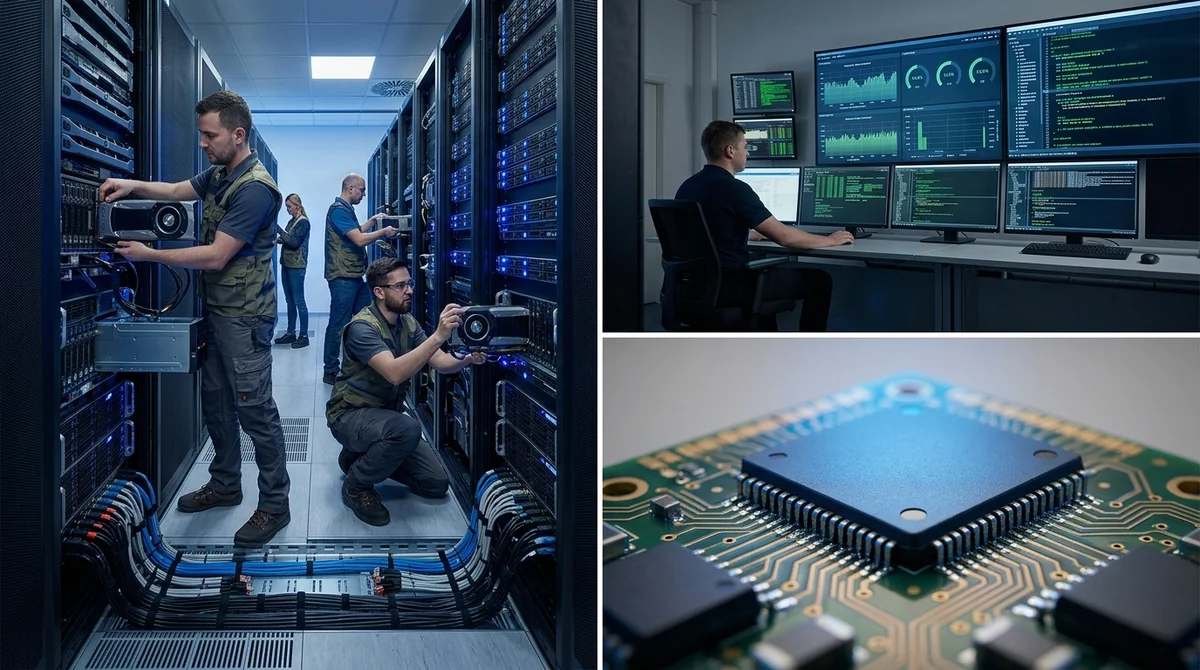
The Russian IT infrastructure market continues to develop at an accelerated pace, reflecting the growing role of digital technologies in the country's economy. Over the past year, the market volume grew by 15% and reached 658 billion rubles. This is particularly noteworthy given the sanctions pressure and the need to develop domestic technological solutions.
Artificial Intelligence as the Main Driver
The main engine of IT infrastructure market expansion is the rapid development of artificial intelligence. AI tasks require the most powerful servers, high-performance graphics cards, and exceptionally complex cooling systems. The state is actively investing in developing its own technological capabilities, particularly in the areas of data centers and data processing systems. Every major AI application requires significant capital investments in infrastructure.
Public Sector as the Main Consumer
The public sector remains the largest consumer of complex IT infrastructure in the Russian market. Government agencies, ministries, and departments are actively expanding data centers, modernizing data processing systems, and implementing AI solutions. The main directions of government demand:
- Development of distributed data centers in strategic regions
- Implementation of big data analytics systems for management decisions
- Building infrastructure for AI applications and state digital services
- Strengthening cybersecurity of critical systems
- Migration to domestic platforms and solutions
These investments reflect the government's strategy of technological independence and create multiplier demand for equipment, specialists, and systems integrators.
Technological Gap in Graphics Cards
However, market development faces a critical bottleneck in semiconductors, which is slowing the adoption of advanced solutions. Russian graphics cards and AI processors lag behind Western counterparts by entire generations of development. NVIDIA and AMD continue to dominate the global high-performance accelerator market, providing the bulk of capacity for training large language models and neural networks. Domestic developments require additional time to mature and achieve competitiveness. This limits the pace of implementing advanced AI systems in Russian companies and government organizations.
What This Means
The Russian IT infrastructure market demonstrates steady growth thanks to government investments and demand for AI solutions. At the same time, a significant technological gap remains in key electronic components, especially in graphics cards for neural network processing. Overcoming this gap is one of the main tasks for the domestic IT industry over the next decade and will require large-scale R&D investments and strategic cooperation.