Gossip Goblin и новая эра AI-кинопроизводства: вопреки обвинениям в 'слопе'
В Стокгольме появилась студия AI-кинопроизводства Gossip Goblin. Команда режиссёра, актёра и композитора записывает озвучку для фильмов про поэтическую гориллу
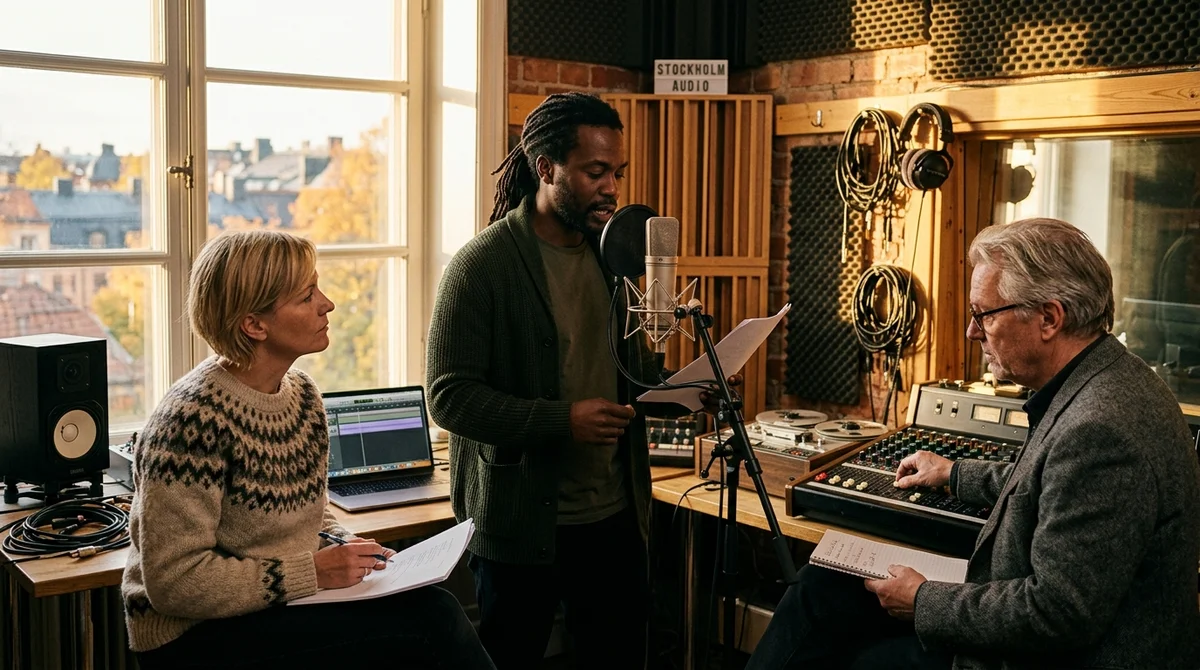
In a former sewing workshop in Stockholm, where seamstresses once stitched garments for 19th-century bourgeoisie, films are now being created with AI. This is not a Hollywood production with a massive budget, but a small creative team in a modest studio. Yet this story symbolizes the moment when AI filmmaking enters a new era of development, and it can no longer be stopped by criticism.
What's Happening in the Gossip Goblin Studio
A typical day at the studio: an actor, director, and composer record voiceover for their AI film. The script tells the story of a poetic Scottish gorilla that exists in a transhumanist cyberpunk world full of contradictions and philosophical questions. It sounds strange and avant-garde, but the team approaches the work seriously, discussing every syllable of dialogue, every intonation, as if writing a script for a real theater or radio show. One of the participants jokes that it's like working on the classic British radio program The Archers — where every word has weight, and all acting lives only in the voice and pauses.
AI in this case is not a magic button you press and get a finished film. It is a tool that expands the creator's capabilities. The human remains the director, editor, and ultimate arbiter of quality and meaning.
Criticism: Slop, Copyright Infringement, Job Loss
Critics aren't silent. The main complaints sound familiar:
- "Slop" — automatically generated low-quality content without meaning or taste, just garbage on screen
- Copyright infringement — models are trained on other people's films without permission, violating the law
- Job loss — real directors and actors lose contracts and earning opportunities
- End of film school — if AI makes films, why study the craft for ten years?
Critics aren't entirely wrong. Copyright is a real problem that needs to be solved. But AI filmmakers respond differently: they don't copy other films, they generate something entirely new. As the artists themselves say: "There are no rules there." This is the motto of a new era — experiment, try, see what happens, and if it turns out well, show it to the world.
From Experiments to Industry
The most interesting thing about the Gossip Goblin story is that it's not an isolated case. Interest from the film industry is growing. If AI in cinema once seemed like the domain of young enthusiasts and experimenters on YouTube, it now attracts the attention of professionals.
Directors, producers, major film companies are beginning to seriously experiment with neural networks in their projects. Hollywood sees real potential: AI can accelerate the creation of costly scenes, reduce expenses for complex computer graphics, allow the director to spend more time on acting and story. Some studios already use generative AI to create storyboards, concept art, digital backgrounds, and even synthesize early versions of scenes before bringing in expensive specialists.
This is a tool for accelerating work, not a replacement for creators.
What This Means
AI filmmaking is no longer science fiction or experimental art. It is the reality of 2026. The question is not whether this will develop, but how exactly it will develop. New copyright legislation will be needed, dialogue with actors' and directors' unions, an honest conversation about how technology can complement creativity, not replace it. The Gossip Goblin story is the first page of a new chapter in cinema history.