AWS and Cisco address three AI agent security issues when scaling
AWS and Cisco have joined forces to protect AI agents during large-scale deployment. The partners address three issues: limited visibility across systems, secur
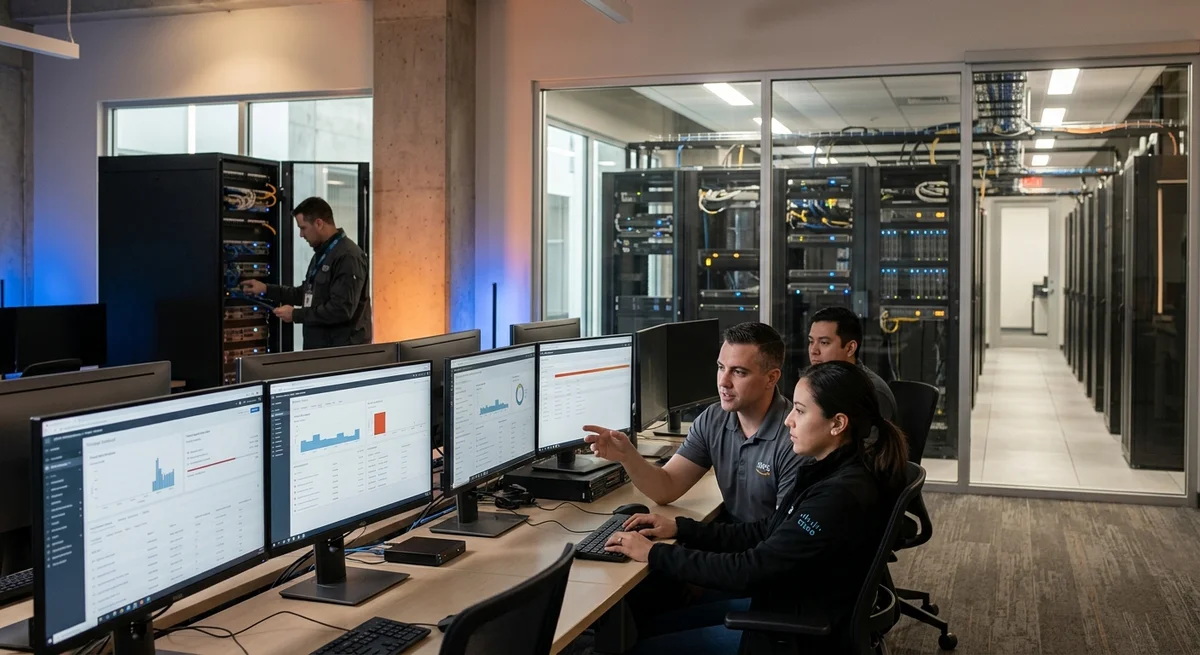
AWS and Cisco announced a strategic partnership to protect AI agents during their mass deployment in corporate environments. The joint solution aims to overcome three critical problems that slow down scaling: lack of visibility into agent actions, security bottlenecks, and growing regulatory compliance requirements. This initiative demonstrates how technology giants approach risk management in enterprise AI deployment and what tools they are preparing for mass agent deployment.
Three Problems with AI Agent Scaling
When companies transition from one or two experimental AI agents to deploying dozens and hundreds simultaneously, there is a qualitative leap in complexity. Architecture must change fundamentally, but many enterprises run into invisible obstacles that freeze deployment.
The first problem is the lack of full visibility. Engineers and risk managers do not know in real time what each agent does, which systems it accesses, what data it processes, what decisions it makes. If an agent makes a mistake or veers into dangerous territory, the system may not notice. This is especially critical for regulated industries, where every action must be documented and explained.
The second problem is security bottlenecks. Manual review of every new agent, every update, every call to external systems and APIs simply doesn't scale. A company can check 10 agents with people, but what about 100 or 1,000? Manual work becomes a barrier to growth.
The third problem is regulatory compliance. Regulators demand more and more documentation, regular audits, proof that the system operates within established rules. This is especially acute in finance, healthcare, and government, where a compliance error can cost millions.
- Visibility: complete loss of control over agent actions in real time
- Security: manual review becomes a serious bottleneck when scaling
- Compliance: growing requirements for audits, documentation, and compliance proof
How AWS and Cisco Solve the Problem
AWS and Cisco proposed a two-tier approach that combines automation with management. First, automated scanning of each agent before deployment. The system checks source code, required permissions, access to external APIs, potential vulnerabilities — all without human intervention. It's like automated security testing, but operates in real time.
Second, a unified management system that gives engineers one window to monitor all agents simultaneously. What permissions does each agent have? Which systems does it access? What errors occur? What unauthorized access attempts were intercepted? All information is accessible from a single control panel without needing to switch between different tools.
The solution integrates AWS tools (Lambda, IAM, CloudWatch) with the Cisco AI Defense platform, which specializes in security checks for AI systems. Cisco brought deep expertise from the network security field — technologies for automated threat detection, rapid incident response, minimization of false positives. The result: a company can deploy hundreds of agents without increasing the number of security engineers.
What Changes in Scaling Practices
Companies that are now actively deploying AI agents face a painful choice: slow down deployment and check everything manually for security, or accelerate and risk security and compliance violations. The AWS and Cisco partnership offers a third path — scaling without compromising security.
This shows where the industry as a whole is moving. Security can no longer be added after the fact — it must be built into the process from the very beginning of development and testing. AWS and Cisco demonstrate that scaling AI agents requires not just powerful cloud infrastructure, but also reliable tools for automated control, monitoring, and rapid response to potential threats and incidents.