Oura has long used AI to predict health, CEO says
Oura has been using AI to predict users' health for years, much earlier than other companies. CEO Tom Hale spoke about the algorithms' ability to predict short-
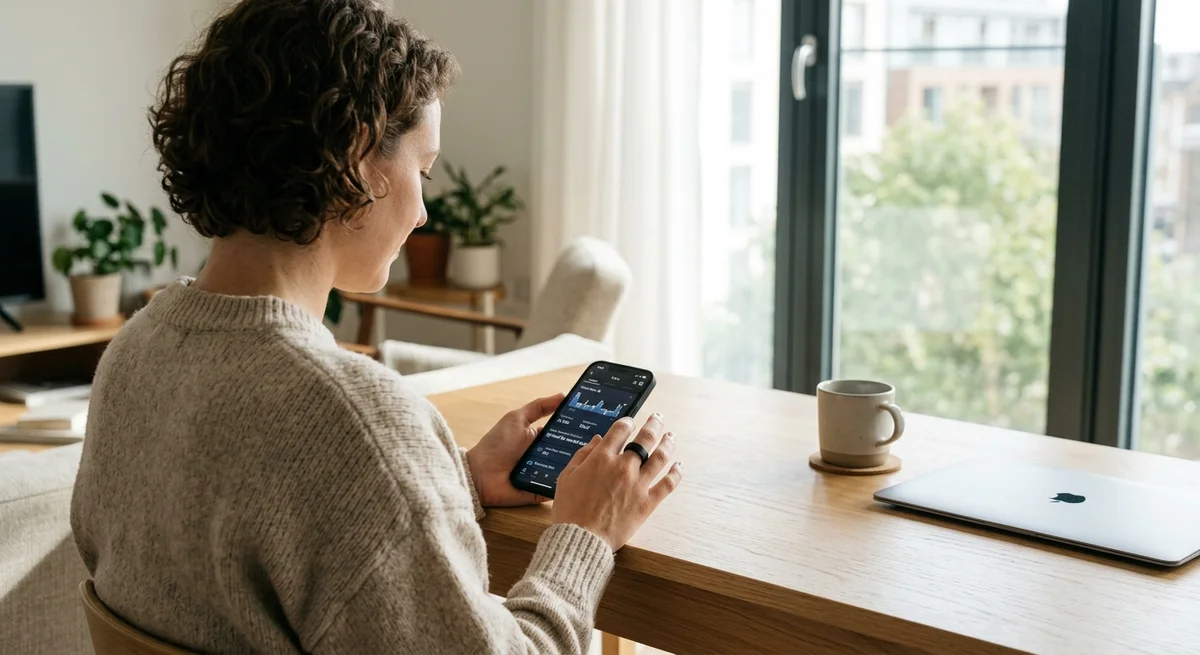
Oura, the company that created popular smart rings for health tracking, is not one of the many startups that jumped on the AI wave in recent years. In fact, the company embedded machine learning in its products much earlier than others. This was revealed by CEO Tom Heigl during the Spark Summit conference in California in an interview with Bloomberg.
AI predicts health months in advance
Oura's algorithms have learned to predict changes in users' health status across different time horizons. The system works on both short-term forecasts — when a user will sleep well, when stress awaits them, how much energy they'll have tomorrow — and long-term ones: identifying disease development risks, chronic condition progression, overall health trends months and years ahead. Technically this is possible thanks to data from the ring: heart rate, heart rate variability, skin temperature, sleep patterns, movement. AI learns patterns between these signals and subsequent health changes. The system doesn't just predict, but also makes personalized recommendations: what actions will help improve sleep, how to manage stress, when to reduce physical activity.
How to convince science of seriousness
Oura's main challenge is the scientific community. When the company talks about predicting health, the medical community demands proof. Clinical trials are needed, statistical validation of algorithms, publications in authoritative medical journals. Heigl acknowledged that this is more difficult than simply selling gadgets. You need to attract independent scientists, conduct open research, and prepare for skepticism. Some doctors still look warily at wearable devices because they haven't seen enough evidence of their effectiveness.
"We're doing work that requires time and rigorous scientific methodology.
These aren't quick PR campaigns, it's actual science"
Oura and Apple: competitors or complement
One question concerned competition with Apple Watch. A large percentage of Oura users also use Apple Watch — does this kill demand? Heigl answered that these are rather complementary devices. Apple Watch provides information during the day: current heart rate, movement, stress in real time. Oura focuses on analyzing the night and long-term forecasts:
- Deep sleep analysis and recovery
- Long-term health trends
- Battery lasts up to 7 days instead of one
- Focus on predictions rather than real-time monitoring
It turns out these are different niches: Apple Watch for everyday health and activity, Oura for deep analysis and forecasts.
What this means
Smart rings are becoming a new generation of personal medical assistants. AI has learned to predict health problems before a person feels them themselves. This could be a revolution in preventive medicine, but only if the scientific community confirms that these predictions actually work.