Data center demand drove U.S. electricity prices up 76%
Electricity prices on PJM Interconnection — the largest U.S. power grid — jumped 76% in the first quarter. The culprit is relentless demand from data centers th
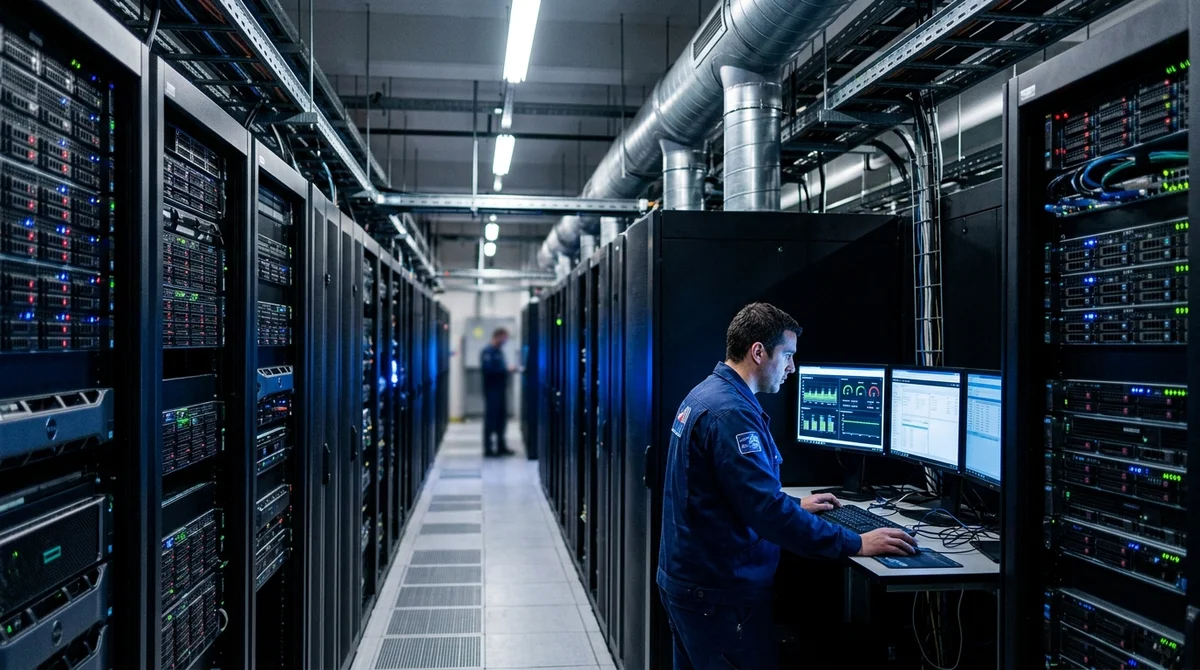
Electricity prices on the largest US power grid rose by 76% in the first quarter of 2026. The reason is explosive demand from data centers powering AI services. This event has sparked a wave of calls for grid operators to find ways to ease the pressure on consumers.
Pressure on the PJM grid reaches a limit
On the PJM Interconnection grid, which serves 65 million people across 13 states, demand from server facilities has gotten out of control. A 76% increase in a single quarter is not market volatility, but systematic pressure from new megawatt-heavy consumers. The grid operator is forced to balance between state demands to protect consumers and the reality: data centers are being built rapidly, pay for electricity, and are necessary for the digital economy to function.
Data centers for AI consume megawatts like never before
Every service — from ChatGPT to cloud applications — requires enormous computational power. Transformer models are trained for months on specialized GPU clusters, consuming gigawatt-hours of electricity. And that's just training. Inference adds constant background consumption. Data centers are being deployed across the country at record speeds. Their energy consumption doubles every few years. The main requirement is one: to be located as close as possible to internet hubs and cities.
- New data centers require 200–500 megawatts (like a small city)
- Cooling servers during hot months adds 30–40% to consumption
- AI models require constant power supply — you cannot shut down GPUs during peak hours
- Cloud services are displacing local computing, shifting the load to data centers
- Each new AI startup requires its own server cluster
States demand solutions, companies seek a way out
Grid operators face a contradiction. States demand to "ease the burden on consumers" and lower prices. But by law they are obliged to serve anyone willing to pay. Residential and small commercial consumers already see the hit to their bills. Large companies and data centers pay market prices and remain attractive customers.
The energy sector is not ready for the AI boom
This jump is a wake-up call that American energy infrastructure is not ready for the AI revolution. The number of data centers is growing faster than new power plants are being built. Solutions exist, but all are complex: build new capacity (including nuclear), require data centers to improve efficiency, introduce consumption quotas, relocate server facilities to regions with cheap energy.
What this means
The PJM story is a prototype of what will start happening everywhere. Demand for electricity for AI will only grow. Electricity will become yet another bottleneck in the development of the AI industry. Countries and companies that provide data centers with cheap abundant energy will gain a competitive advantage.