Alibaba, Baidu and Huawei move away from Nvidia in favor of their own AI accelerators
Alibaba, Baidu and other Chinese giants are ramping up production of their own AI accelerators. This is a strategic move to guarantee independence from US sanct
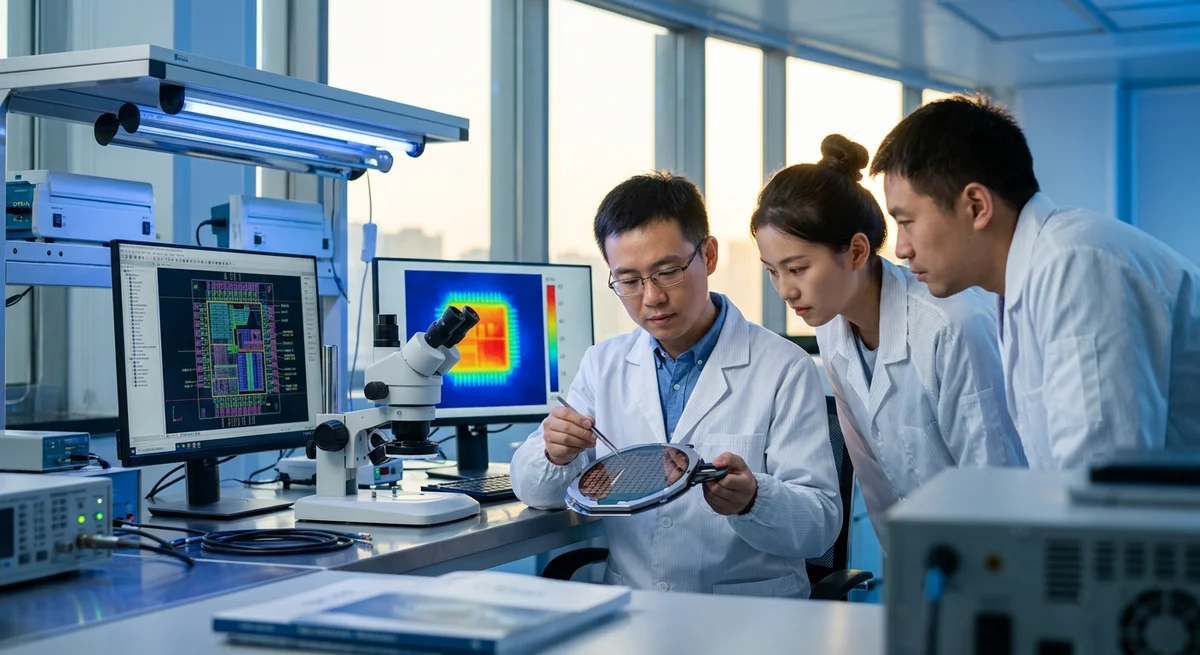
Chinese IT giants Alibaba, Baidu, and Huawei are actively increasing their own production of AI accelerators. This is happening despite rumors about Nvidia's possible return to the Chinese market and is part of a technological independence strategy.
Why the transition accelerated
Western sanctions on the export of advanced microchips forced China to invest in its own solutions. Nvidia, the primary GPU supplier for AI, is practically inaccessible to the region due to American restrictions. Building machine learning systems without dependence on American technology is now a matter not just of economics, but of technological sovereignty. Even if the US returns Nvidia to the market, companies understand: relying on foreign equipment is risky.
Who is expanding capacity
The largest Chinese companies have invested tens of billions of yuan in their own AI accelerator developments:
- Alibaba — Dharma and Yitian line, already integrated into Aliyun cloud services
- Baidu — Kunlun series fourth generation, operates in its own data centers
- Huawei — Ascend, used in cloud and Kirin mobile processors
- Tencent — developments for recommendation systems and NLP tasks
- ByteDance — investments in specialized startups and its own chips
Each company optimizes for its own tasks: Alibaba for e-commerce and cloud, Baidu for search and LLM, Huawei for mobility.
Local technology becomes competitive
Chinese accelerators have already reached 5-nanometer process and are approaching Nvidia A100 in performance. The architecture has stabilized, engineering teams have gained experience, and development costs are falling along the learning curve. These are no longer primitive copies — they are fully competitive solutions optimized for local stacks and requirements. In parallel, the ecosystem is growing: frameworks (MindSpore, PaddlePaddle), optimization tools, drivers. If a year ago developers wondered how code would run on a Chinese chip, now there are already ready-made solutions.
"We are not just copying
Nvidia, we are building a system tailored to Chinese requirements and scales," local analysts describe the position.
What this means
The global AI hardware market is fragmenting. Nvidia is losing its monopoly on the largest Asian market, but this is not its collapse — it is normal for any technology: local players eventually close the critical gap in the supply chain. For Western companies, this means that strategic control over "hardware" is no longer a guarantee of dominance. For researchers, it means that AI models will now be trained on different architectures, which could lead to new optimizations and tradeoffs. The process will be long — not in one or two years — but irreversible.