AI startup Altara raises $7M to unify scientific data
Startup Altara raised $7 million for an AI platform that unifies fragmented data in scientific laboratories. The system helps diagnose errors and accelerate R&D
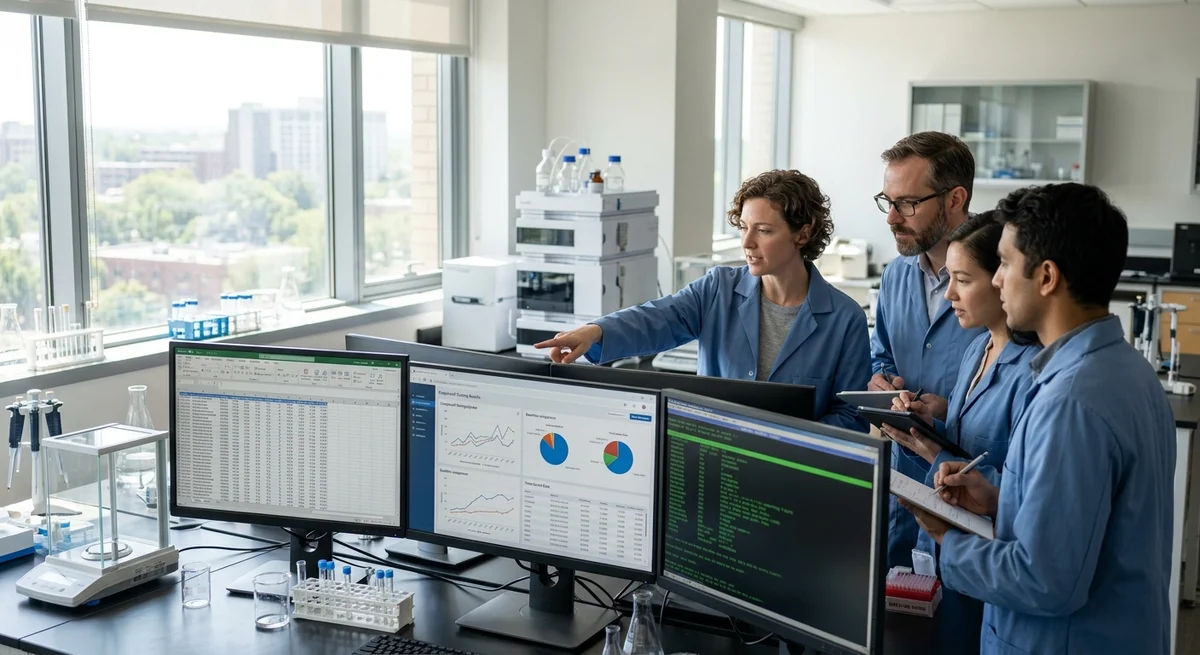
Startup Altara has raised $7 million in funding to develop an AI platform that solves one of the most painful problems in scientific research: data fragmentation. In laboratories and R&D departments of companies around the world, information remains scattered across spreadsheets, legacy corporate systems, and incompatible databases. Altara created a tool that consolidates these isolated information sources and allows scientists and engineers to focus on what they do best — science, not data management.
Bottleneck in R&D and Engineering
In physical sciences and engineering, every project generates enormous volumes of data: experiment results, equipment parameters, historical records, production logs, calibration values. But here's the problem: this information is scattered across different storage systems and formats. Lab notes may be in local Excel files from the 2010s.
Equipment data is stored in proprietary systems that no one can replace without disrupting operations. Historical archives sit in the cloud, on corporate servers, or even on old backup disks. The result is predictable: new employees lose weeks searching for information.
Old experiments can't be reproduced because data is lost in a maze of systems. Scientists are forced to manually copy information between tools, wasting hours on routine tasks. By Altara's own estimates, engineers spend up to 30% of their working time not on analysis and problem-solving, but on moving and organizing data.
How Altara Unifies Disparate Data
The platform works like an intelligent translator and coordinator. It connects to a company's existing systems without replacing or redesigning them and creates a single, unified interface to all data sources. Key platform capabilities:
- Automatic detection of data across different sources and linking them into a single graph
- Equipment malfunction diagnostics based on historical patterns and anomalies
- Detection of outliers and anomalies in experimental results in seconds
- Prediction of likely failures and automatic optimization recommendations
The system uses LLM and machine learning to "understand" the context and specifics of each laboratory. Over time, the AI becomes more useful, adapting to the company's jargon, abbreviations, and specific workflows.
Venture Capital Sees a Huge Market
The $7 million in investments reflects growing venture capital interest in physical sciences and engineering as a new frontier for AI automation. Semiconductor manufacturers, pharmaceutical companies, battery developers, materials manufacturers — they all face one problem: how to accelerate the development cycle and reduce R&D costs. Since digitalization in the hardware industry significantly lags the software sector, a huge niche has formed for tools that bring order to data and accelerate workflows.
What This Means for Science
Investment in Altara confirms an important trend: physical sciences and engineering are becoming a new frontier for AI automation. Companies are finally realizing that the cost of time lost on data management exceeds the cost of the tool itself. For scientific laboratories, this means the ability to get innovations to market faster and reduce R&D expenses. For venture capital, it's a chance to invest in companies solving real problems for engineers and scientists, rather than hypothetical scenarios from technology fiction.