Anthropic and Elon Musk's xAI signed a deal for compute resources
Anthropic (the maker of Claude) signed a deal with xAI to use compute resources. It's an unusual but logical move: a severe GPU shortage makes cooperation more
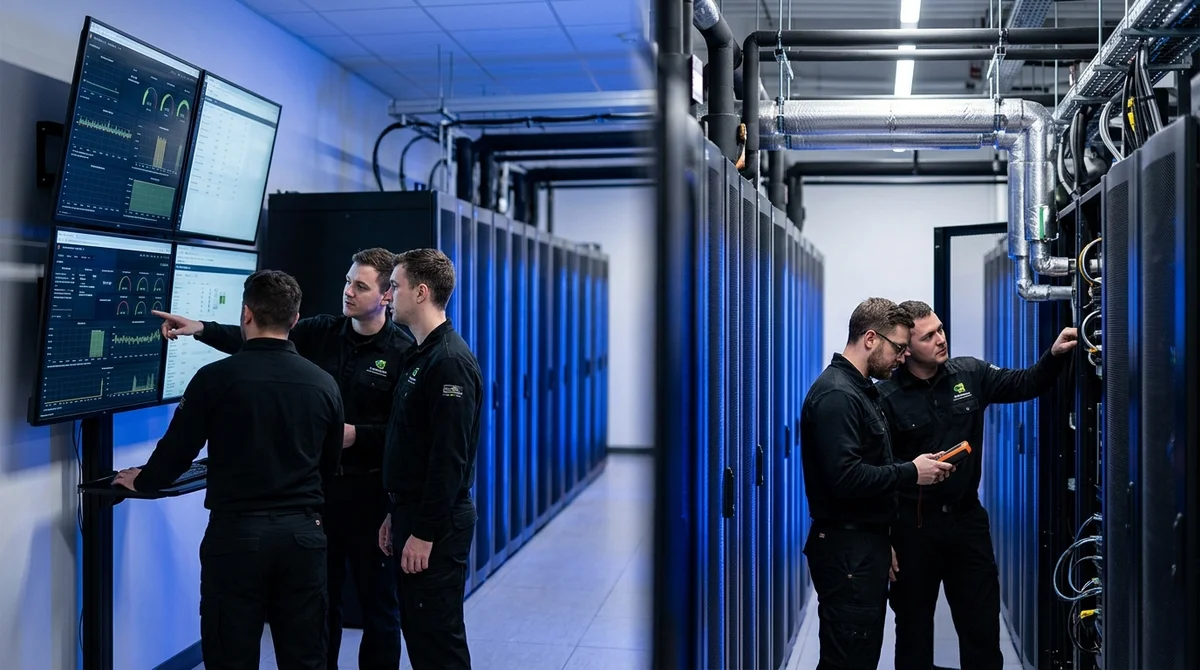
Anthropic and Elon Musk's company xAI have signed an unexpected partnership on the use of computing resources. In the midst of the AI race, two competing companies have found a way to cooperate that could rewrite the rules of the game in the industry and change the dynamics of artificial intelligence development.
Partnership of Competitors in the Heat of the Race
Anthropic, the team that created Claude, has concluded a deal with xAI for access to computing power and infrastructure resources. At first glance, this seems strange: both companies are competing for the same place in the industry, fighting for the same investors and trying to seize the leading position in the AI market. xAI recently raised an unprecedented $6 billion in investment and publicly stated its goal to create AGI faster than OpenAI and other competitors.
Anthropic has the backing of Google, Amazon, Salesforce and has raised over $4 billion in funding over the past year. Nevertheless, the leadership of both companies recognized the obvious: a war for computing resources is more expensive and less efficient than wise cooperation. This deal helps both sides accelerate development and save billions on infrastructure without losing competitive advantage at the level of algorithms and the final product that users see.
Critical Computing Deficit
The main reason for this partnership is the acute shortage of GPUs and specialized chips for training large language models. In 2024-2025, demand for computing power is growing exponentially, outpacing supply by a huge margin. NVIDIA cannot fulfill all orders even at the price of $40 thousand per H100 GPU, and new suppliers like Cerebras and Graphcore are only gaining momentum and are unlikely to solve the deficit in the next 18-24 months. This is not just about chip shortages. This is about computing power becoming more expensive than hiring people and becoming the main bottleneck in developing new models:
- Each next-generation LLM requires exponentially more resources for training — GPT-4 required millions of GPUs and the electricity of an entire city per day
- Building a data center of the required scale takes 2-3 years of development and $2-5 billion in capital expenditure, plus the struggle for access to electricity
- Cooling such a large amount of GPU requires its own energy infrastructure and can consume dozens of megawatts of electricity
Instead of a multi-year cycle of building its own data centers, Anthropic can immediately gain access to ready-made xAI resources, saving billions and accelerating the development of new versions of Claude.
New Trend in the AI Industry
This deal marks a cardinal trend: competitors are willing to cooperate at the infrastructure level while competing with each other at the level of products and research. OpenAI and Microsoft have long worked in an alliance (Azure), Google relies on its own TPU, Meta shares LLaMA on all available resources. Now Anthropic and xAI show that even direct competitors can work hand in hand at the infrastructure level without losing advantages in algorithms and product. This suggests that in the coming years we will see more such strategic alliances.
What It Means
In the new reality of the AI race, competition does not mean complete isolation. Companies will cooperate at the level of infrastructure and data centers while competing at the level of algorithms and products. This could lead to a healthier ecosystem where innovation does not depend only on the size of the wallet, and startups have equal access to resources to compete with giants.