Aurora's autonomous trucks ready to scale: from dozens to hundreds
After a year of commercial operations, Aurora is entering a scaling phase. The company's driverless trucks have already hauled freight between Dallas and Housto
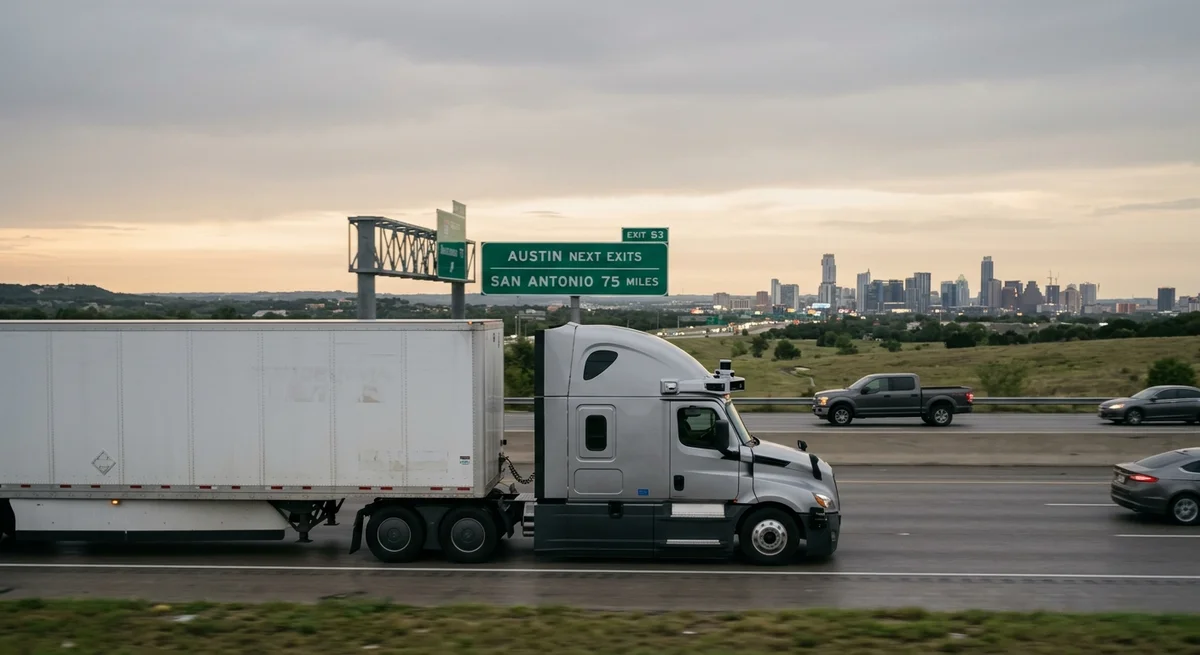
Aurora, one of the few companies that have proven the viability of autonomous trucks, is entering a new phase. After launching commercial operations in April last year, the company is now scaling its fleet from tens of vehicles to hundreds this year. This is a turning point — autonomous driving finally stops being "coming soon" and becomes a reality in the logistics that feeds the US economy.
Ten Years of Waiting
For ten years, the industry promised that autonomous vehicles would soon hit the roads. DARPA challenges, successful tests in controlled environments, ambitious conference announcements — it was all there, but real scaling never materialized. Every time a company claimed a breakthrough, it turned out that actual service was still far away. Aurora stands out because it didn't chase a universal solution. Instead of solving all urban driving problems at once, the company focused on a single, but profitable task — long-haul transportation between cities, where conditions are more predictable than on megalopolis streets. This allowed it to reach commercial viability faster.
How the Dallas-Houston Route Works
Currently, Aurora transports cargo between Dallas and Houston on a route spanning about 280 km. Trucks use an array of sensors — LiDAR, cameras, and radar — for driverless navigation. In the initial phase, an operator was present for safety; now operations are becoming fully autonomous.
The route was chosen deliberately:
- Well-structured interstate highways with clear lane markings
- Predictable traffic and stable weather
- Logistics hub (Texas is a major hub for ground transportation)
- Repeatability — the same routes every day
- Access to major industrial partners
Scaling: Hundreds of Vehicles This Year
CEO Chris Urmson confirmed the transition from a pilot project to full-scale commercial deployment. This means not only fleet growth but also expansion of routes within Texas and potentially to other states, hiring additional support staff, and deep integration with logistics partners like UPS and FedEx.
Challenges remain serious: certification and regulation at all levels, integration with labor laws, reliability in extreme weather, competition from Waymo and other startups, insurance and liability for accidents.
What This Means for Everyone
If Aurora maintains its pace, autonomous trucks will become a common sight on interstate highways within the next 2-3 years. This will free up millions of drivers for retraining, lower logistics costs, and reshape the long-haul transportation economy. For investors, it's a sign: autonomous logistics is finally becoming a legitimate business, not a lab project.