Musk's lawsuit exposes OpenAI conflict between profit and safety
Elon Musk has filed a lawsuit against OpenAI, challenging the legality of its commercial structure. According to the entrepreneur, OpenAI's creation of a for-pr
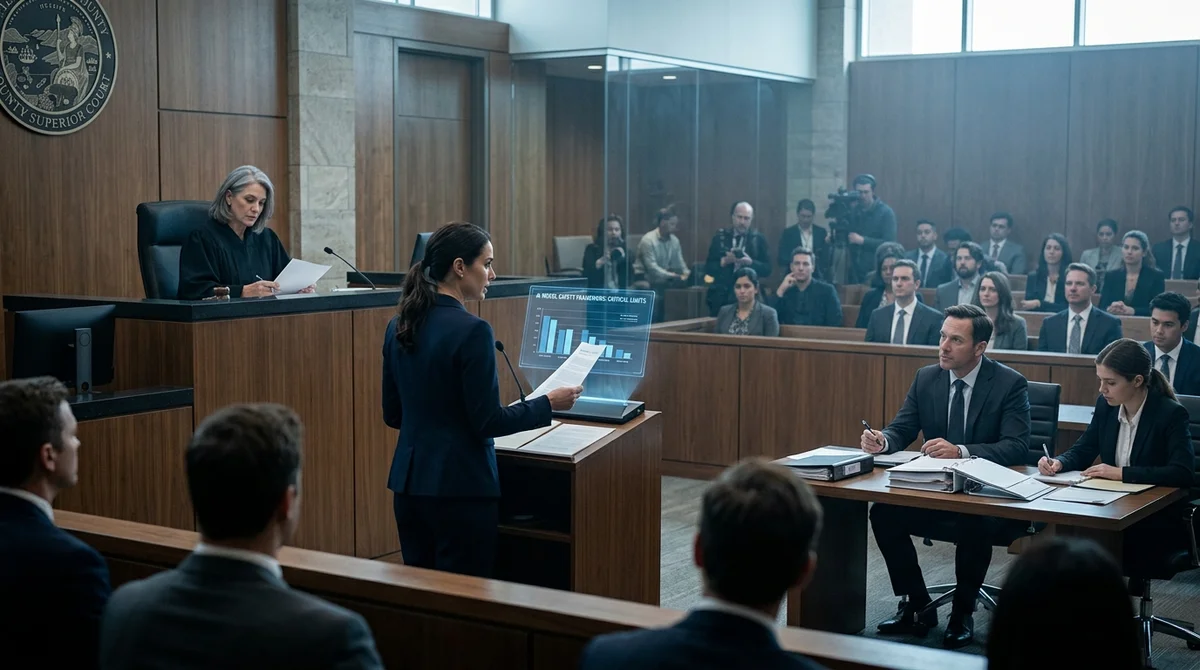
Elon Musk has filed a legal lawsuit against OpenAI, questioning the very legal and organizational structure of the company. The core of his claim: OpenAI LP, the commercial subsidiary, has departed from the original mission to ensure AGI safety for all of humanity.
How It Started
OpenAI was founded in 2015 as a nonprofit organization with an explicit and clear goal: to develop artificial general intelligence (AGI) that would not only be powerful but also safe, and whose benefits would be distributed for the benefit of humanity. The company attracted funding from charitable foundations, wealthy technologists, and philanthropists willing to donate money without expecting financial returns. However, in 2019, the strategy changed.
OpenAI created a commercial subsidiary structure, OpenAI LP, which allowed the company to accept investments from Microsoft, other major technology companies, and venture funds with the goal of generating financial profit. This enabled OpenAI to raise tens of billions of dollars to scale research and development, but, according to Musk, it radically changed the company's fundamental incentives and priorities.
"The company has departed from its original, clearly articulated mission in favor of private investors and shareholders,"
Musk argues in his legal complaint.
Mission vs. Financial Incentives
Now a profound question arises that concerns the foundation of the entire AGI industry: can a single organization simultaneously work for the public good and deliver record profits to private shareholders and investors? This is not merely a philosophical objection—it is a question of structural incentives. According to Musk, the answer is clear and unambiguous—it cannot, if the company's charter explicitly states that its sole priority is AGI safety, not financial income.
Musk's lawsuit points to a number of specific problems:
- OpenAI is investing in maximum acceleration of AGI development for competitive advantage over other laboratories, rather than for deep safety research
- Growing commercial pressures (the need to return investments within established timelines) force the company to make serious compromises in safety research and testing
- Investors, particularly Microsoft, have real influence over strategic decisions and priorities that often conflict with the original safety mission
- The company actively privatizes all income from AGI research and sales instead of distributing benefits as public goods
What's at Stake
If Musk wins the lawsuit, it could mean serious and far-reaching consequences not only for OpenAI but for the entire industry. Possible outcomes include: complete restructuring of OpenAI back into a fully nonprofit model, court freezing of commercial operations pending full audit of charter compliance, or even recovery of accumulated profits for an independent global AGI safety development fund. Even if the lawsuit does not win in court, it has already initiated a deep review process that forces the entire AGI development industry to seriously reconsider the fundamental balance between speed and responsibility. The question becomes clear: how much can commercial incentives and the race for AGI leadership even coexist with public responsibility and safety promises?
What This Means for the Industry
This lawsuit is not simply a personal dispute between Musk and OpenAI, as news reports might suggest. It is a fundamental question about who controls AGI, whose interests it is developed for, and what accountability mechanisms ensure its safety in the long term. If private investors and shareholders can easily reorient the company away from its public mission for short-term profit, then the promise of "safe AGI" becomes merely marketing and a PR move, not a technical and organizational priority. At stake is the industry's credibility.