Basata automates the medical back office — and doctors finally call back
Basata is bringing AI into clinic back offices to handle calls and patient scheduling. The result: people can finally reach doctors. Administrators are not worr
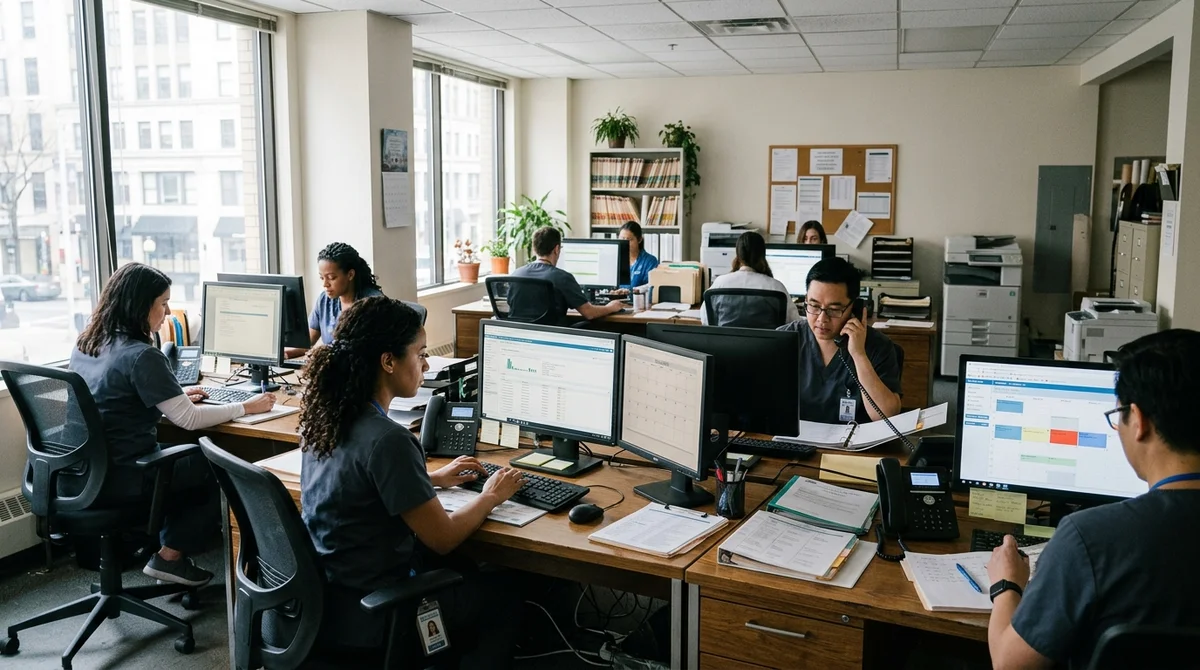
Why can't you reach your doctor? The answer often lies not in a shortage of doctors, but in an administrative disaster unfolding behind the clinic's scenes. Receptionists, secretaries, and assistants in medical facilities are so overloaded that processing incoming calls, scheduling patient appointments, and handling insurance takes up their entire workday. Doctors simply don't have time to call patients back because only processed and filtered information reaches them.
Automation That Works
Basata is a startup that decided to automate precisely this part: the back-office of medical facilities. The company developed an AI-based system that takes on routine administrative tasks. The system processes incoming calls, analyzes patient complaints and questions, automatically schedules them in available time slots, works with insurance companies, and performs dozens of other mechanical operations. This frees people from the most exhausting part of their work and allows them to focus on complex cases that require human judgment.
What exactly does the system handle:
- Processing incoming calls and determining the reason for the patient's inquiry
- Automatically scheduling patients in available doctor appointment slots
- Interacting with insurance companies and confirming coverage of services
- Tracking interaction history with each patient and preparing documentation
- Sending appointment reminders to patients
Staff Are Grateful, Not Frightened
The most interesting moment in Basata's story is the reaction of administrative personnel. The company's founders note that employees they work with are not afraid of losing their jobs due to automation. On the contrary, people are pleased. Why? Because current work is mentally and physically exhausting. Answering the same questions 100 times a day, manually scheduling patients in paper calendars, checking insurance in three phone calls, searching for information in different systems — this is not creative work, it's the execution of boring routine hour after hour, day after day. AI takes this burden upon itself, and people begin to perform more meaningful functions: communicating with patients who need special assistance, resolving conflicts, working on improving service quality.
"Employees are not worried about their jobs.
They're simply literally drowning in the current workload"
But There's a Big Question
Behind this success story lies a deeper and more troubling problem that sooner or later will force many companies automating human labor to face a reckoning. Basata, like them, will eventually be forced to answer a more complex question: where is the line between augmenting workers' capabilities and completely replacing them?
Right now administrators are grateful for the relief of burden and are not worried about their jobs. But as Basata's system improves and its capabilities grow, the need for human hands will inevitably decrease. Over time, one well-calibrated system could serve a clinic that previously required three or four administrators. And then the celebration may end, and the sharp question will arise about the fate of people whose work has been automated and is no longer needed.
For now, at Basata they believe they have found the right balance: AI does the tedious and mechanical work, people handle interaction, critical thinking, and personal patient support.
What This Means for Medicine
AI in healthcare is usually associated with diagnostics: algorithms that interpret X-rays or predict disease risks. But Basata shows that often the barrier between a patient and quality treatment is not a shortage of doctors, but the simple overload of administration. Automating the back-office could be a quick win for everyone: patients finally get through, doctors focus on medicine, administrators don't burn out from work. The question is how long this balance will last.