Nanoleaf bets on robots, red light, and AI instead of smart lighting
Nanoleaf is experimenting with robotics, red-light therapy, and embodied AI instead of its usual smart bulbs. CEO Gimmy Chu openly said: "the smart home is bori
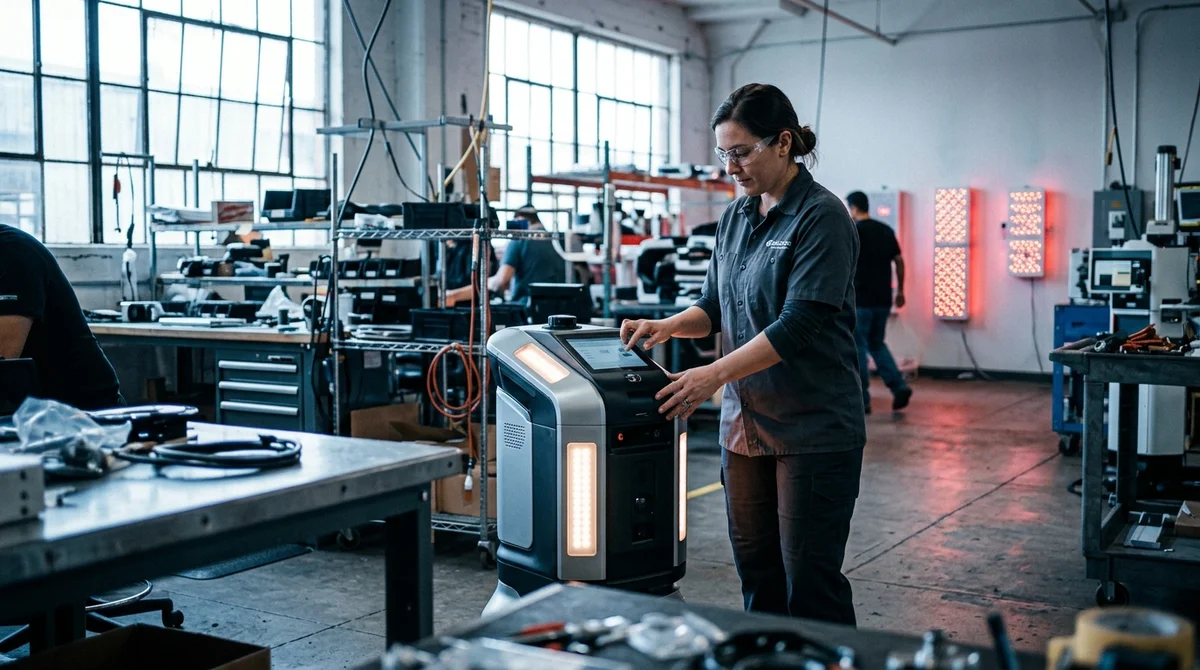
Nanoleaf, a company that revolutionized the market with modular LED panels ten years ago, is reconsidering its core bet. For the first time in its history, it is turning away from smart lighting toward robotics, red light therapy, and embodied AI.
When smart home gets boring
Over the past two years, Nanoleaf has been surprisingly quiet. While Govee and Philips Hue launch new products wave after wave, Nanoleaf has released only a few new smart light fixtures. This silence is not a lack of ideas, but a sign that the company is rethinking itself.
Gimmy Chu, CEO and co-founder of Nanoleaf, was candid: "Smart home is becoming boring." He even asked journalists to stop calling his company a smart lighting company. This is not just wordplay — it's a signal of a fundamental strategic turnaround.
The reason is logical: the smart lighting market has become oversaturated and monotonous. When all players offer smartphone synchronization, a million color modes, and voice control — differences disappear. Consumers choose by price or design, seeing no real innovation.
New categories: robots and wellness
Nanoleaf announced a trio of new products based on embodied AI — artificial intelligence built into physical devices that act independently. Details are sparse, but the company confirmed three directions:
- Robotics: AI-powered robotic devices
- Red light therapy: red light therapy devices for health
- AI-integrated wellness solutions
The pivot seems risky, but there's logic to it. Wellness is one of the fastest-growing markets globally (valued at $4+ trillion annually). And embodied AI is a trend now sweeping the tech sector, from Boston Dynamics to Tesla Optimus. Nanoleaf is betting that consumers are more willing to invest in devices that actively do something (robots help) than in beautifully glowing light bulbs. And from a consumer psychology perspective, it makes sense.
Competitors already moving
But Nanoleaf is not alone in seeing this goldmine. Govee is already experimenting with portable devices and broader smart home categories. Philips Hue is integrating into smart home ecosystems. If Nanoleaf wants to return to a leadership position, it needs not just to release a great product, but to create a compelling ecosystem that people perceive as must-have, not nice-to-have. Risk: losing its familiar audience of smart lighting fans before establishing itself in new markets.
What this tells us about the market
Nanoleaf's strategic turnaround is an indicator of the state of the IoT lighting market. When an industry leader seeks salvation in neighboring categories, it means that growth in the core category has stalled or is approaching a ceiling. Smart light fixtures have become a commodity, and innovation has shifted to adjacent areas. For consumers, this may be for the better. Instead of endlessly perfecting one idea (smarter, more colorful), companies will start creating integrated solutions that genuinely improve health and quality of life. Red light is proven to help with recovery and sleep; robots can take on routine tasks. Perhaps the next decade will be less boring than this one.