Dessn raises $6M for AI tools for production design
Startup Dessn has raised $6 million to develop AI design tools that integrate directly with production code. The platform lets designers work directly with the
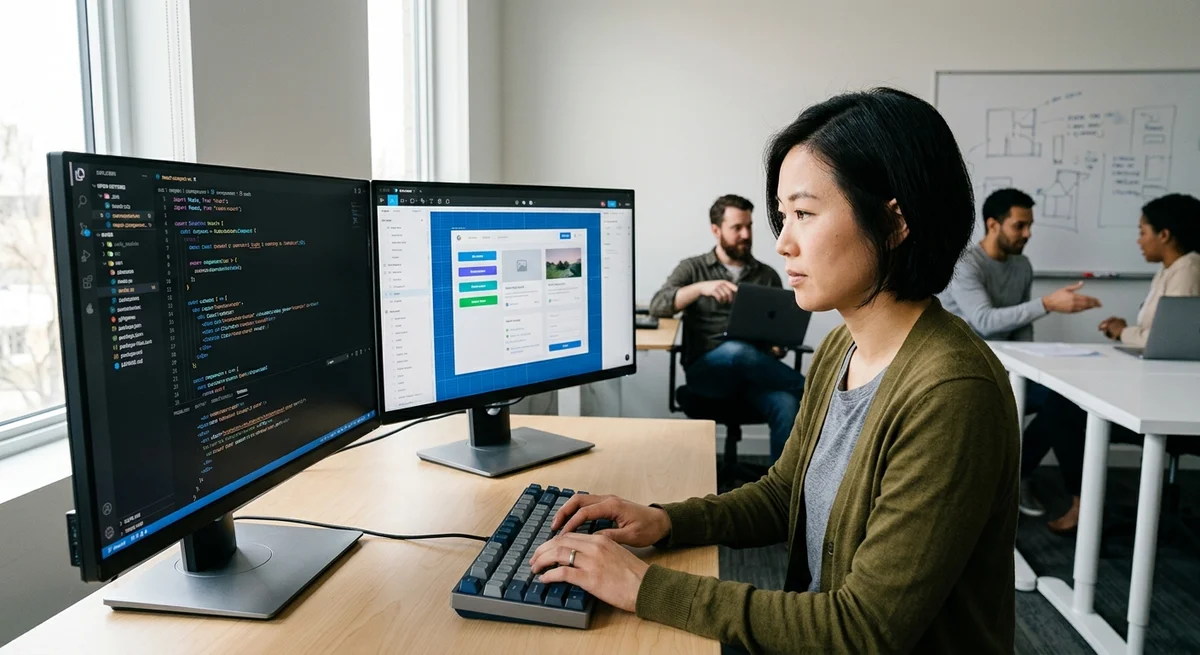
Dessn raised $6 million in funding to develop AI-powered tools that unite design and production code in a single workspace. The company is solving one of the key pain points in interface development — the gap between visual design and its implementation in code, which slows down work speed and creates confusion between teams.
How Dessn Transfers Design to Code
Dessn is creating a platform that allows designers to work directly with production code through a visual interface. Instead of exporting layouts from Figma, designers open Dessn and see the real components of their application — React, Vue, Angular, Svelte. When they change a button color, text size, spacing, or even component behavior, these changes sync with the source code automatically.
The designer sees the final result in real time, and the developer gets ready, tested code without intermediate interpretation. The platform works with design systems — it understands tokens (colors, sizes, fonts, spacing) and can apply changes to all components using that token at once. This is particularly important during scaling: if you need to change the color of a primary button throughout the application, Dessn does it in seconds.
Designers don't need to understand JavaScript or CSS — Dessn's interface is intuitive, like Figma.
The Problem: When Design and Code Diverge
In traditional processes, designers and developers work in parallel worlds. A designer creates layouts in Figma, releases a specification (sizes, colors, fonts), and a developer reads it and codes the interface manually. In practice, this leads to:
- Outdated mockups — designer updates, but developer doesn't know
- Code that doesn't match the mockup — developer changed logic, but the mockup doesn't know
- Endless discussions about details — "your code should have 16px, not 14px"
- Frozen speed during iterations — you need to change both the mockup and the code simultaneously
This hits particularly hard for products that evolve quickly. Every change requires double work: update Figma and update the code. If a developer forgot to sync the code with the new mockup, bugs are guaranteed.
How AI Helps Synchronize Design and Code
Dessn uses AI to understand the context of production code and suggest that designers work directly at the level of real components. The platform analyzes the application's architecture, the design token system, and syncs changes back and forth in real time. If a designer changes the brand's primary color, AI updates the CSS variable, and the entire application instantly gets recolored. If a developer adds a new component, the designer can immediately customize it in Dessn without waiting for a separate export or documentation.
"Design and code are no longer two separate documents.
It's one living interface that both teams edit in real time."
What This Will Change in Development
If Dessn realizes its potential, it could redefine the interface creation process. Instead of the cycle "mockup → code → iteration → rework," teams will get a single space where design is always synced with code and updates in real time. For startups, this could mean accelerating development by weeks and reducing sync errors. For large companies — reducing time spent on alignment between design and development departments, which is particularly painful after implementing Agile methodology. For designers — direct influence on code, without the intermediate layer of developer-interpreters who often change the designer's vision for technical reasons.
The $6 million funding indicates that investors believe in the scale of this idea. In recent years, interest in tools that blur the boundary between design and development has only grown. Companies like Framer, Webflow, and others have already proven that there is demand for tools that unite both worlds. Dessn positions itself not as the next Figma, but as a true synchronization platform between design and production code — a completely different product category.